Refrigerant guide · 7 min read
R-12 to R-134a conversion for an old Sub-Zero: should you do it, and is it even legal?
Is converting an old R-12 Sub-Zero legal, and is it worth it? An honest Santa Rosa guide to the law, the real rebuild involved, and your three repair paths.
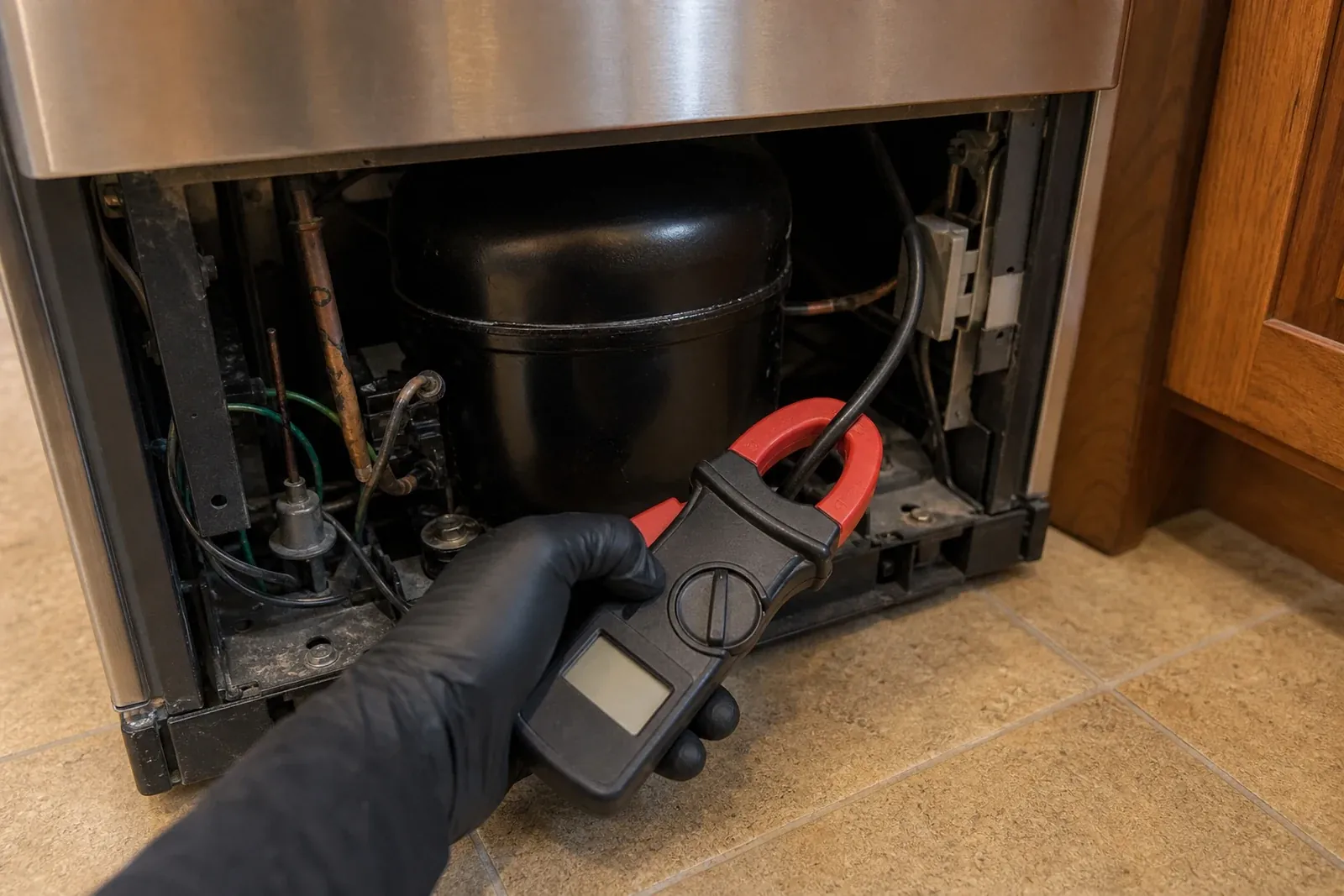
Running an old R-12 Sub-Zero is legal: only new U.S. production and import of CFC-12 ended, on December 31, 1995, and using or servicing existing R-12 equipment is still allowed. So converting to R-134a is a choice, not a requirement.
The harder question is whether you should. A genuine R-12 to R-134a conversion is not a quick gas swap — it is a full sealed-system rebuild done by an EPA Section 608 certified technician, and it usually trades a small amount of cooling performance for a refrigerant that's cheap and available. Below is the law, the real work, and the three honest paths, so a Santa Rosa owner can decide with clear eyes.
What the law actually says about R-12
The common belief that R-12 is "banned" is not quite right. What ended was new U.S. production and import of CFC-12, which stopped on December 31, 1995, under the Montreal Protocol as implemented through Title VI of the Clean Air Act. Using and servicing existing R-12 equipment remains legal. An older Sub-Zero designed for R-12 can lawfully keep running and be recharged with reclaimed R-12 — it does not have to be retrofitted or scrapped.
Three rules still govern the work, and they are why this is professional-only. First, refrigerant must never be knowingly vented during service, repair, or disposal — it has to be recovered, under Clean Air Act Section 608. Second, refrigerant may generally only be sold to certified technicians, so a homeowner cannot lawfully buy R-12 to self-charge. Third, the technician must hold EPA Section 608 certification for stationary refrigeration — that's Section 608, not the automotive Section 609. Knowingly venting carries civil penalties of up to tens of thousands of dollars per day, per violation, so this is not a corner anyone should cut.
One more point that confuses owners: R-134a itself is not banned either. As of January 1, 2021, it's no longer allowed in newly manufactured household refrigerators under the HFC phasedown, but it remains legal to service and retrofit existing units with it.
What a real conversion involves (and why it's not a "gas swap")
A proper R-12 to R-134a conversion is a sealed-system rebuild, not a top-off. The two refrigerants need different lubricants: an R-12 system runs on mineral oil, and R-134a will not circulate mineral oil — it pools and starves the compressor. So at a high level, the job means recovering the old R-12, repairing the leak that prompted the work, changing the lubricant from mineral oil to POE (ester) oil, replacing the filter-drier, re-matching the metering to R-134a, pulling a deep vacuum, and recharging by weight. It's careful, certified work on the same sealed system and compressor we'd repair on any vintage box.
We keep the specifics in the shop, not in a guide — charge amounts and procedure are exactly the kind of thing the law puts in certified hands. What matters for your decision is the honest performance caveat: R-134a in a system designed for R-12 runs higher head pressure and lower cooling capacity. A converted vintage unit often cools slightly less efficiently and works the compressor a little harder. Anyone who promises "same or better" after a conversion is overselling it.
A warning about hydrocarbon "drop-in" refrigerants
Search long enough and you'll find cheap cans sold as R-12 "drop-in" replacements — propane-based R-290, isobutane R-600a, and trade names like "12a," "ES-12a," or "DuraCool." Do not put these in your Sub-Zero, and don't let anyone talk you into it. They are A3-flammable hydrocarbons, they are not approved retrofits for these units, and using one inside a sealed system that wasn't designed for a flammable charge is a genuine fire and liability risk — in a Fountaingrove or Coffey Park kitchen that's the last shortcut anyone should take.
The legitimate paths are reclaimed R-12 or a proper R-134a conversion, both handled by a certified technician. There's no responsible "easy can" version of this job.
Your three honest paths, side by side
There are three real choices for an old R-12 Sub-Zero with a sealed-system problem, and the right one depends on the unit, not on a rule of thumb. Recharging with reclaimed R-12 keeps the original design and the best performance, but the gas is scarce, expensive, and certified-only — and the leak still has to be fixed first. Converting to R-134a uses a cheap, available refrigerant, but adds labor and gives up a little cooling capacity. And replacement is the honest answer when the compressor is already failing, because converting a unit whose heart is dying rarely makes sense.
| Path | Refrigerant cost & supply | Performance | Best when |
|---|---|---|---|
| Reclaimed R-12 recharge | Scarce, expensive, certified-only | Original spec — best | Sound compressor; you want it kept exactly as designed |
| R-134a conversion | Cheap and available | Slightly lower capacity, higher head pressure | Sound compressor; supply or cost rules out R-12 |
| Replacement | Not applicable | New unit | Compressor already failing on a very old box |
This is the core of the repair-or-replace decision on a vintage unit, and it's one we make with gauges on the system, not over the phone. If your box is a mechanical-era model, our 500 Series repair guide walks through how those units are built and why the cabinet usually outlasts the sealed system. The best next step is a real diagnosis: our $89 service call goes toward the repair, and it tells us — and you — which of these three paths actually fits your Sub-Zero. Call (628) 209-6820 or book online and we'll read the system honestly.
FAQ
Questions & answers
Is it illegal to use an old R-12 Sub-Zero refrigerator?
No. Only new U.S. production and import of R-12 ended, on December 31, 1995. Using and servicing existing R-12 equipment remains legal, and a certified technician can recharge it with reclaimed R-12. It doesn't have to be converted or scrapped.
Can I convert my Sub-Zero to R-134a myself?
No. It's not a gas swap — it's a sealed-system rebuild that requires recovering the old refrigerant, changing the oil to POE, replacing the filter-drier, deep-vacuuming, and recharging by weight. By law, refrigerant is sold only to EPA Section 608 certified technicians and may never be vented, so this is professional-only work.
Will my Sub-Zero cool just as well after converting to R-134a?
Usually slightly less well. R-134a in a system designed for R-12 runs higher head pressure and lower cooling capacity, so a converted vintage unit often cools a bit less efficiently and works the compressor harder. Anyone promising the same or better performance is overselling it.
Guides
More Santa Rosa guides
Next step
Rather leave it to a specialist?
Call with the Sub-Zero or Wolf model number and current temperatures for a flat quote before any visit.