Alert explainer · Santa Rosa
The Sub-Zero clean-condenser alert in Santa Rosa: what it means and how to clear it
Of all the messages a Sub-Zero can show, the clean-condenser or vacuum-condenser alert is the friendliest. It is usually maintenance, not a breakdown, and in Santa Rosa it fires more often than almost anywhere else for one very local reason.
4.9/5 · 1,356 verified customer reviews
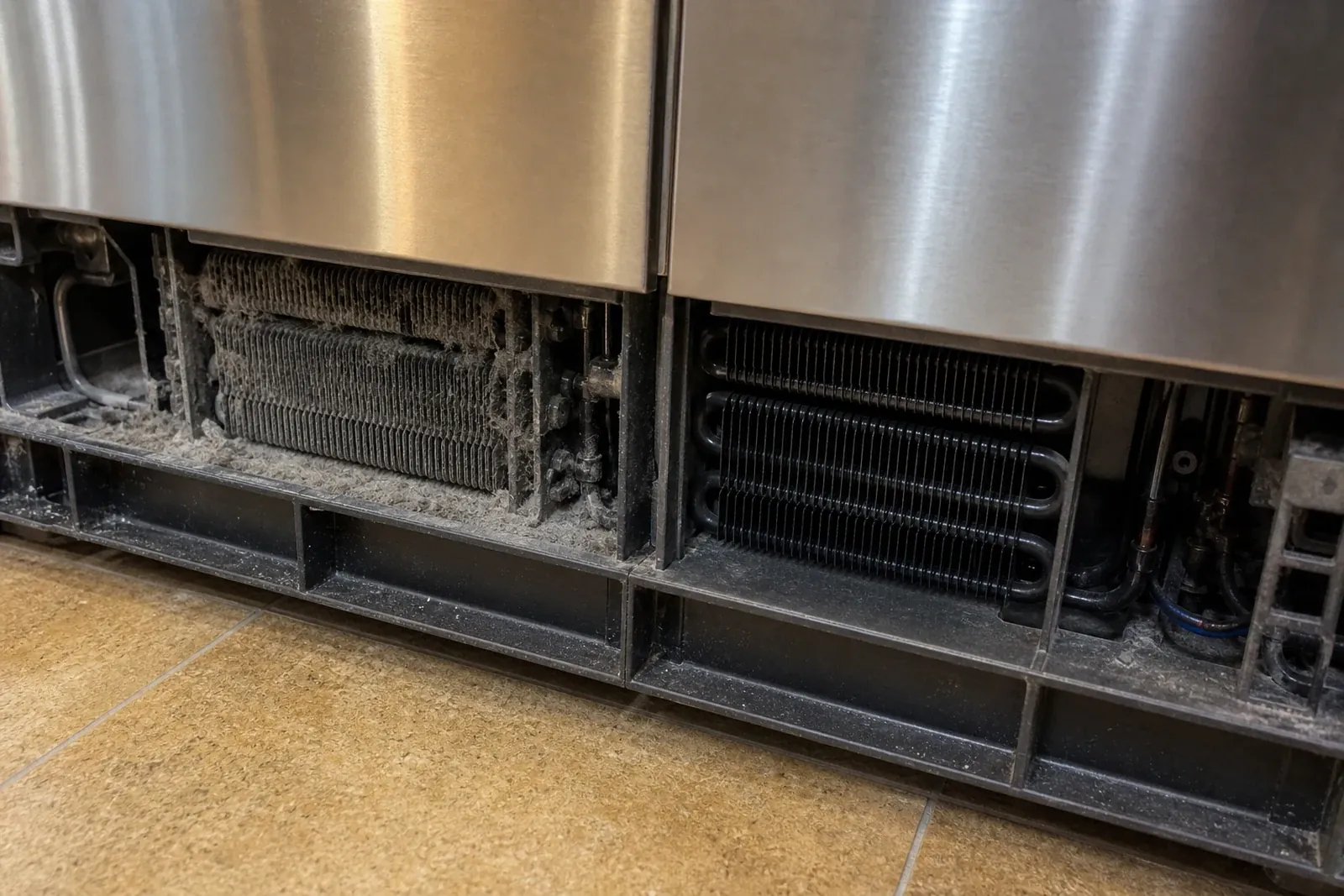
This page is a single, deliberate explainer for one alert, not a code dictionary. Sub-Zero displays are model-specific, and chasing a numbered chart usually leads owners astray; but the clean-condenser reminder is consistent enough in what it asks for that it is worth understanding on its own. When it lights up, the appliance is telling you its heat-shedding coil is choked and needs attention before the compressor pays the price.
The condenser is the radiator of the refrigerator. As refrigerant carries heat out of the food compartments, the condenser coil at the base of the cabinet dumps that heat into the kitchen air, and a fan pulls air through its fins to help. When the fins clog, the coil cannot release heat, the compressor runs longer and hotter to compensate, and the control eventually raises the reminder. Clear the obstruction and the whole system relaxes; ignore it and you shorten the life of the most expensive part in the box.
Why here
The Santa Rosa reason this alert fires early
The same alert exists on every Sub-Zero in the country, but Sonoma County conditions trip it faster. Two things drive that. The first is the dry, dusty hillside terrain that surrounds so much of the city: homes on the Fountaingrove and Skyfarm ridges and out toward the Mark West and Riebli valleys pull a steady stream of fine soil into the coil every time the fan runs. The second is wildfire smoke, which has become a near-annual event since the 2017 Tubbs Fire reshaped these neighborhoods. The ash from a smoke event is far finer than ordinary household dust and settles deep in the fins, where a vacuum nozzle barely reaches.
The combination means a coil that would stay clean for a year in a coastal town can choke in a single Santa Rosa summer. Garage installations and outdoor refrigeration take the brunt, breathing unfiltered, ash-laden air with no conditioned room around them. This is not a defect in the appliance; it is the environment doing what it does to any heat exchanger. It simply means the reminder is a more frequent, and more important, part of owning a Sub-Zero in wine country than the manual's standard interval suggests.
Step by step
How to clear it safely
- Confirm the temperatures before touching the alert. Read the fresh-food and freezer numbers first. If both are near normal, the alert is a maintenance reminder and you can proceed. If either compartment is warming, leave the message on the display; it is real diagnostic evidence and clearing it only hides the problem.
- Pull the lower grille and expose the coil. With the unit running, unclip or unscrew the toe-kick grille at the base. The condenser is the finned coil behind it. In Santa Rosa homes you will often find it packed grey with hillside dust, pet hair and a fine film of wildfire ash, which is exactly what set the reminder off.
- Brush and vacuum the fins, then clear the fan. Work a soft appliance brush across the fins in the direction they run, then vacuum the loosened debris with a crevice tool. Check that nothing is touching the condenser fan blade so it can spin freely. Do not bend the fins or use water; a dry brush-and-vacuum is all the coil needs.
- Clear the reminder and reseat the grille. On most built-ins you clear the alert by pressing and holding the door-ajar or alarm key for about fifteen seconds once the coil is clean and temperatures are normal. Reattach the grille, then watch the unit over the next day to confirm the message stays gone and run times shorten.
When it is more than dust
When the alert signals a real fault
The line to watch is simple: if the reminder returns within days of a genuine cleaning, or it arrives alongside a warming compartment and a compressor that barely stops running, the panel is no longer reporting dust. It is reporting that the system cannot shed heat for a deeper reason, an aging sealed system, a failing condenser fan, or a control misreading the coil. At that point repeated resets do harm, because they let a recoverable situation drift toward compressor damage. That is the moment to stop and have it measured.
Where to read next
For the full alarm picture on other messages, see the error codes and alarms guide. If the unit is also warming, start at the not-cooling diagnostic or the sealed system and compressor page. Seasonal coil care for smoke and heat lives on the wildfire-season condenser page.
FAQ
Clean-condenser alert questions from Santa Rosa owners
What does a Sub-Zero clean-condenser alert actually mean?
It is the unit telling you the condenser coil needs cleaning so it can shed heat efficiently. On older 600-series built-ins this appears as a flashing "Vacuum Condenser" message or a service light; on newer panels it can show as a cleaning reminder. It is one of the few Sub-Zero alerts that is genuinely a maintenance prompt rather than a part failure, provided your temperatures are still normal when it appears.
Why does this alarm fire so often in Santa Rosa?
Because the local environment loads condensers faster than most places. The hillside lots in Fountaingrove, Skyfarm and the Mark West foothills sit in dry, dusty terrain, and Sonoma County's recurring wildfire smoke since 2017 lays down an ultra-fine ash that drifts straight to the coil. A condenser that might stay clean for a year elsewhere can trip the reminder in a single hot, smoky summer here, which is why we tell Santa Rosa owners to clean it more often than the standard interval.
How often should I clean the condenser in Santa Rosa?
Sub-Zero's general guidance is every six to twelve months, but in the dusty hillside neighborhoods and after any wildfire-smoke event we suggest the shorter end of that range, and a quick check after a long heat stretch. Garage and outdoor units need it most because they pull in unfiltered air. Keeping the coil clean is the single cheapest thing you can do to extend the life of the compressor.
Is it safe to clear the alert myself?
Clearing the reminder is owner-safe as long as both compartments are at normal temperature and you have actually cleaned the coil first. Clearing it while the unit is warm, or repeatedly resetting it without cleaning, is the mistake to avoid; it masks a developing fault and can let a recoverable airflow problem turn into a sealed-system one. If the alert returns within days of a proper cleaning, stop resetting and book a diagnosis.
The alert keeps coming back after I clean the coil. Now what?
A reminder that returns on a clean condenser is no longer about dust. It usually means the compressor is still running long and inefficiently, which can stem from an aging sealed system, a weak condenser fan, or a control reading the coil temperature incorrectly. At that point the panel is reporting a real fault, and it needs gauges and measurements on site rather than another reset. This is where the alert stops being maintenance and becomes a repair call.
Does this alert mean my compressor is failing?
Not by itself. In the large majority of Santa Rosa cases a clean-condenser alert is exactly what it says, a dirty coil, and cleaning resolves it. It only points toward the compressor when it persists after a thorough cleaning and the unit also runs nearly constantly or warms. We never diagnose a compressor from an alert alone; the sealed-system page explains the gauge and amp-draw testing that confirms it.
Related
Next step
Clear the alert for good in Santa Rosa
If the reminder keeps returning on a clean coil, send your model tag and current temperatures and we will measure what the panel is really reporting.