Santa Rosa · Fountaingrove · 95403 / 95409
Fountaingrove Sub-Zero running warm? The hillside dust and afternoon heat usually point at the condenser, not the compressor
On the Fountaingrove ridge, a Sub-Zero that drifts warm in July is far more often an airflow and coil story than a dead compressor. Dry-season grit off the hillside and the afternoon sun beating on a south-facing kitchen load the condenser long before the sealed system is ever the problem.
Direct answer
A warm Sub-Zero in Fountaingrove is usually airflow, not the compressor. Dry summer dust packs the condenser while afternoon heat raises head pressure, so the fresh-food side drifts first. Clean the condenser path, keep the doors shut, log both temperatures, and stop lowering the setpoint. If both sides stay warm with constant run time, book a diagnostic at (628) 209-6820.
Why Fountaingrove is different
Ridge dust and dry heat are a condenser story
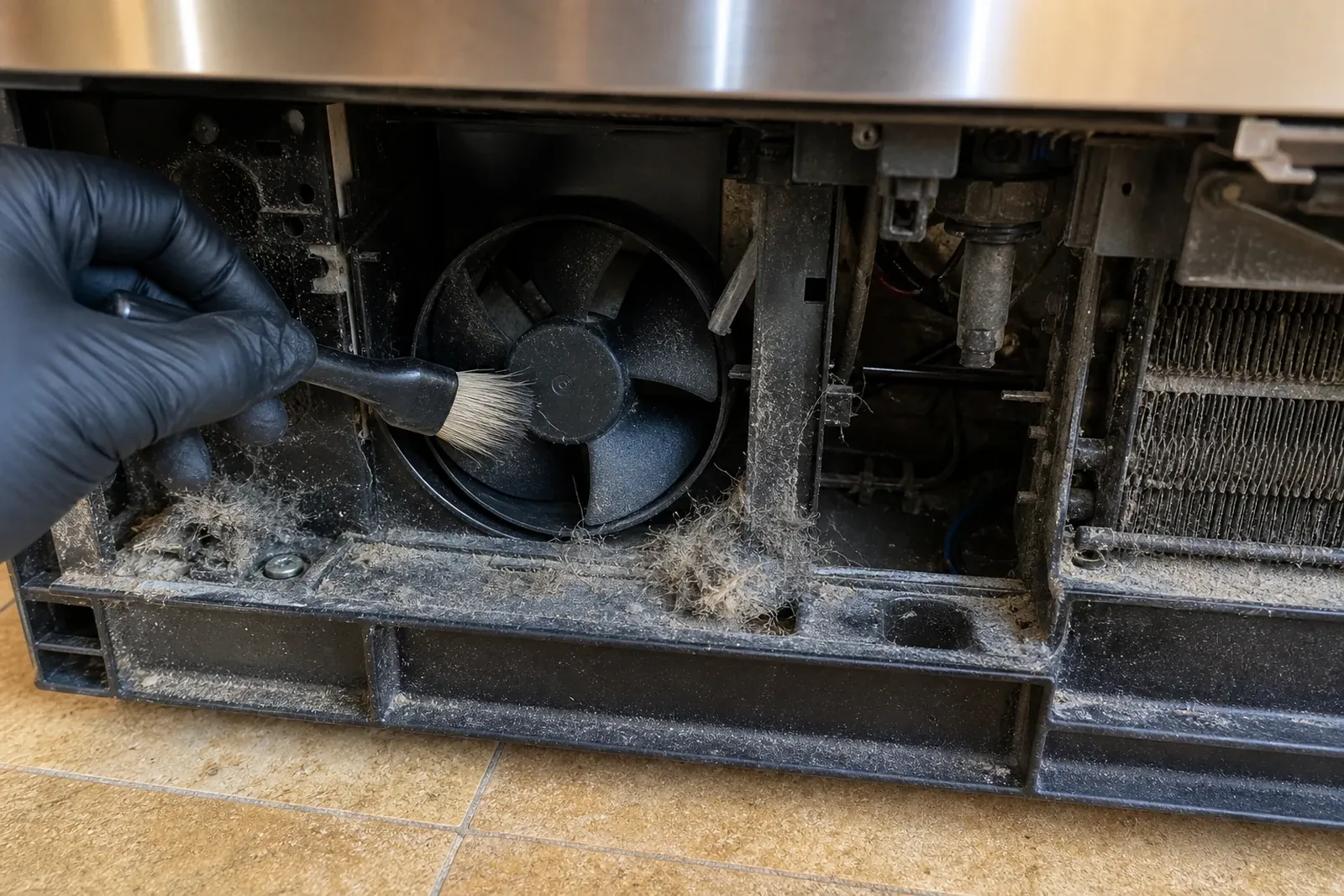
Fountaingrove and the Skyfarm streets above it sit on open hillside straddling the 95403 and 95409 lines, where the soil is dry from late spring through October and the prevailing wind carries fine grit off the slopes straight toward the house. That grit settles on the lower grille of a built-in Sub-Zero and mats into the condenser fins. At the same time, the afternoon sun on a west- or south-facing view kitchen pushes the room into the high 70s or 80s while the cabinet is closed up tight around the unit. Dirty coil plus warm room plus restricted airflow is the exact recipe for a fresh-food side that creeps up two or three degrees by dinner.
The physics behind it is straightforward. A condenser sheds heat by passing room air across its fins; the dirtier the fins and the warmer the room, the less heat leaves the refrigerant, so condensing pressure and temperature climb. The compressor then has to work harder for less cooling, run times stretch, and the fresh-food evaporator — which already runs warmer than the freezer evaporator in Sub-Zero's dual system — is the first to lose ground. On the ridge, both inputs to that equation peak in the same months, which is why these calls cluster in the dry, hot stretch of summer rather than spreading evenly across the year.
That is why most warm Sub-Zero calls in Fountaingrove are airflow and coil, not the sealed system. A compressor or charge problem would usually pull both compartments down together and run the unit almost constantly; a dust-loaded condenser in a hot room lets the freezer hold while the fresh-food section quietly drifts. The honest fix is often a thorough condenser clean, a condenser-fan check, a look at the door reveal and a temperature re-log over a few hours — not a four-figure sealed-system repair. We would much rather rule that out for the price of a diagnostic than sell you a compressor you do not need.
Read the pattern
What the symptom is actually telling you
Before anyone names a part, the symptom and the model tag do most of the sorting. On the ridge, a warm reading after a heat run is overwhelmingly a coil-and-airflow problem; both sides drifting with constant run time is the signal that moves the conversation toward the condenser fan, charge or compressor. Use the table to see where a Fountaingrove call usually lands, then confirm on site with measured temperatures, airflow and amp draw rather than a single display number.
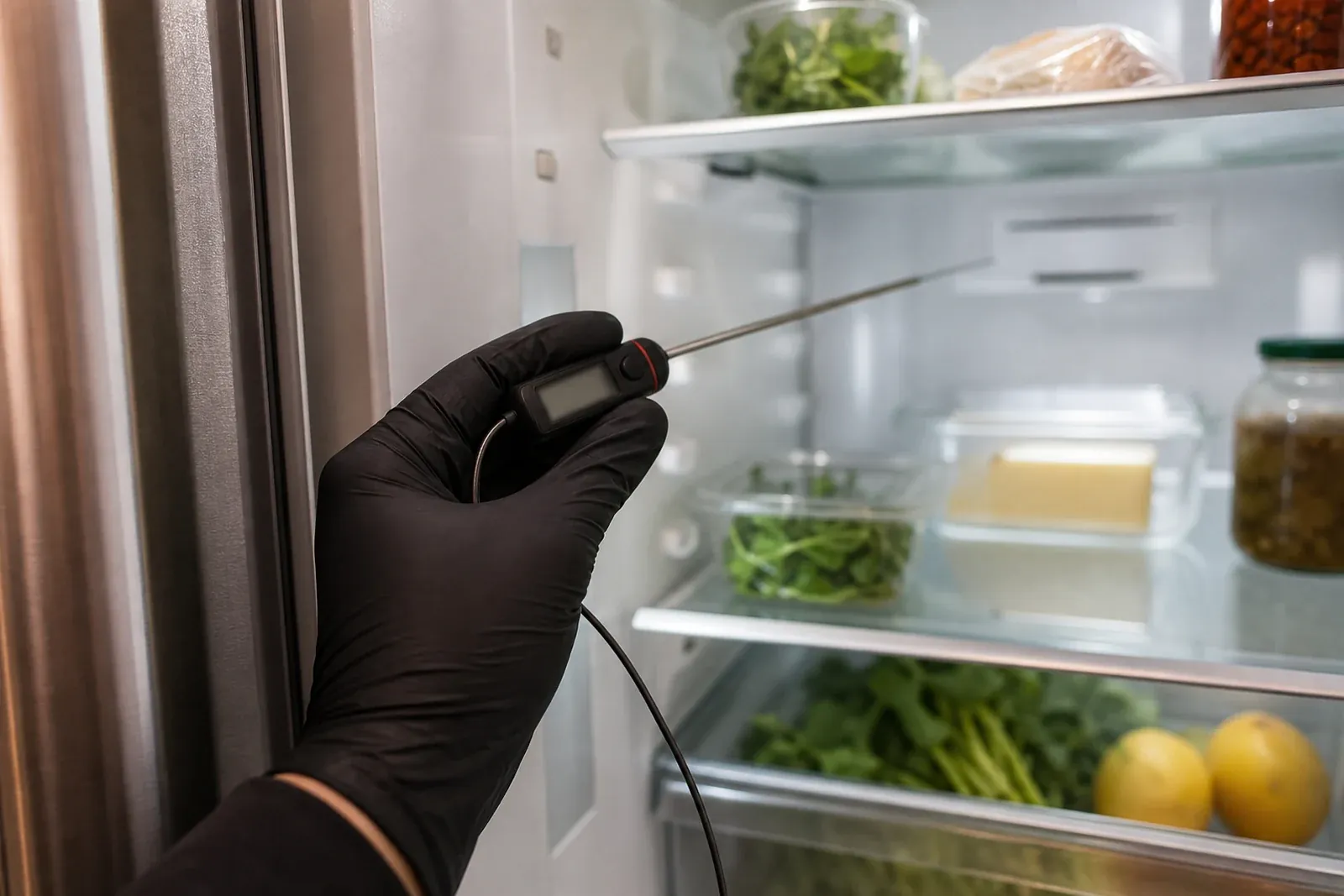
The single most useful clue you can gather before we arrive is the split between the two compartments. Sub-Zero's dual refrigeration runs the fresh-food and freezer sections on separate evaporators, so the way they fail apart from each other is diagnostic. A freezer that still reads at or near zero while the fresh-food side sits in the mid-40s is a textbook airflow-and-coil pattern; both reading high together with a unit that never seems to cycle off is the pattern that earns a sealed-system check. A display that simply blinks a setpoint tells us almost nothing on its own — what matters is the measured cabinet temperature and how it behaves over a few hours with the doors left closed.
| What you notice | Likely cause on the ridge | Planning range |
|---|---|---|
| Fresh-food warm by afternoon, freezer cold | Dust-loaded condenser, restricted airflow, evaporator fan | $120–$480 |
| Warm after a heat wave or smoky week | Condenser grit/ash; clean and re-measure | $95–$280 |
| Both sides warm, unit runs nearly constantly | Condenser fan, charge or compressor (sealed system) | $900–$1,800 |
| Hums but freezer slowly losing ground | Condenser fan motor or heavy coil load | $300–$620 |
| Noticeably louder, hot to the touch at the grille | Airflow starvation at the lower grille | $120–$420 |
Summer cadence
A condenser rhythm built for the Fountaingrove dry season
A Sub-Zero on a sheltered downtown street can often hold a once-a-year condenser clean. A unit on an exposed Fountaingrove lot generally cannot — the dry-season dust load is simply higher, and wildfire-season ash can blanket an intake in a single bad week. We plan the cadence around the calendar so the coil is clean going into the hottest, dustiest stretch rather than after the unit has already been struggling. Think of it as matching the maintenance interval to the lot, not to a generic manual written for a mild, sheltered climate.
- Late spring (May–June): a pre-summer condenser clean and condenser-fan check before the first sustained heat, so the coil starts the season clear.
- Midsummer (July–August): a quick intake and grille inspection on exposed ridge lots, clearing any visible grit and confirming the lower air path is open.
- Fire season (Sept–Oct): after any smoky stretch, check the condenser for ash, wipe the intake, and re-measure both temperatures to confirm the unit recovered.
- Off-season (winter): verify the gaskets and door reveal so a cold-weather seal problem does not get blamed on the summer heat the following year.
None of this requires opening the sealed system. It is access, airflow and measurement — the cheap, honest work that keeps the expensive work from ever being needed. A unit kept on this rhythm rarely surprises its owner in August, because the variable most likely to cause a warm reading has already been addressed. For owners who would rather not track the seasons themselves, we can note the lot's exposure and suggest an interval that fits it. See the broader Sub-Zero maintenance calendar for the full-year version that covers gaskets, filters and water systems alongside the coil.
Getting there
Long driveways, gated entries and hillside parking
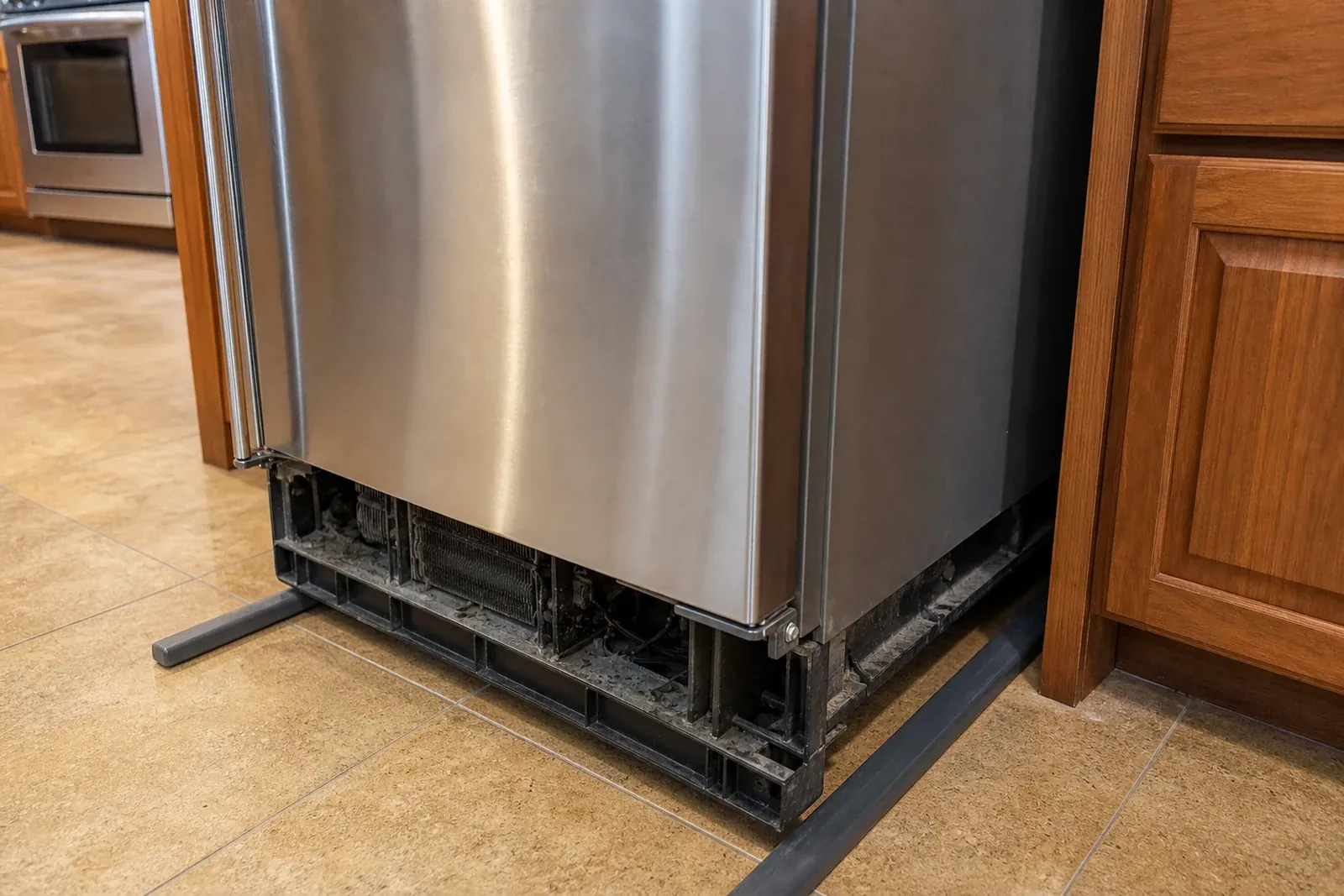
Service on the ridge is partly a logistics problem, and pretending otherwise just creates return trips. Many Fountaingrove and Skyfarm homes sit at the top of long, steep driveways, some behind gates near the Fountaingrove Golf & Athletic Club, and the part the technician needs may be in the van at the bottom of the hill. A built-in Sub-Zero usually has to be eased forward on its rollers to reach the lower condenser and the rear sealed-system components, and that pullout has to be done cabinet-safe so the surrounding millwork, panel-ready fronts and stone surrounds are not scratched. On a hillside lot the floor is rarely perfectly level either, which is one more reason the rollout gets done carefully rather than quickly.
There is also a clearance reality unique to view kitchens: the condenser and grille that need attention are exactly the spots a designer tries to hide. Custom toe-kick grilles, tight islands and integrated cabinetry can all conceal a coil that is gasping for air, so part of the visit is simply confirming the unit can breathe in the space it was installed into. A clean coil behind a blocked grille still runs warm.
Telling us the access details up front — gate code, where the truck can park, whether the kitchen is up a flight of stairs, and the model number off the tag — lets intake load the right part family and the right protection before the drive up. That single step is the difference between a one-visit fix and a return trip, and on a ridge driveway a return trip is a real cost in time. For the protection standards we follow on every pullout, see cabinet-safe built-in service.
Owner-safe vs stop
What to do before we arrive — and what to leave alone
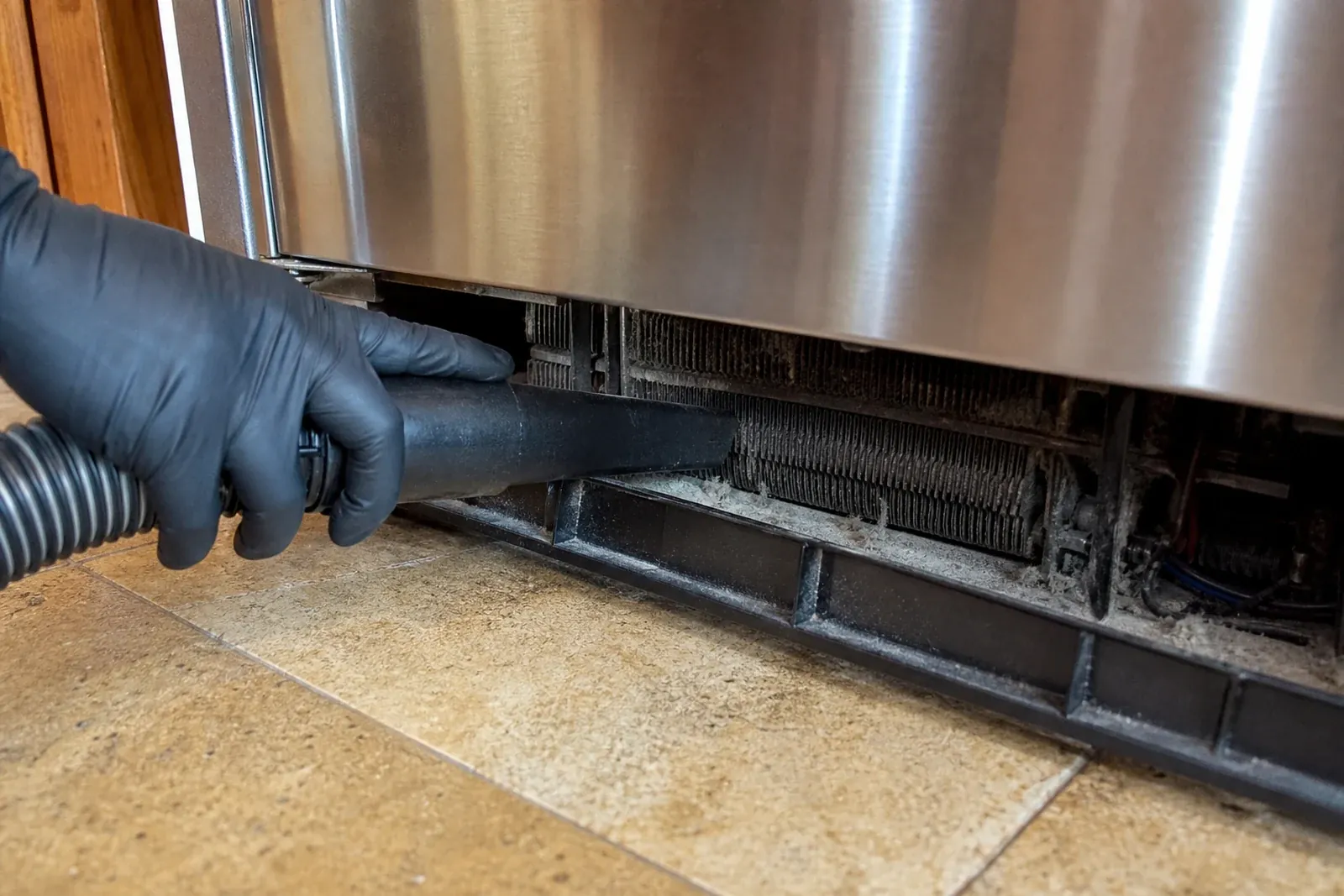
If your Fountaingrove unit is drifting warm in the heat, a few owner steps genuinely help and may even resolve it outright. Vacuuming the lower grille and the visible condenser face with a soft brush attachment, confirming the doors are sealing and not held open a hair by an over-packed shelf, keeping the doors closed for a few hours so the cabinet can recover, and writing down both the fresh-food and freezer temperatures at the start and end of that window are all useful. Better still, they give the technician real evidence to work from instead of a single panicked reading.
A short, dated log is worth more than it looks. Two numbers at 2 p.m. and the same two at 6 p.m. tell us whether the unit is holding, slowly losing, or never recovering — and that pattern alone often decides whether the next step is a coil clean or a full sealed-system diagnostic. It is the cheapest diagnostic tool in the house.
Then stop. Do not add refrigerant, do not bypass a thermistor, and do not keep lowering the setpoint chasing the number — that frosts the evaporator and hides the very pattern we need to read. If both compartments are warm with constant run time, if the freezer itself is losing ground, or if you smell something hot at the grille, that is the point to book rather than keep tinkering. Sealed-system work also requires EPA-certified handling, so it is genuinely not owner-territory. The same diagnostic logic for the whole product line lives on our not-cooling diagnostic hub, and when the evidence does point past the coil, our sealed-system and compressor page explains what that work actually involves.
Next step
Call with the Sub-Zero model number
Have the model-tag photo, current fresh-food and freezer temperatures, and the symptom timeline ready. That lets the Santa Rosa intake route the visit around the likely Sub-Zero part family instead of a generic appliance script.
FAQ
Questions Santa Rosa homeowners ask before scheduling
Why does my Sub-Zero run warm in Fountaingrove only in summer?
The dry-season dust off the hillside packs the condenser while afternoon sun heats the kitchen, and the two together starve airflow exactly when the unit is working hardest. A coil that held fine in winter can drift warm in July. Cleaning the condenser path and re-measuring both temperatures is the first and cheapest step.
Is a warm fresh-food side a compressor problem?
Usually not. On the ridge, a warm fresh-food section with a still-cold freezer almost always points to airflow, a dust-loaded condenser, the evaporator fan or a thermistor — not the compressor. A real compressor failure tends to take both compartments down together with near-constant run time. We confirm with measured temperatures and amp draw before naming any sealed-system part.
How often should I have the condenser cleaned on a Fountaingrove hillside home?
More often than a sheltered downtown unit. Exposed ridge lots in 95403 and 95409 collect more dry-season grit, so we plan a pre-summer clean in late spring and a quick intake check midsummer. After any smoky fire-season week, it is worth re-checking for ash on the coil.
Who repairs Sub-Zero refrigerators in Fountaingrove and Skyfarm?
We are an independent Sub-Zero specialist covering Santa Rosa, including the Fountaingrove and Skyfarm hillside neighborhoods. We work only on Sub-Zero built-in refrigeration, use genuine OEM parts, and protect surrounding cabinetry on every pullout. Call (628) 209-6820 to book a diagnostic.
Can wildfire smoke or ash make my Sub-Zero run warm?
Yes. Fine ash settles on the lower grille and coats the condenser intake the same way dry-season dust does, restricting airflow and raising run times. After a smoky stretch, checking the condenser for ash and re-measuring temperatures is the right first move before assuming anything bigger has failed.
Do you need special access for homes up long Fountaingrove driveways?
It helps a lot. Many ridge homes sit behind gates or at the top of steep driveways, so a gate code, a note on where the truck can park, stair details and the model number let us bring the right parts and cabinet protection up in one trip. That up-front detail is often what turns a return visit into a one-visit fix.
Related