Santa Rosa · repair case library
Sub-Zero case notes from Santa Rosa kitchens
These are representative Sub-Zero cases drawn from years of Sonoma County calls — composites, not specific customers. Each one walks the same honest path: what we saw, what we measured, what it cost, and how it ended.
Direct answer
These anonymized Sub-Zero case notes show how a Santa Rosa diagnosis actually unfolds: a symptom, the readings we take, the real fault behind it, where it lands in our price ranges, and the outcome. They are representative composites, not real customers. For your own diagnosis call (628) 209-6820.
Why this page exists
Evidence first, story second
Most repair sites show you a wall of five-star quotes with no detail. We would rather show our work. The cases below are anonymized, representative composites built from patterns we genuinely see across Santa Rosa — they are not transcripts of named customers, and we have invented no addresses, no quotes, and no specific people. What is real is the method: a Sub-Zero call moves from symptom to evidence to diagnosis to a flat-rate quote you approve before we touch a part.
Each note ties the fault to where it falls in our published ranges. As a reminder: the diagnostic is $95–$150 and is credited toward the repair if you proceed. Most built-in repairs land between $200 and $650. Sealed-system work — anything that requires opening the refrigerant circuit — runs $900–$1,800 and needs EPA Section 608 certification to perform legally. If a case below resembles your unit, that range is roughly what to expect, but only a real diagnostic on your serial number can confirm it.
We group these by neighborhood because geography genuinely changes the failure pattern here. Fountaingrove and Mark West hillside dust loads condensers; Oakmont's uniform panel-ready fleet ages in lockstep; Bennett Valley's older estates still hide vintage refrigerant. Read the one closest to your home first.
Fountaingrove · 95403
Case 1 — Hillside dust and a warm BI-48
Symptom: A hilltop Fountaingrove household reported the fresh-food side of a panel-ready BI-48 drifting to the low 50s°F over a hot July week, while the freezer column stayed rock solid. The compressor seemed to run almost constantly.
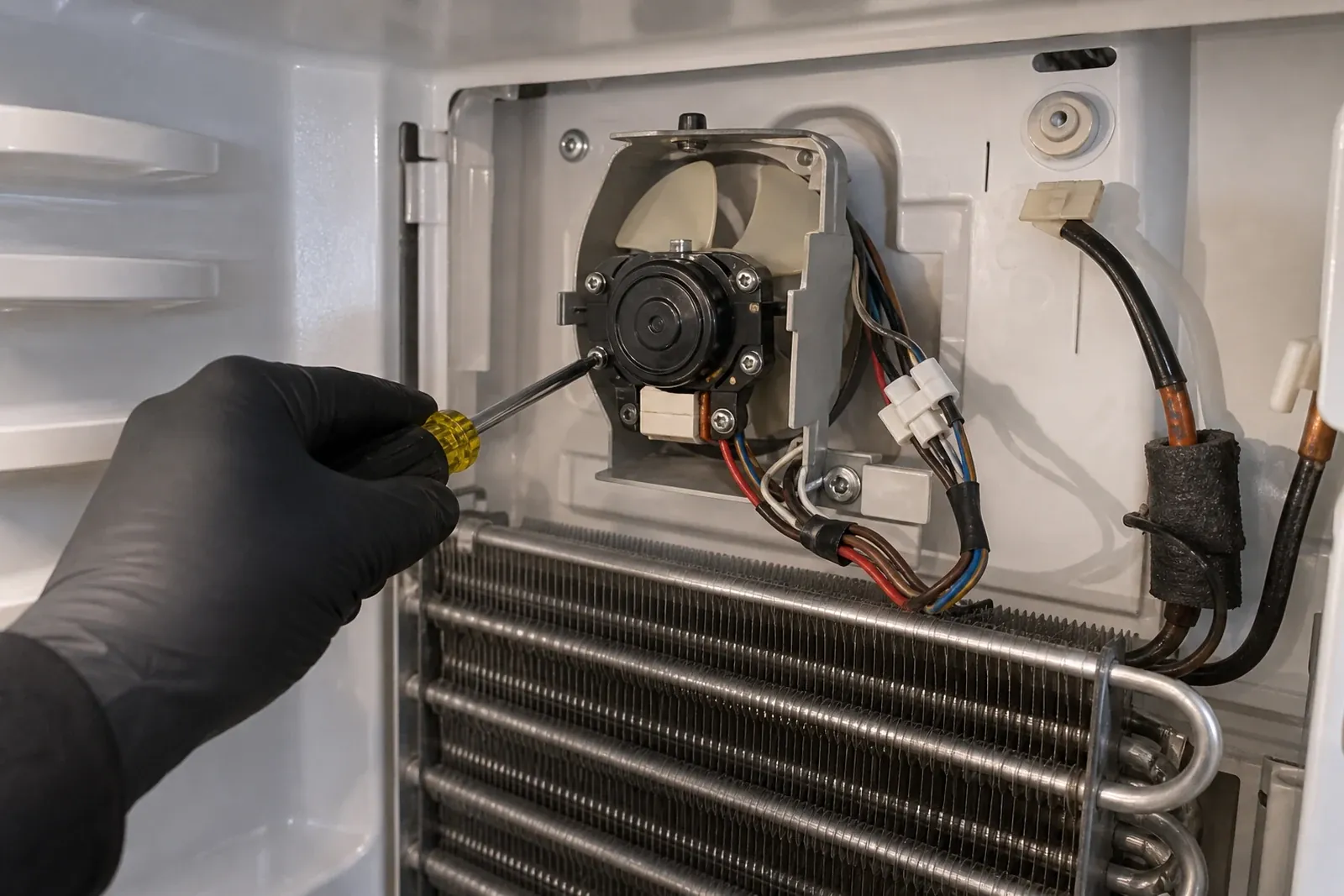
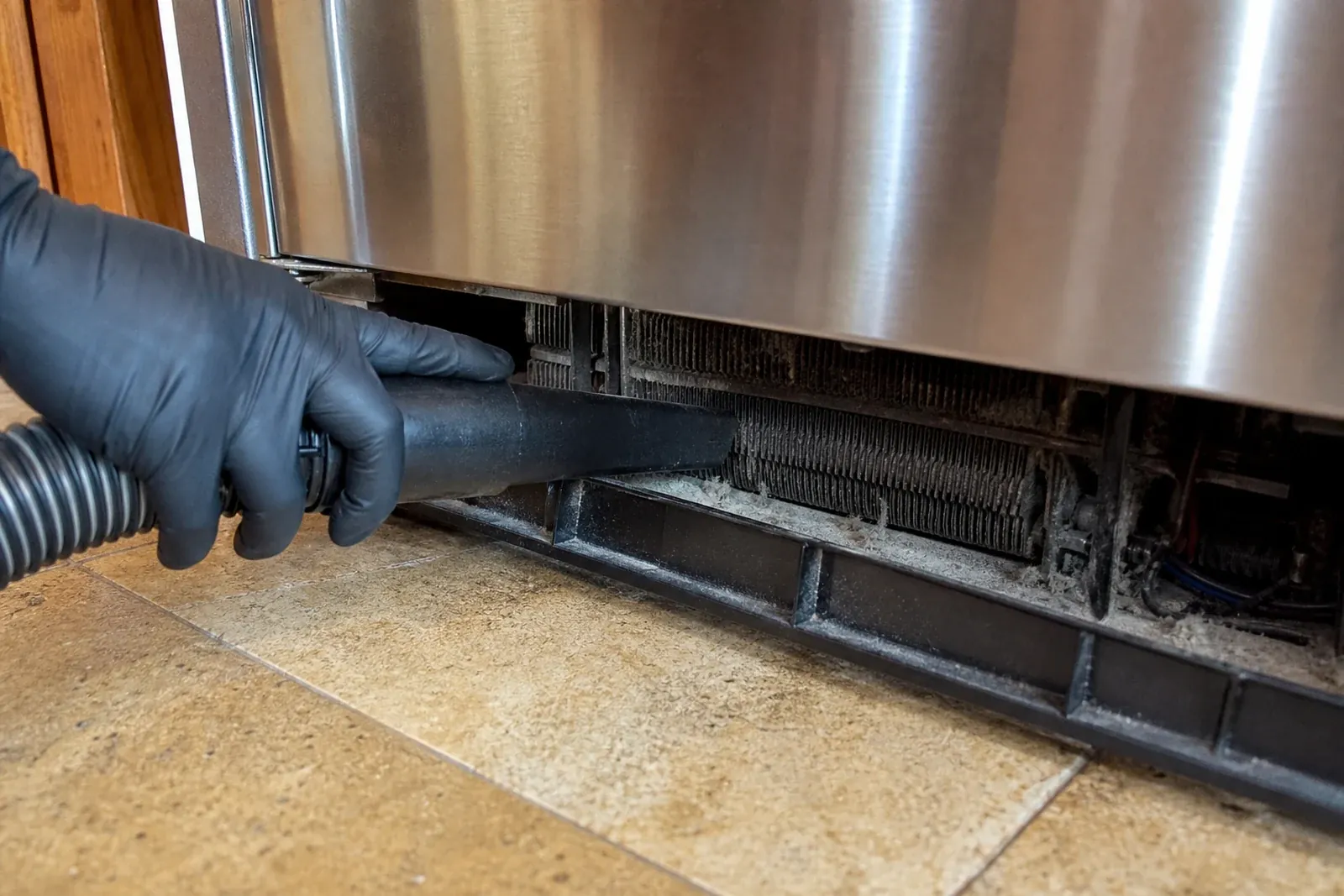
Evidence: Pulling the upper grille revealed a felted gray mat across the condenser — fine hillside dust plus a faint ash residue from a prior fire season. Condenser-coil temperature read far above ambient. We confirmed the evaporator fan and defrost cycle were normal and the door gaskets sealed clean, which ruled out the cheaper suspects.
Diagnosis: Heat-rejection failure from a choked condenser — not a sealed-system fault. The compressor was overworking against its own trapped heat, so the fresh-food side could not hold temperature on the hottest days.
Outcome: Full condenser clean, fan verification, and a temperature re-check after a pull-down cycle. This sits in the lower service band, well under the sealed-system tier. We left the household on a six-month cleaning reminder because elevation guarantees this returns. The lesson worth carrying off this case: a constantly running compressor and a warm fresh-food side is the textbook signature of heat-rejection trouble, and on a Fountaingrove ridge it is almost never the refrigerant. We always rule out the cheap, reversible cause before we even open a conversation about the expensive one — a habit that has saved more than a few hilltop owners a four-figure quote they did not need.
Bennett Valley · 95405 / 95409
Case 2 — A vintage estate and a silent sealed system
Symptom: An older Bennett Valley estate unit lost cooling entirely on both sides over two days. The lights worked, the interior fan spun, but nothing got cold — and the compressor was eerily quiet.
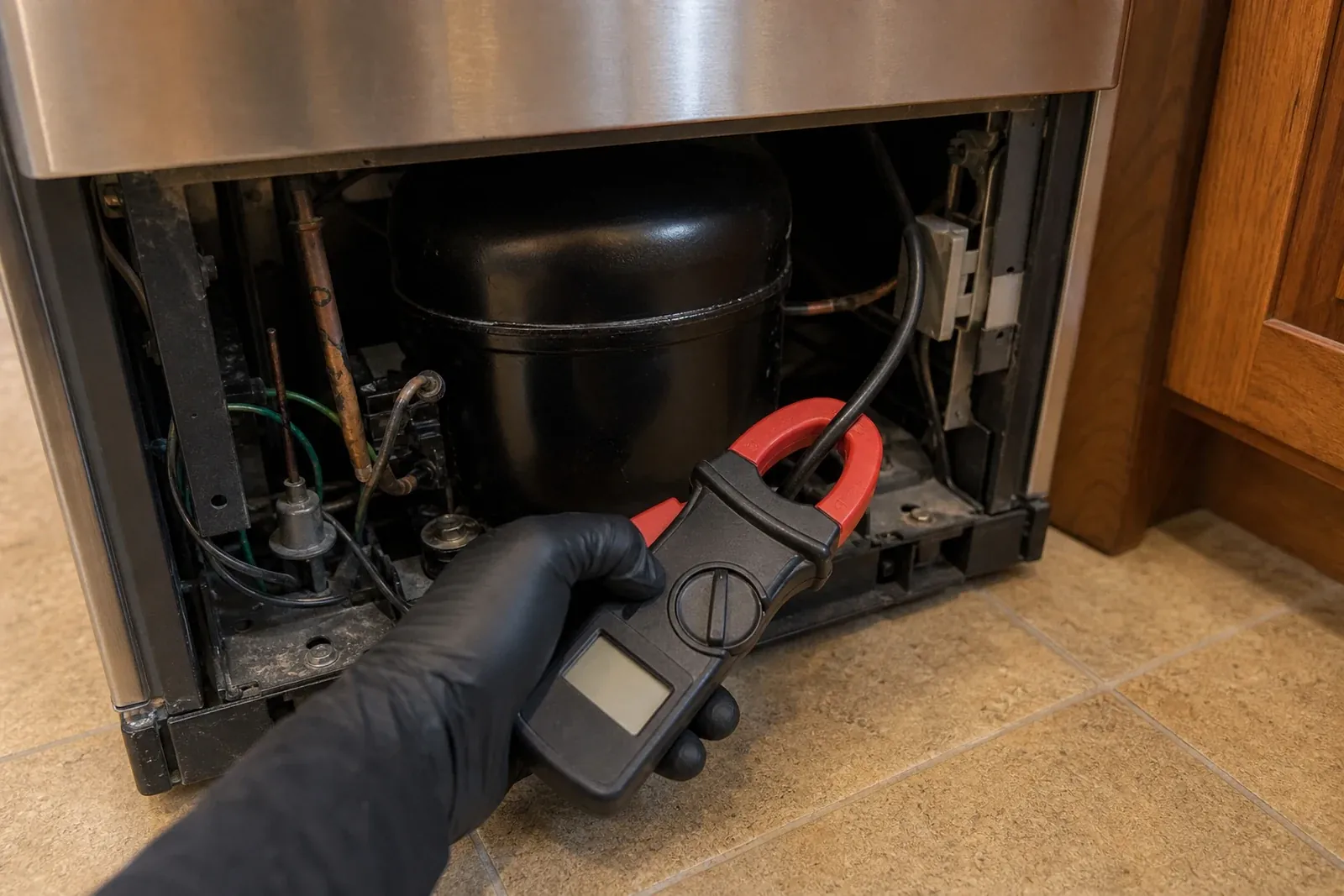
Evidence: The model and serial tag dated the cabinet to an early refrigerant era. We measured no meaningful temperature split across the evaporator and confirmed the compressor was energized but not building pressure. Electrical controls and the start components checked out, which pointed past the easy fixes.
Diagnosis: A failed sealed system — loss of refrigerant charge with no recoverable cooling. On a cabinet this age the refrigerant is a legacy type, so the repair requires recovery, evacuation, recharge, and EPA Section 608 certification done by the book.
Outcome: This is squarely sealed-system work — the upper price tier — and we said so plainly before any part order. The household chose to invest because the cabinet was sound and built-in replacement plus cabinetry rework would have cost far more than the repair. We restored a stable charge and verified pull-down over a full cycle. Two points make this case representative of Bennett Valley's older estates. First, refrigerant era is not trivia: a legacy charge changes how the system must be recovered and what it costs to do legally, which is why the model tag is the first thing we read. Second, we never quote sealed-system work as a guess — we confirm the failure with pressure and temperature evidence before a single part is ordered, because this is the one repair tier where being wrong is genuinely expensive for the homeowner.
Oakmont · 95409
Case 3 — Fleet-aged ice maker in a 55+ community
Symptom: An Oakmont resident's built-in stopped producing ice while the refrigerator and freezer held perfect temperature. Water seemed to reach the unit but the bin stayed empty.
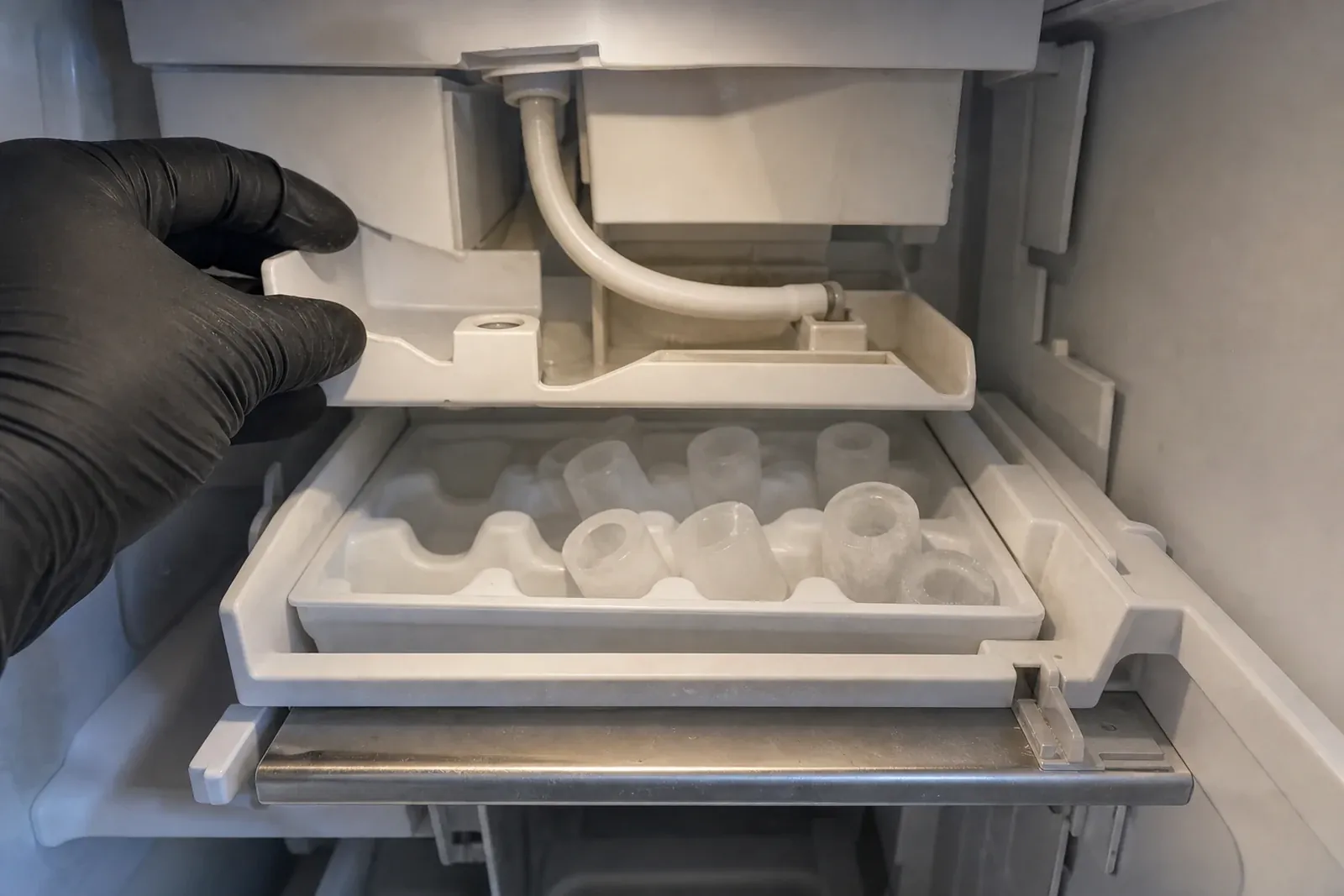
Evidence: We tested the water inlet valve and found it scaling shut — consistent with Santa Rosa's moderately hard water. The fill cycle was weak and inconsistent. Freezer temperature was correct, so the ice mold was cold enough; the bottleneck was water delivery, not freezing.
Diagnosis: A scaled, failing inlet valve restricting fill — a classic hard-water outcome, and one we see in clusters in Oakmont because the community's panel-ready fleet was installed in the same window and ages together.
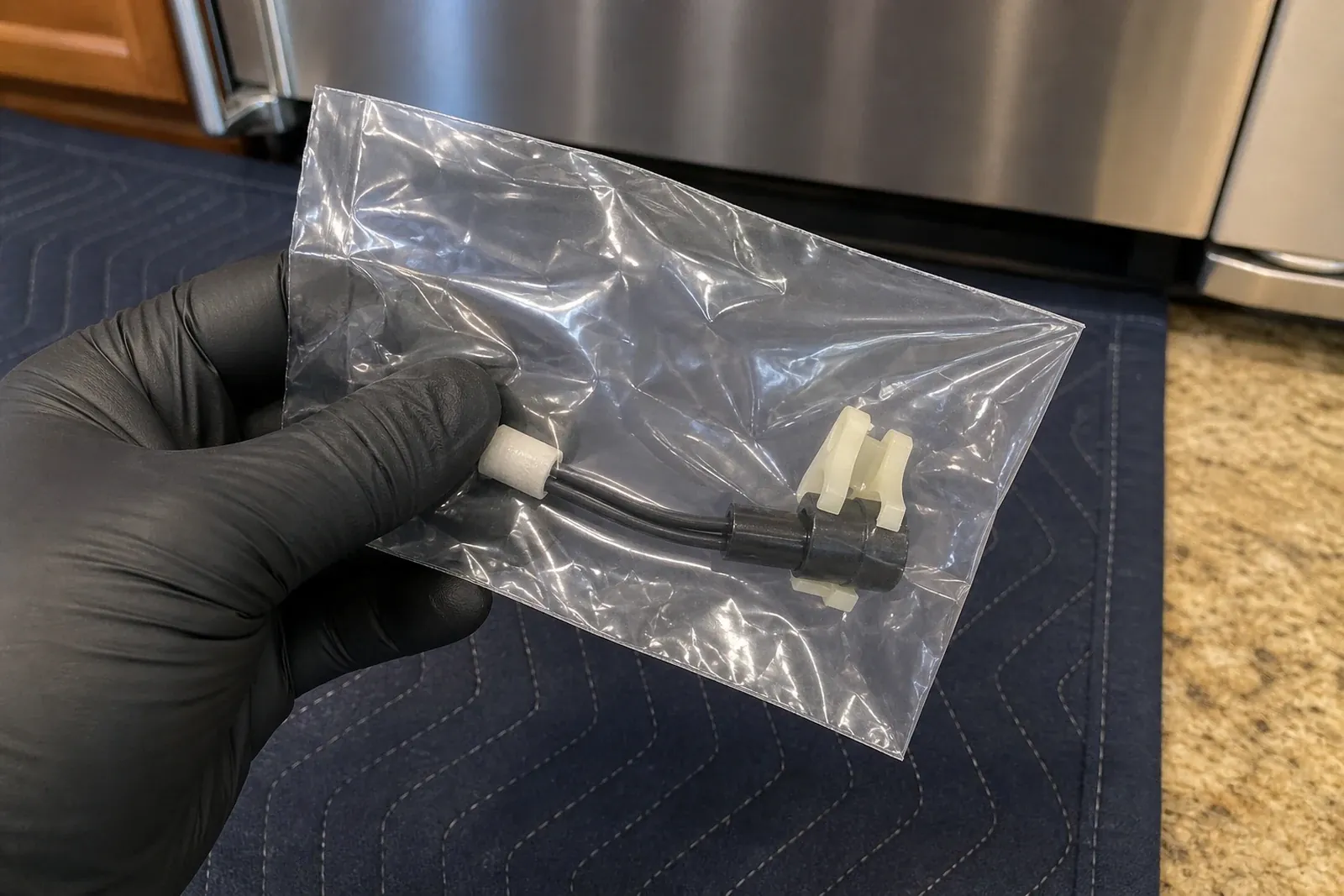
Outcome: Genuine OEM inlet valve, flush, and a fill-rate re-test. This is a mid-band repair, nowhere near the sealed-system tier. We flagged the filter as overdue and noted that Oakmont owners benefit from a 6–9 month filter rhythm given local water. What makes this case useful beyond the one unit is the clustering: because Oakmont's panel-ready BI-36 and BI-48 fleet was largely installed in the same era, age-related faults tend to surface across the community in waves. When one neighbor's ice maker scales shut, others on the same water and the same install vintage are often months behind. We mention it not to upsell but so owners recognize the pattern early — a $20 filter on schedule prevents the valve replacement entirely.
Mark West Springs · 95403
Case 4 — Frost, fog and a tired gasket
Symptom: A Mark West Springs household noticed condensation beading inside the fresh-food compartment, soft frost near the hinge side of the door, and a compressor running longer than it used to.
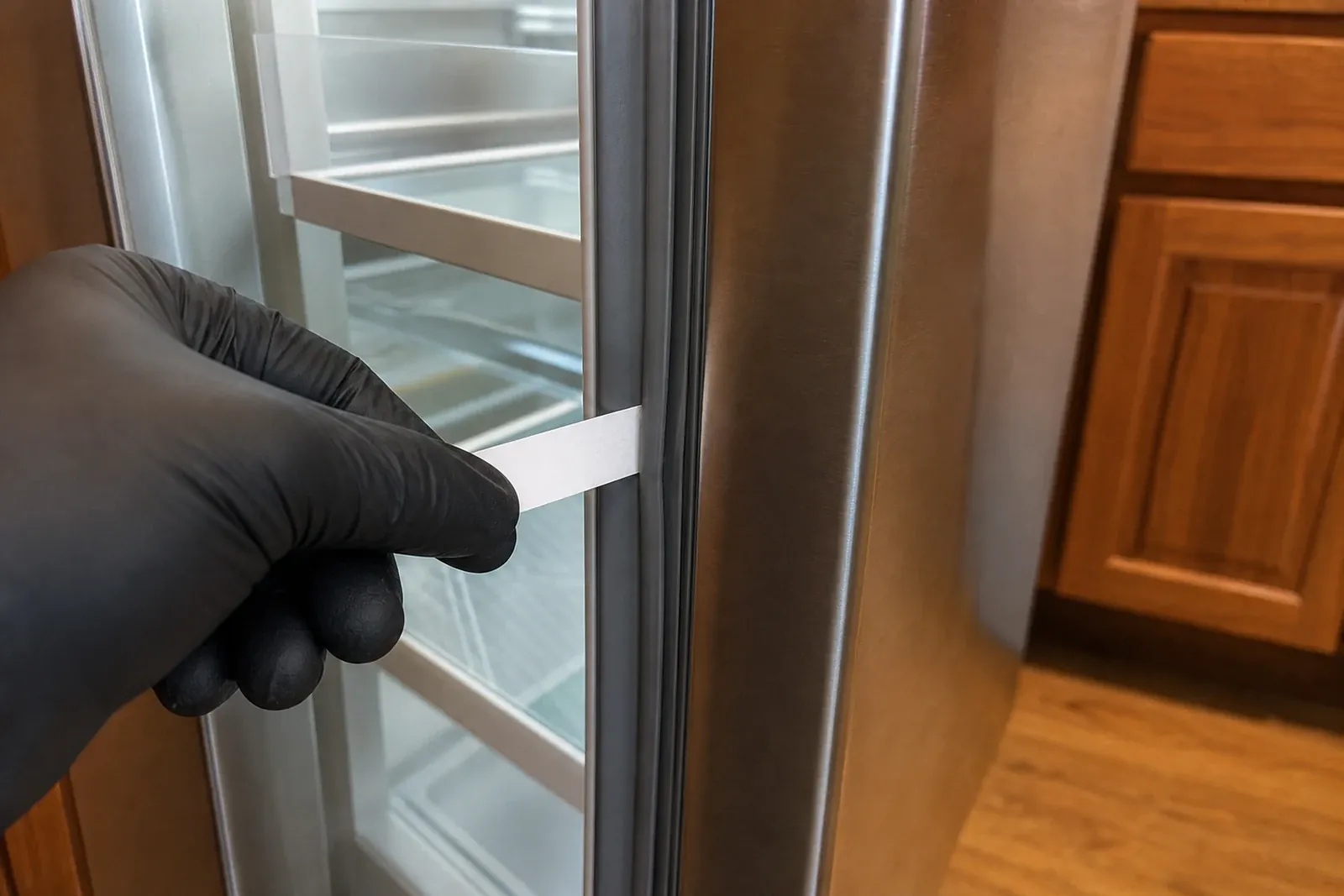
Evidence: A dollar-bill drag test along the gasket showed slack along the lower hinge corner — the door was pulling humid valley air in. We confirmed the defrost system was cycling correctly and the condenser was clean, isolating the air leak as the real driver.
Diagnosis: A perished door gasket. The poor seal let moist air in, forcing extra runtime and producing the frost and sweating. No control or sealed-system fault was present.
Outcome: Genuine OEM gasket fitted and seated, then a re-test of the seal and runtime. This is a low-to-mid band repair. We also wiped and inspected the magnetic channel because Mark West's rural-edge dust collects there and shortens gasket life. This case is a good example of how a small, cheap fault masquerades as a big one. The longer runtime and frost looked, to the owner, like a refrigerator on its way out — the kind of symptom that sends people shopping for a new built-in. In reality it was a perished seal, the least expensive category of repair we do. Catching it early also matters because a leaking gasket forces extra runtime that wears the compressor over time, so the cheap fix today protects the expensive component tomorrow.
Fountaingrove · wine column
Case 5 — A wine column drifting warm
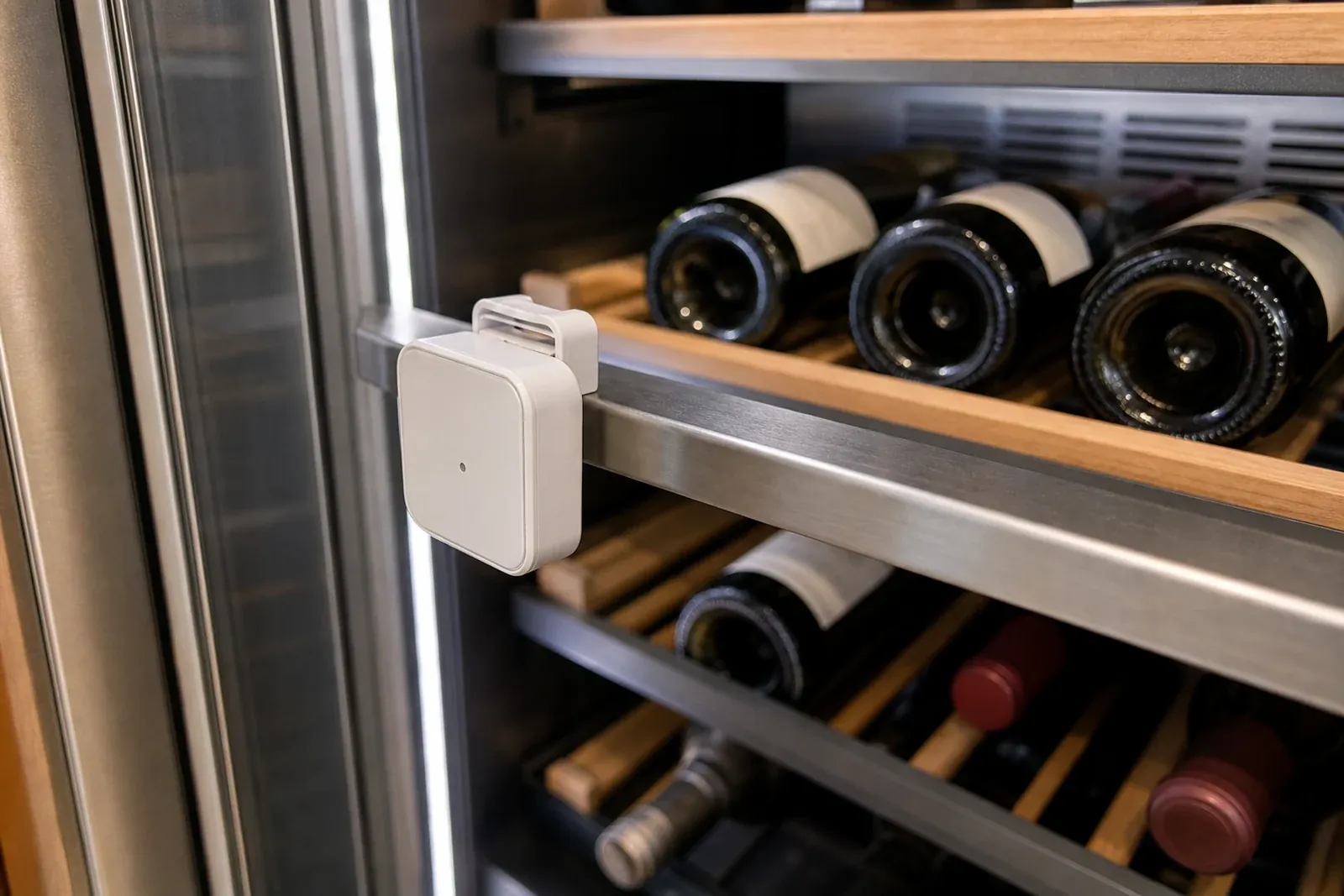
Symptom: A dual-zone Sub-Zero wine column in a Fountaingrove home was holding the lower zone correctly but letting the upper zone creep two to three degrees above its set point — enough to worry a collector.
Evidence: We logged temperatures across both zones over a pull-down, checked the zone damper and fan, and inspected the door seal and lighting load. The compressor and condenser were healthy; the drift tracked to a sluggish zone control responding slowly to set-point changes.
Diagnosis: A failing control component in the upper-zone circuit, not a refrigerant problem. In Wine Country, this matters: a couple of degrees of instability over months is exactly what damages a cellar's value.
Outcome: Genuine OEM control part, recalibration, and a 48-hour stability watch via temperature logging before we called it solved. This landed in the mid service band, well below sealed-system territory. Wine-column stability is a service we take seriously because here it protects real money. A two- or three-degree drift sounds cosmetic, but a collection held even slightly too warm across a Sonoma County summer ages faster than the owner intends, and that loss is invisible until the bottle is opened. The discipline that distinguishes a real wine-column repair from a guess is the follow-up logging: we do not close the job on a single good reading. We watch the corrected zone hold across two full days before we sign off, because a control fault that only misbehaves intermittently is the kind that comes back if you trust one snapshot.
Read across the cases
How these map to symptoms and cost
The table below summarizes the five cases at a glance — symptom, the evidence that settled it, and where the fix fell in our ranges. Use it as a rough orientation, not a quote: your serial number, refrigerant era, and actual measurements decide the real number. A surprising share of "my fridge is dying" calls turn out to be a condenser or a gasket, not a sealed system.
| Neighborhood / unit | Symptom | Diagnosis | Price-range fit |
|---|---|---|---|
| Fountaingrove BI-48 | Warm fresh-food side | Dust/ash-choked condenser | Lower band |
| Bennett Valley estate | Total loss of cooling | Failed sealed system, legacy refrigerant | Sealed-system tier |
| Oakmont built-in | No ice | Scaled water inlet valve | Mid band |
| Mark West Springs | Interior frost & sweating | Perished door gasket | Low-to-mid band |
| Fountaingrove wine column | Upper zone drifting warm | Failing zone control component | Mid band |
Next step
Call with the Sub-Zero model number
Have the model-tag photo, current fresh-food and freezer temperatures, and the symptom timeline ready. That lets the Santa Rosa intake route the visit around the likely Sub-Zero part family instead of a generic appliance script.
FAQ
Questions Santa Rosa homeowners ask before scheduling
Are these Sub-Zero case notes from real Santa Rosa customers?
No. They are anonymized, representative composites built from genuine patterns we see across Fountaingrove, Bennett Valley, Oakmont and Mark West. We deliberately invented no names, addresses, or quotes. What is accurate is the method — symptom, measured evidence, diagnosis, and where the cost lands.
How much does a Sub-Zero diagnostic cost in Santa Rosa?
The diagnostic is $95–$150 and is credited toward your repair if you approve the work. You get a flat-rate quote before we touch a part. Most built-in repairs run $200–$650; sealed-system work runs $900–$1,800. Call (628) 209-6820 to book.
Why does my Fountaingrove Sub-Zero keep running warm in summer?
On Fountaingrove and Skyfarm hillsides, fine dust and fire-season ash blanket the condenser, so the compressor cannot reject heat on hot days — exactly the pattern in Case 1. It is usually a cleaning, not a sealed-system repair. We recommend a six-month condenser clean at that elevation.
Is a total loss of cooling always a sealed-system repair?
Not always, but it is the case where it is most likely. We confirm it by measuring the evaporator split and compressor performance before quoting, because sealed-system work is the upper price tier and requires EPA Section 608 certification. Many "dead" units are actually a choked condenser or control fault — far cheaper.
Why does my Oakmont built-in stop making ice?
In Oakmont the usual culprit is a water inlet valve scaled shut by Santa Rosa's moderately hard water, as in Case 3 — the freezer is cold enough, but water cannot fill the mold. A genuine OEM valve and a fresh filter on a 6–9 month rhythm typically resolve it.
Can you stabilize a Sub-Zero wine column that drifts a few degrees?
Yes — and in Wine Country it is worth doing. As in Case 5, a couple of degrees of upper-zone drift usually traces to a zone control component, not refrigerant. We replace the genuine OEM part and log temperatures for 48 hours to confirm stability before closing the job.
Related