Symptom guide · Santa Rosa
Sub-Zero making noise or buzzing in Santa Rosa: locate the sound first
A Sub-Zero that has grown loud is not necessarily failing, but the noise is worth reading. Most sounds trace to one of four sources, and where the noise lives in the cabinet tells you which one and how serious it is.
4.9/5 · 1,267 verified customer reviews
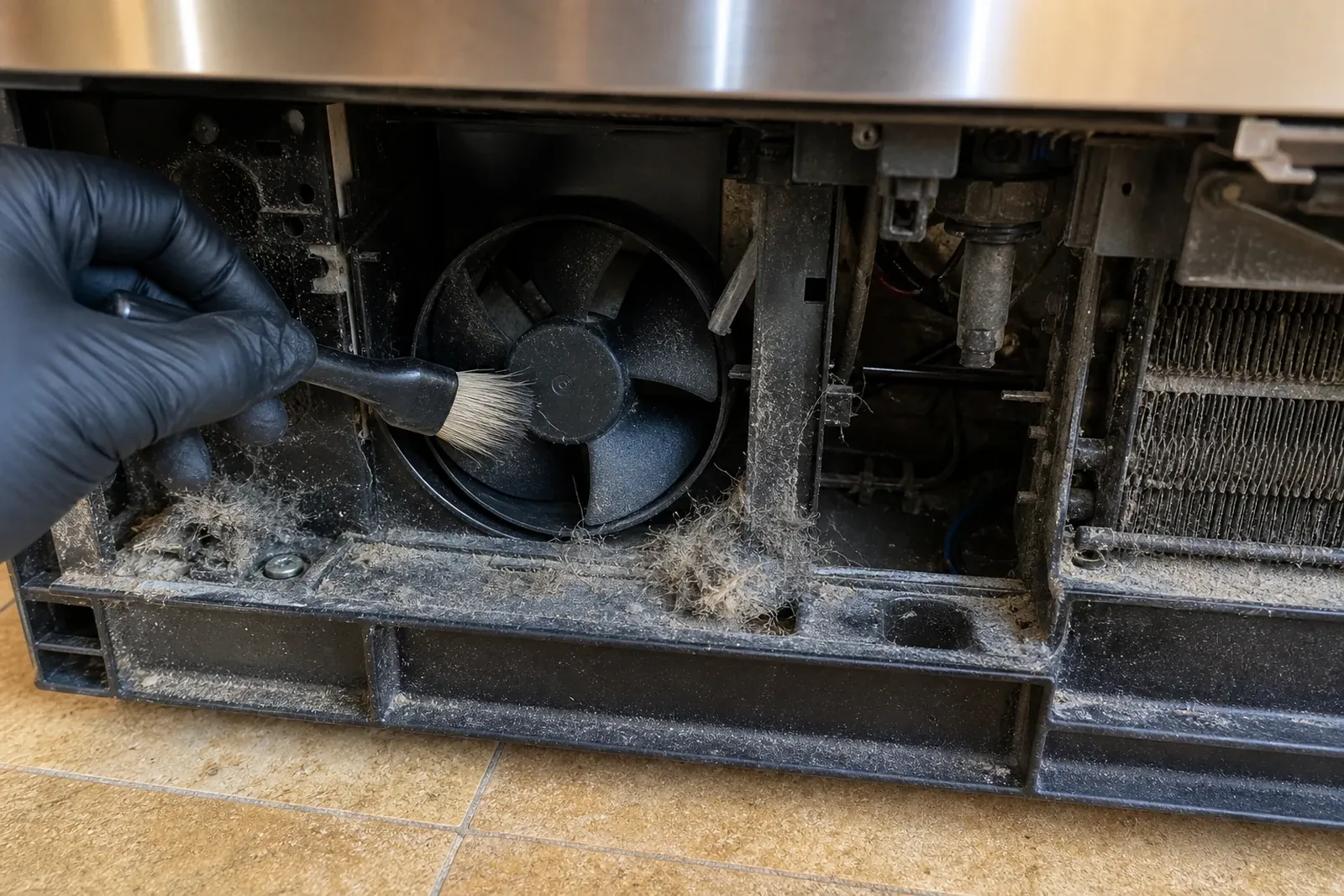
Every refrigerator makes sound; a Sub-Zero is simply quiet enough that any new noise stands out. The cabinet holds three things that move air or refrigerant and one that drops ice, and each makes its own kind of sound when it wears. A condenser fan rattles, an evaporator fan whirs or squeals, a compressor hums and occasionally buzzes, and the ice maker clicks and clatters. Sorting which one you are hearing is the whole job, and you can do most of that listening before you ever pick up the phone.
It helps to know that loudness and seriousness are not the same thing. The cheapest fix on this list, a coil packed with dust, can produce the most annoying rattle, while a genuinely serious compressor fault can be a low drone that is easy to ignore. The point of the checks below is to separate the irritating-but-harmless from the quiet-but-important, so you spend money on the right part.
Match the sound
Four sources and what each one means
Local pattern
Why Santa Rosa kitchens hear it sooner
Where the appliance lives changes how its noise is experienced. Across the wine-country neighborhoods, from the estate kitchens of Bennett Valley to the remodeled ranch homes of Rincon Valley, the modern great-room layout puts the Sub-Zero in the same volume of air as the sofa and the dining table. There is no door to close on the sound, and the hard floors and tall ceilings that make those rooms beautiful also carry every hum across the space. Owners in these homes tend to notice a developing fan or compressor fault weeks before someone with a built-in tucked into a closed kitchen would.
Oakmont, the planned 55-plus community along the eastern edge of the city near Trione-Annadel, presents the same effect for a different reason. The homes are quiet and the residents are often home through the day, so a new buzz or click that a busier household might miss gets caught early there. Both situations are good news for the appliance: a noise reported at the rattle stage is usually a cleaning or a fan motor, while the same fault ignored for months can drag the compressor into the conversation. We would always rather hear about the sound while it is still cheap to chase down.
Before you book
Four owner-safe checks
- Place the sound: top, bottom or behind the door. Stand quietly and decide whether the noise comes from the lower grille area, from inside a compartment, or from the upper hinge region. The bottom houses the compressor and condenser fan; inside the box is the evaporator fan and ice maker. Pinning the location halves the list of suspects before anyone arrives.
- Pull the lower grille and watch the condenser fan. Slide off the toe-kick grille and look at the fan behind the coil. A blade ticking against built-up dust, or a wobble from a dry bearing, produces a rattle or a low growl. Santa Rosa hillside grit and wildfire ash are common reasons that fan starts to buzz; brushing the coil and clearing the blade sometimes ends the noise outright.
- Open each door and listen for a fan change. The evaporator fan usually pauses when you open a door. If a whirring or grinding stops the moment the door swings open and returns when it closes, the noise is the interior fan, not the compressor below. A chirp or squeal that follows that pattern points to a worn evaporator fan motor.
- Note the rhythm of a buzz or click. Time the sound. A brief click or hum every few minutes as the unit cycles is normal. A loud buzz that holds steady, or a click that repeats every few seconds without the compressor ever settling into a run, can signal a struggling compressor or its start device, which is sealed-system work and not an owner fix.
When a buzz is serious
The sound that means stop and call
One pattern deserves prompt attention: a deep, sustained buzz combined with a compressor that clicks on and tries to start but never settles into a steady run, especially if the cabinet is also warming. That points at the compressor or its start device, which is sealed-system work governed by refrigerant-handling rules and never an owner repair. If you are hearing that, move perishable food and book a diagnosis.
Where the read leads
A buzz that comes with warming heads to the sealed system and compressor page. If the noise comes alongside a warm fresh-food side, begin at the not-cooling diagnostic. A rattle that clears with a coil cleaning is the happiest outcome and needs no parts at all.
FAQ
Noise and buzzing questions from Santa Rosa owners
What Sub-Zero noises are normal and which are not?
A soft hum from the compressor, a gentle whoosh of the fans, occasional ticks and pops as parts expand and contract, and the clatter of cubes dropping into the bin are all normal. What is not normal is a loud sustained buzz, a metallic rattle, a grinding or squealing whir, a rhythmic knock, or a gurgle that grows louder over time. The change from quiet to noticeable is the real signal; a Sub-Zero that has suddenly become the loudest thing in the kitchen is telling you a part has started to wear.
Why does my Sub-Zero sound so loud in my open kitchen?
Many Santa Rosa wine-country homes are built around a great room, where the kitchen flows straight into the living and dining space with hard surfaces and high ceilings. A built-in that would be muffled in a closed galley kitchen instead projects into the whole room, so even a normal hum can feel intrusive and a developing fault gets noticed early. That is actually useful: in these open layouts owners catch a failing fan or a buzzing compressor well before it becomes a breakdown.
My Sub-Zero is buzzing. Is that the compressor?
Not always. A buzz most often comes from the condenser fan vibrating against debris or a dry bearing, which is inexpensive to fix. It can also be the inlet valve buzzing as the ice maker calls for water. A true compressor buzz is different: it is a deep, sustained electrical drone, sometimes with the compressor clicking on and off without settling, and it usually comes with warming. If yours is the latter, the sealed-system and compressor page explains how that is diagnosed.
Is a clicking Sub-Zero something to worry about?
A single soft click as the unit starts or stops a cycle is normal relay operation. Repeated clicking every few seconds, with no steady compressor run between clicks, is the warning sign; it often means the compressor is trying to start and failing, or a start relay is faulty. If the box is also warming, treat it as a real fault and book a diagnosis rather than waiting for it to stop on its own.
Will a quieter Sub-Zero ever just need a cleaning?
Often, yes. The most common noise fix in Santa Rosa is also the cheapest: a condenser packed with hillside dust or wildfire ash makes the fan work harder and rattle, and the compressor run longer and louder. Pulling the grille, brushing and vacuuming the coil, and clearing anything touching the fan blade resolves a surprising share of noise complaints with no parts at all. If the sound persists after a clean coil, the fan motor or compressor is the next read.
How much does a Sub-Zero noise repair cost in Santa Rosa?
It depends entirely on the source. A condenser cleaning or a fan-blade clearance is at the low end, often within the $95 to $260 range, while replacing an evaporator or condenser fan motor typically runs $260 to $560. A compressor or start-device repair is sealed-system work at $900 to $1,800. The $89 diagnostic is credited toward the repair once you approve the flat-rate quote.
Related
Next step
Quiet the kitchen in Santa Rosa
Tell us where the sound lives and whether it follows the door or the cycle, and we will bring the fan or diagnostic gear the symptom calls for.