Santa Rosa · wildfire season
Wildfire ash and your Sub-Zero condenser: a Sonoma County survival guide
When a smoke event settles over Santa Rosa, the finest particles do not stop at your windows — they ride indoor air straight onto the Sub-Zero condenser. After Tubbs, Kincade and Glass, the pattern is consistent: a fridge that held all summer drifts warm within days of an ash fall.
Direct answer
Wildfire ash is far finer than dust, so it packs a Sub-Zero condenser in days and chokes the airflow the compressor needs. During a Sonoma County smoke event, inspect and clean the coil every 1–2 weeks, watch for warm fresh-food and longer run times, and keep the grille clear. If drift persists after cleaning, call (628) 209-6820.
Why ash is different
Wildfire ash is not ordinary hillside dust
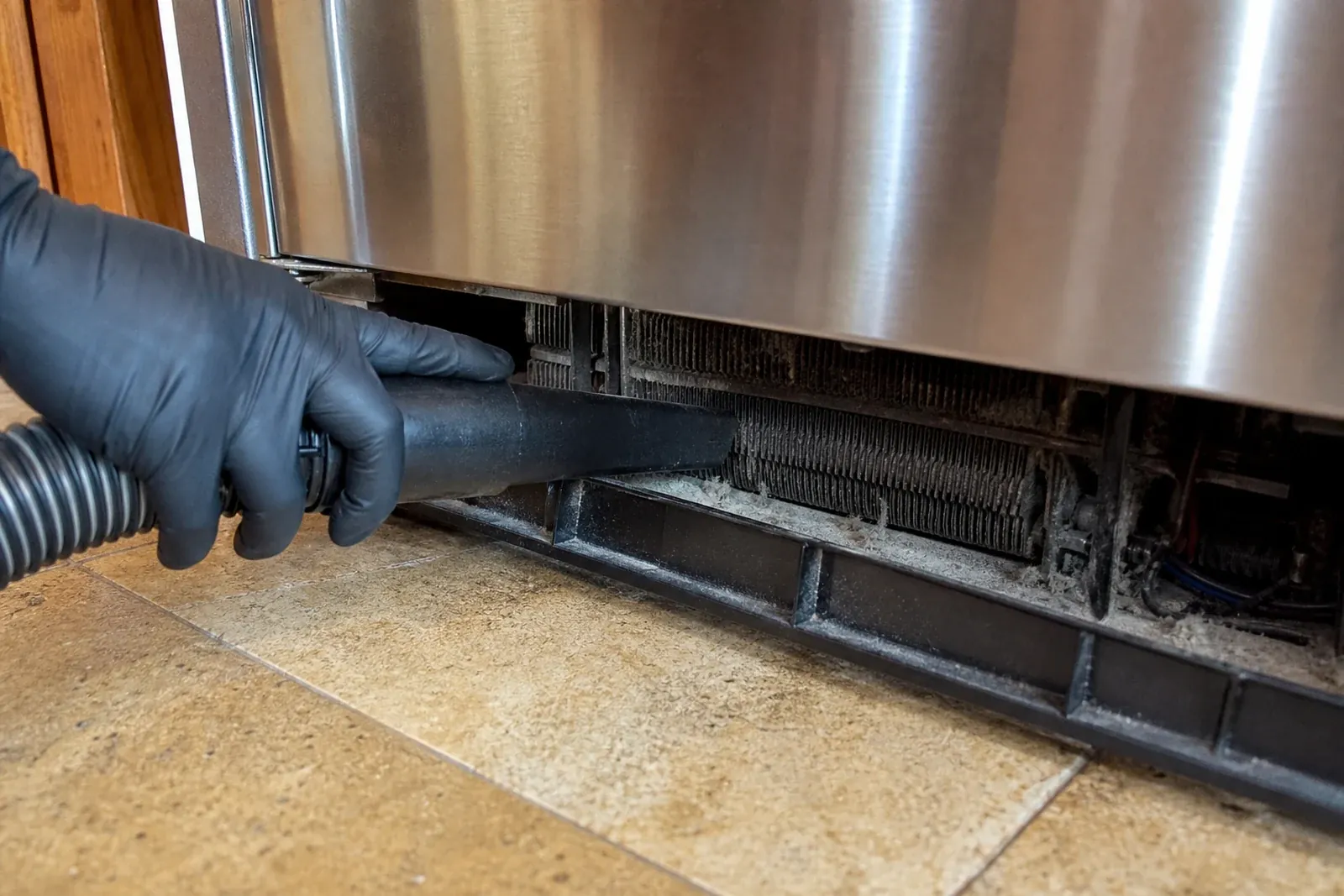
Sonoma County Sub-Zeros already fight dry-season dust, especially up in Fountaingrove, Skyfarm and the Mark West foothills. Wildfire ash is a different problem. The particles that travel miles on smoke are extremely fine — much of it in the PM2.5 range, finer than a human hair is wide — and they behave more like a powder than a grit. Where ordinary dust forms a loose fuzz you can see building over months, ash settles into a dense, slightly waxy mat that bridges the gaps between condenser fins and seals off airflow quickly.
It is also chemically different from dust. Wildfire ash carries fine soot and partially combusted organics, so it clings rather than brushes away, and it draws in kitchen humidity and cooking grease to form a sticky film on the coil. That film is what makes the difference between a five-minute vacuum and a coil that needs a real cleaning. A Sub-Zero condenser is a tight aluminum fin pack designed for unobstructed air; even a thin, even layer of this material across the fin faces measurably cuts the heat it can reject.
That fineness is why the timeline collapses. A condenser that you might clean every three to six months in a normal Santa Rosa year can lose meaningful airflow within days to a couple of weeks of a serious ash fall. The Sub-Zero compressor and condenser fan are engineered to pull room air through that coil to shed heat; when the coil is blanketed, heat stays in the box and the system simply runs longer and longer to compensate. The fridge is not broken — it is suffocating, and the longer it suffocates, the more the sealed system pays for it.
Smoke-event symptoms
What a Sub-Zero does in the days after an ash fall
The symptoms after a smoke event are quiet at first, which is why so many owners miss the connection. The fridge does not fail dramatically; it slowly loses its margin. People remember closing every window, running an air purifier and taping a door — and then weeks later wonder why the milk feels less cold, never linking it back to the smoke. Below is the order we typically see complaints arrive once smoke has been hanging over the county for a few days.
| What you notice | What is actually happening | Typical timing |
|---|---|---|
| Compressor runs noticeably longer / rarely cycles off | Coil blanketed; heat not shedding | First and earliest sign |
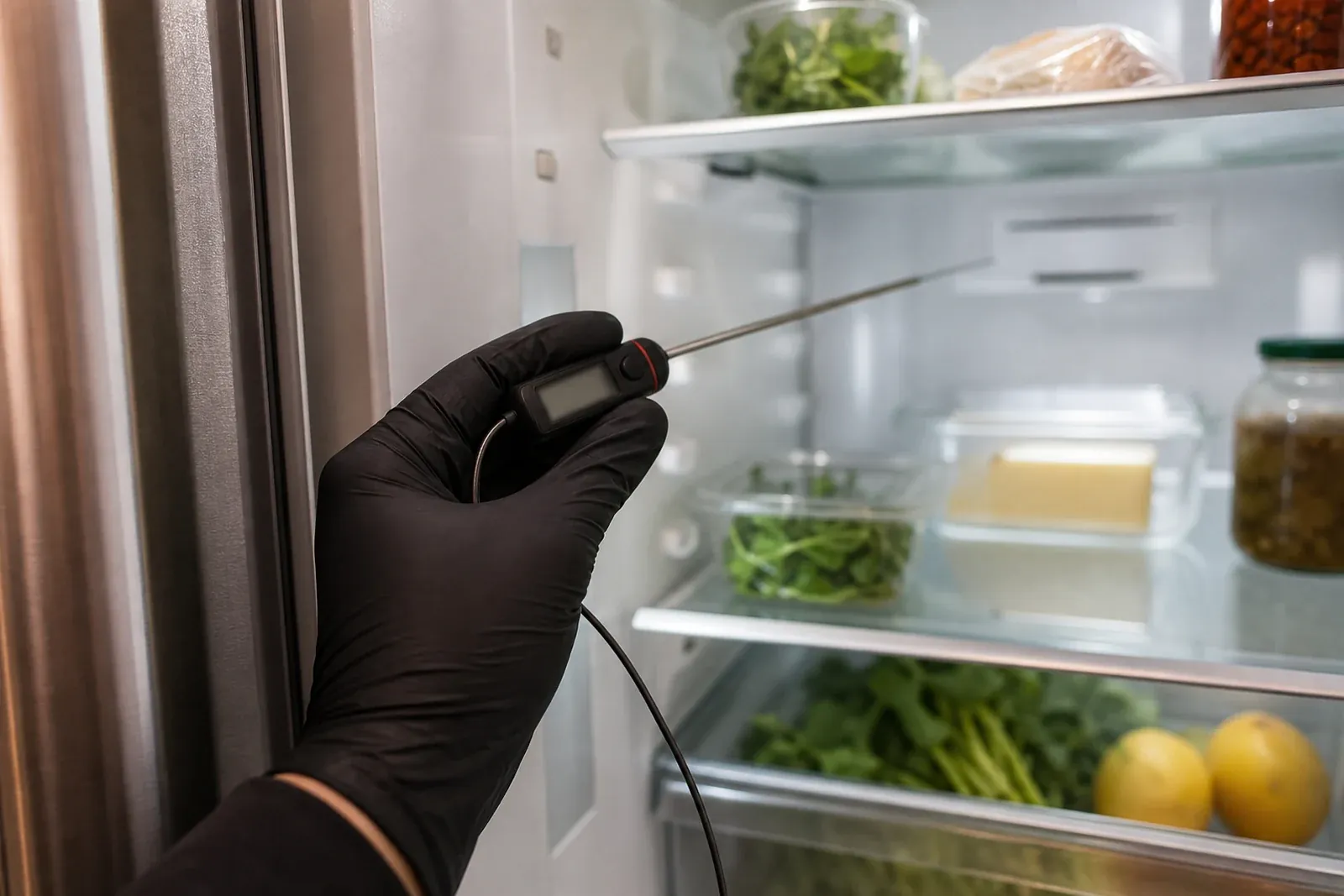
| Fresh-food side drifts a few degrees warm, freezer still holds | Reduced condenser airflow stressing the warm side | Days into a smoke event |
| Condenser fan louder or laboring | Fan pushing against a packed coil | Days into a smoke event |
| Ice slows; cabinet feels warmer to the hand | Sustained airflow loss across both systems | If left uncleaned |
| Both sides warm, near-constant running | Severe restriction; sealed-system mimicry | Weeks of neglect |
Fire-season cadence
How often to clean the condenser during and after fire season
Your normal maintenance calendar does not apply during an active smoke episode. The single most useful habit is to check the condenser more often and clean on sight of buildup rather than on a fixed date. Think of it as event-driven, not seasonal. A reasonable Sonoma County rhythm looks like this:
- Before fire season (late spring): a thorough condenser clean so you start the dangerous months with a clear coil.
- During a smoke event / poor-AQI stretch: inspect every 1–2 weeks; clean whenever you see a film forming on the fins.
- Right after the air clears: one deliberate clean to remove the fine ash that settled while doors and windows were sealed.
- Through the rest of fire season: inspect every 2–4 weeks until the first soaking rains.
Owner cleaning is limited and specific: with the unit powered down, gently brush the visible condenser and vacuum the loosened ash with a soft brush attachment on low suction. Do not bend the fins, do not blow ash deeper into the cabinet with compressed air, and never open the sealed system. If a clean does not restore normal cycling within a day, the restriction has likely moved past what a brush can reach.
Protect the system
Keeping ash out of the sealed system's way
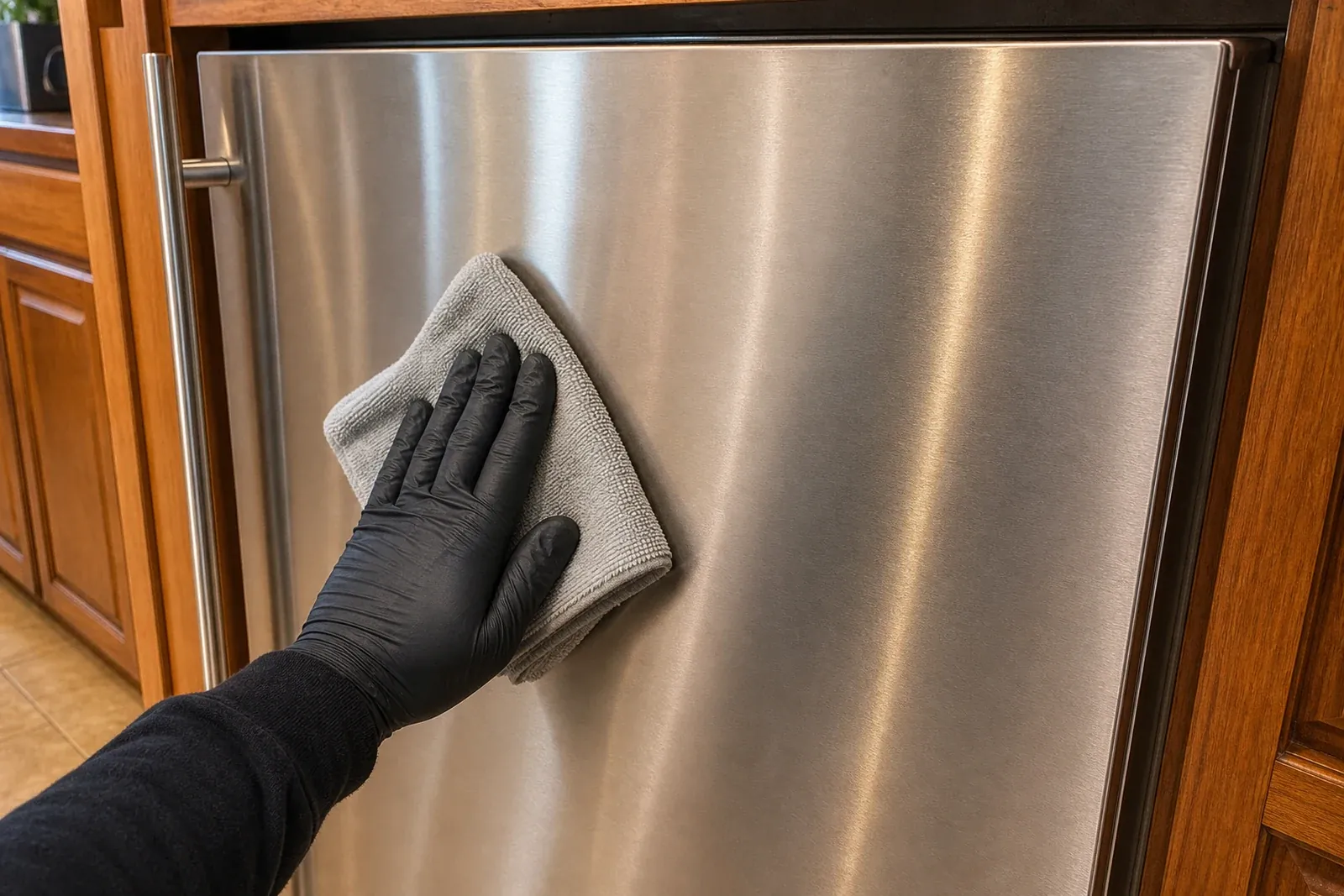
The goal during fire season is to protect the part of the Sub-Zero you cannot service yourself — the sealed refrigerant system — by never letting it run hot. A compressor that labors for weeks against a smothered coil ages faster, and a slow refrigerant leak that would have stayed hidden can surface under that added thermal load. Keeping airflow clear is the cheapest sealed-system insurance there is.
- Keep the grille and toe-kick area unobstructed. Boxes, evacuation bins and stacked supplies in front of a built-in choke the very air path you are trying to protect.
- Run indoor air filtration. A portable HEPA unit near the kitchen reduces how much ash reaches the coil in the first place — the same filtration that protects your lungs protects the fridge.
- Resist lowering the setpoint. Cranking a drifting Sub-Zero colder does not fix airflow; it just makes the loaded compressor work harder and can frost the evaporator.
- Do not add refrigerant or chase an alarm. If symptoms persist after a clean, those steps hide the evidence a technician needs and can turn a clean-and-verify visit into sealed-system territory.
Sub-Zero built for cabinet-safe access matters here: when we open a Fountaingrove or Oakmont unit after a fire season, we protect the surrounding millwork while we clear deep ash and verify temperatures, amp draw and airflow before naming any part.
Wine collectors deserve a special note. A Sub-Zero wine column holds a far tighter temperature band than a refrigerator, so the same ash-loaded condenser that nudges a fridge a few degrees can push a wine column out of its safe range much sooner — and a collection does not get a second chance at a heat excursion. If you store wine through a Sonoma County fire season, treat the column's condenser as a higher priority than the kitchen fridge: inspect it more often, keep its grille clear, and log its temperature if smoke lingers for more than a few days.
After the smoke
When a clean is not enough: the post-fire diagnostic
Most post-smoke calls end at a thorough cleaning. A minority do not, and those are worth understanding so you do not over-spend or under-react. If you have cleaned the visible coil, kept the doors shut, stopped fiddling with the setpoint, and the fresh-food side still will not return to a steady temperature after a full day, the restriction or the fault has moved past the brush. At that point a measured diagnosis earns its keep.
On site we confirm the model and serial, log the fresh-food and freezer temperatures over time rather than trusting one display snapshot, and read condenser-fan operation and compressor amp draw. Deep ash often hides behind the visible coil face and around the fan shroud where an owner cannot safely reach; clearing it there frequently restores the unit on its own. The decision tree below is roughly how a Santa Rosa post-fire call sorts out.
| After cleaning, the unit shows… | Likely situation | Planning range |
|---|---|---|
| Visible coil dirty, cycling improves after clean | Surface ash load — owner-clearable | $0 (DIY) to $95 |
| Deep ash behind coil face or fan shroud | Restriction past brush reach; full coil clean | $95–$280 |
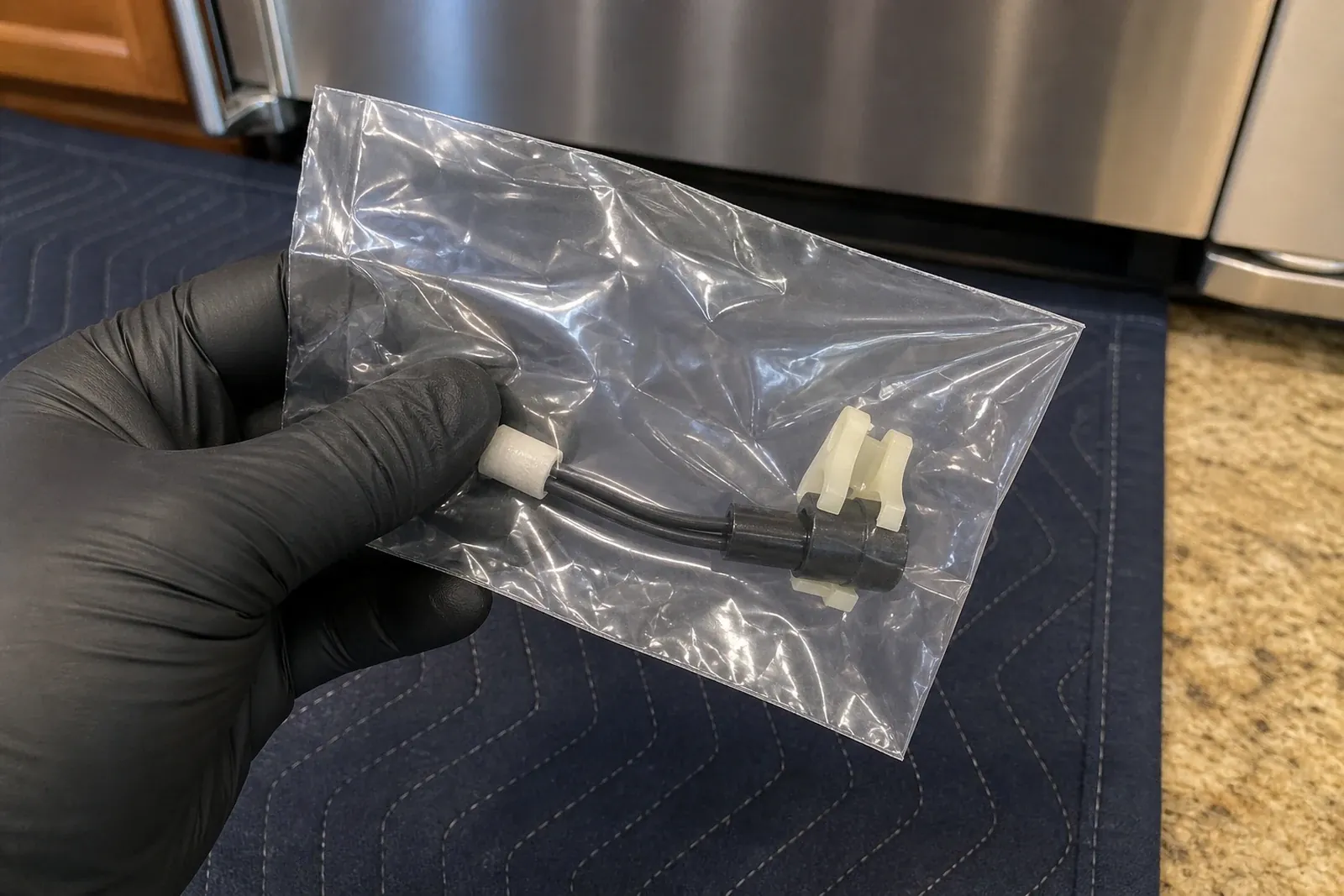
| Clean coil but fresh-food still drifts | Evaporator fan, thermistor or defrost stressed | $280–$600 |
| Both sides warm, constant run after clean | Sealed system unmasked by weeks of heat load | $900–$1,800 |
Local reality
What we see across Sonoma County after a fire year
The neighborhoods that took the heaviest ash in 2017, 2019 and 2020 — Fountaingrove, Mark West Springs, Riebli Valley and the hillside edges of Rincon Valley — are also where condensers load fastest in any dry stretch, so they pay double during a fire year. Oakmont's uniform panel-ready BI-36 and BI-48 units share the same grille geometry, which means an ash fall tends to hit the whole community's fridges the same way at once. Downtown and Bennett Valley homes are not exempt; fine ash travels on the wind regardless of how far you sit from the burn scar.
The encouraging part: nearly all of these post-smoke calls are airflow, not failure. A drifting fridge after a smoke event is usually a $95–$280 clean-and-verify, not a $900–$1,800 sealed-system repair — provided the coil is cleared before the compressor spends weeks cooking itself. The diagnostic is $95–$150 and credited toward any repair, with a flat quote approved before work begins.
Next step
Call with the Sub-Zero model number
Have the model-tag photo, current fresh-food and freezer temperatures, and the symptom timeline ready. That lets the Santa Rosa intake route the visit around the likely Sub-Zero part family instead of a generic appliance script.
FAQ
Questions Santa Rosa homeowners ask before scheduling
How often should I clean my Sub-Zero condenser during wildfire season in Santa Rosa?
Far more often than the usual three-to-six months. During an active smoke event, inspect every one to two weeks and clean whenever a film appears on the fins, then do one deliberate clean once the air clears. Through the rest of fire season, check every two to four weeks until the first rains.
Why does wildfire smoke make my Sub-Zero run warm when the windows are closed?
Fine ash is much smaller than household dust and still drifts indoors and recirculates onto the condenser even with windows shut. It mats the coil fins quickly and chokes the airflow the compressor needs to shed heat, so the fresh-food side drifts warm while the unit runs longer. It is airflow, not a sealed-system failure.
Can wildfire ash actually damage my Sub-Zero's sealed system?
Ash does not enter the sealed system directly, but a coil smothered for weeks forces the compressor to run hot and long, which accelerates wear and can unmask a slow refrigerant leak. Keeping the condenser clear during fire season is the simplest way to protect the part of the fridge you cannot service yourself.
My Fountaingrove Sub-Zero drifted warm right after a smoke event — is it the compressor?
Usually not. In Fountaingrove, Mark West and the hillside neighborhoods, a warm fresh-food side after smoke is almost always a packed condenser, not a dead compressor. Power down, clean the visible coil, and re-measure both temperatures; most of these turn out to be a $95 to $280 clean-and-verify.
Should I clean the condenser myself or call someone after a Sonoma County fire?
Brushing and vacuuming the visible condenser with the unit powered down is owner-safe and worth doing. Stop there: do not use compressed air, do not bend the fins, and do not open the sealed system. If normal cycling does not return within a day of cleaning, the ash has likely reached areas a brush cannot, and it is time to book a diagnostic at (628) 209-6820.
Do you service the Oakmont and Rincon Valley areas after fire season?
Yes. Santa Rosa is our core route, including Oakmont's panel-ready BI-36 and BI-48 columns and the Rincon Valley hillsides that take heavy ash. We also dispatch to Windsor, Sebastopol, Healdsburg, Rohnert Park and Sonoma, typically within one to two business days.
Related