5.0/5 · 812 verified customer reviews
Santa Rosa · ice & water
Sub-Zero ice maker and water-line repair in Santa Rosa
Slow ice and hollow cubes are usually a water problem before they are a module problem — and Santa Rosa's moderately hard water plays a real role.
Direct answer
A Sub-Zero making no ice in Santa Rosa is usually a supply problem before a module: confirm the ice maker is on, the shut-off arm is down, the bin seated, and the freezer holds at or below 5 degrees Fahrenheit (target 0). Moderately hard local water also scales the inlet valve. Call (628) 209-6820.
Root causes
Water first, module second
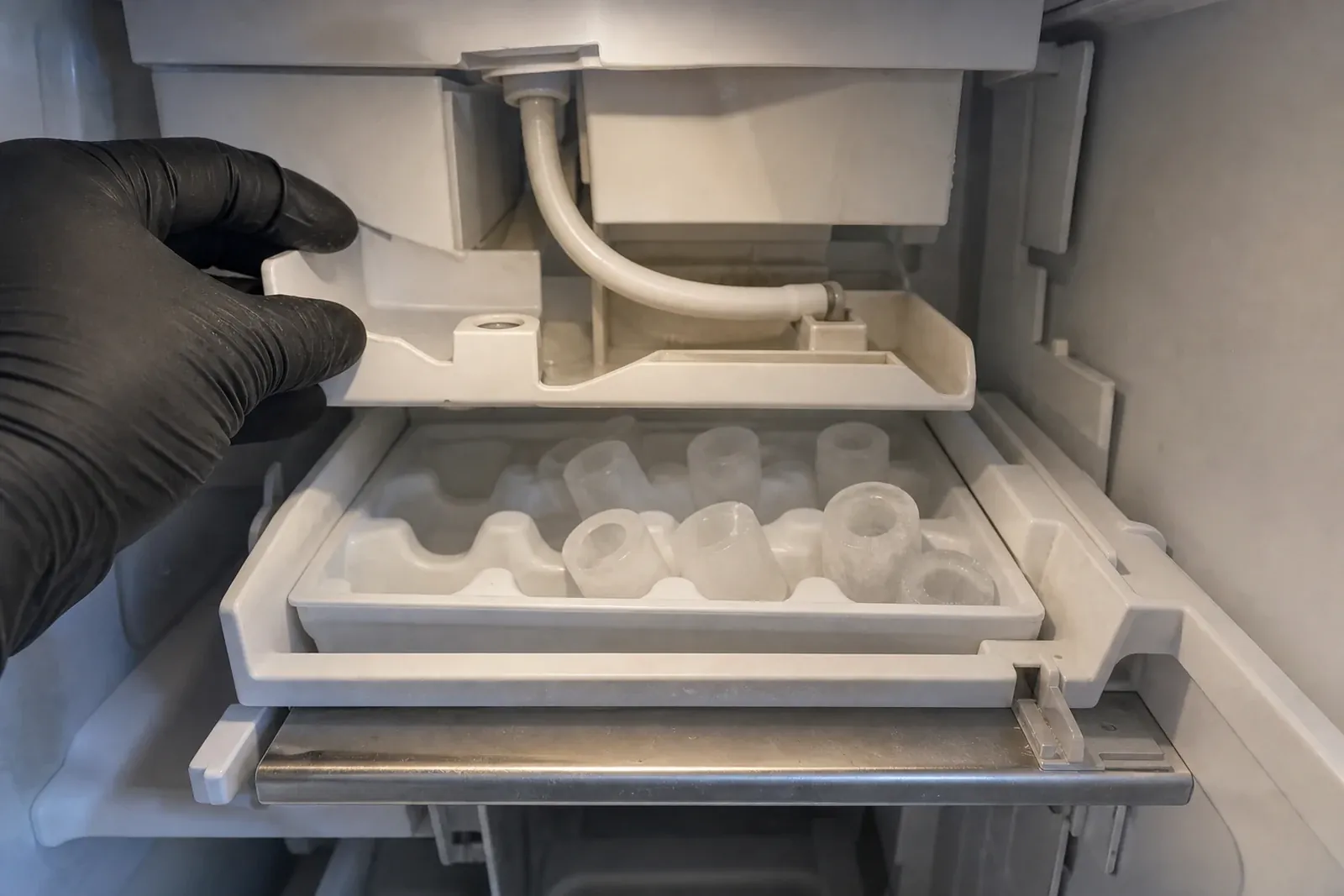
A hollow or undersized cube almost always means the ice mold is not filling fully — a fill-tube freeze-up, a tired inlet valve, a clogged filter or low household pressure. A complete no-ice condition adds the freezer temperature and the module/optics to the list. Replacing the module first, before checking water and temperature, is the most common way to pay twice.
| Symptom | Likely Sub-Zero cause | Planning range |
|---|---|---|
| Hollow / small cubes | Fill tube, inlet valve, filter, pressure | $320–$520 |
| No ice at all | Valve, module, freezer temp too high | $380–$680 |
| Off-taste or slow flow | Old filter / scale (Santa Rosa hard water) | $95–$260 |
Local water note
Why Santa Rosa water matters
Much of Santa Rosa runs moderately hard water, which leaves scale on inlet valves and shortens filter life. If you have not changed the filter in over nine months, that alone can explain slow flow and off-taste. We confirm pressure and filter condition before condemning a valve or module. If that scaled fill line or inlet valve has also started to weep onto the floor, see Sub-Zero leaking water in Santa Rosa for the leak side of the same problem.
The freeze-up trap
Why a warm freezer makes bad ice
Ice production depends on the freezer holding temperature, so an ice complaint is sometimes really a cooling complaint. If the freezer has drifted a few degrees — from a dusty condenser, a tired evaporator fan or a door seal — the mold cannot freeze a full, clear cube, and you get slow, hollow or cloudy ice. That is why our ice diagnosis always reads the freezer temperature first; fixing the airflow can restore the ice without touching the ice maker at all. It also explains why ice problems spike in Santa Rosa during summer heat, when the whole unit is working harder.
Don't thaw it wrong
What to avoid before the visit
If the fill tube is frozen, resist the urge to chip at it or pour hot water into the freezer — both risk cracking the tube or the liner. Turn the ice maker off, let us confirm whether the freeze-up is the symptom or the cause, and avoid running the dispenser repeatedly hoping it clears. A quick photo of the ice the unit is currently making (hollow, small, cloudy, or none) is a genuinely useful clue to send when you book.
Next step
Call with the Sub-Zero model number
Have the model-tag photo, current fresh-food and freezer temperatures, and the symptom timeline ready. That lets the Santa Rosa intake route the visit around the likely Sub-Zero part family instead of a generic appliance script.
FAQ
Questions Santa Rosa homeowners ask before scheduling
Sub-Zero ice maker not working at all — where do I start?
Start with the basics: confirm the ice maker is switched on, the wire shut-off arm is down, and the bin is fully seated. Then verify the freezer holds at or below 5 degrees Fahrenheit, target 0. A raised arm or unseated bin stops production on most Sub-Zero models entirely.
Why is my Sub-Zero ice maker so slow making ice?
Slow ice usually means a restricted water path or borderline freezer temperature, not a dead module. A kinked or partly blocked fill tube, an aging filter, or low pressure all starve the tray. Santa Rosa's moderately hard water scales the inlet valve over time, shrinking flow and slowing every cycle.
Can I reset a Sub-Zero ice maker myself before booking?
Yes. Power-cycle the unit, confirm the arm is down and the freezer is at or below 5 degrees Fahrenheit, then wait a full 24 hours before judging output. A first batch often looks thin. If ice is still slow or hollow after a day, the water path or valve likely needs service.
What temperature should my Sub-Zero freezer be for the ice maker to work?
The freezer should hold at or below 5 degrees Fahrenheit, with 0 the target. Above that, the tray fills but freezes too slowly, producing hollow or partial cubes. A warm freezer often traces back to a dust-clogged condenser, common on Santa Rosa hillsides, so clean it every 6 to 12 months.
Does my undercounter Sub-Zero ice maker need different service?
Often yes. The standalone undercounter ice maker is the 315I, a separate unit from a built-in freezer's module, with its own water line, valve, and tight-cabinet condenser. That condenser clogs faster in confined spaces and after wildfire-season ash, so it needs cleaning more often than a full-size built-in.
How much does a Sub-Zero ice maker repair cost in Santa Rosa?
Most ice maker and water-line repairs fall in the $200 to $650 band, covering inlet valves, fill tubes, or the module. The diagnostic visit is $95 to $150 and is credited toward the repair. Sealed-system work is a different category. Booking is online at https://nexfield.pro/crm/book?u=1.
Should I check the water line before calling about no ice?
Yes, a quick look helps. Make sure the supply line behind the unit is not kinked or pinched and the shut-off valve is fully open. A frozen or scaled fill tube is a frequent culprit here. Photograph the model tag and call (628) 209-6820 so the right valve part rides along.
Related