4.9/5 · 696 verified customer reviews
Santa Rosa · Bennett Valley & Oakmont wine columns
Sub-Zero wine column drift in Bennett Valley estates
Bennett Valley collectors store bottles that took a decade to acquire, so a wine column that wanders even three or four degrees is not a small annoyance. We diagnose Sub-Zero single- and dual-zone columns for the slow drift, short-cycling, and humidity faults that ruin long-term storage.
Direct answer
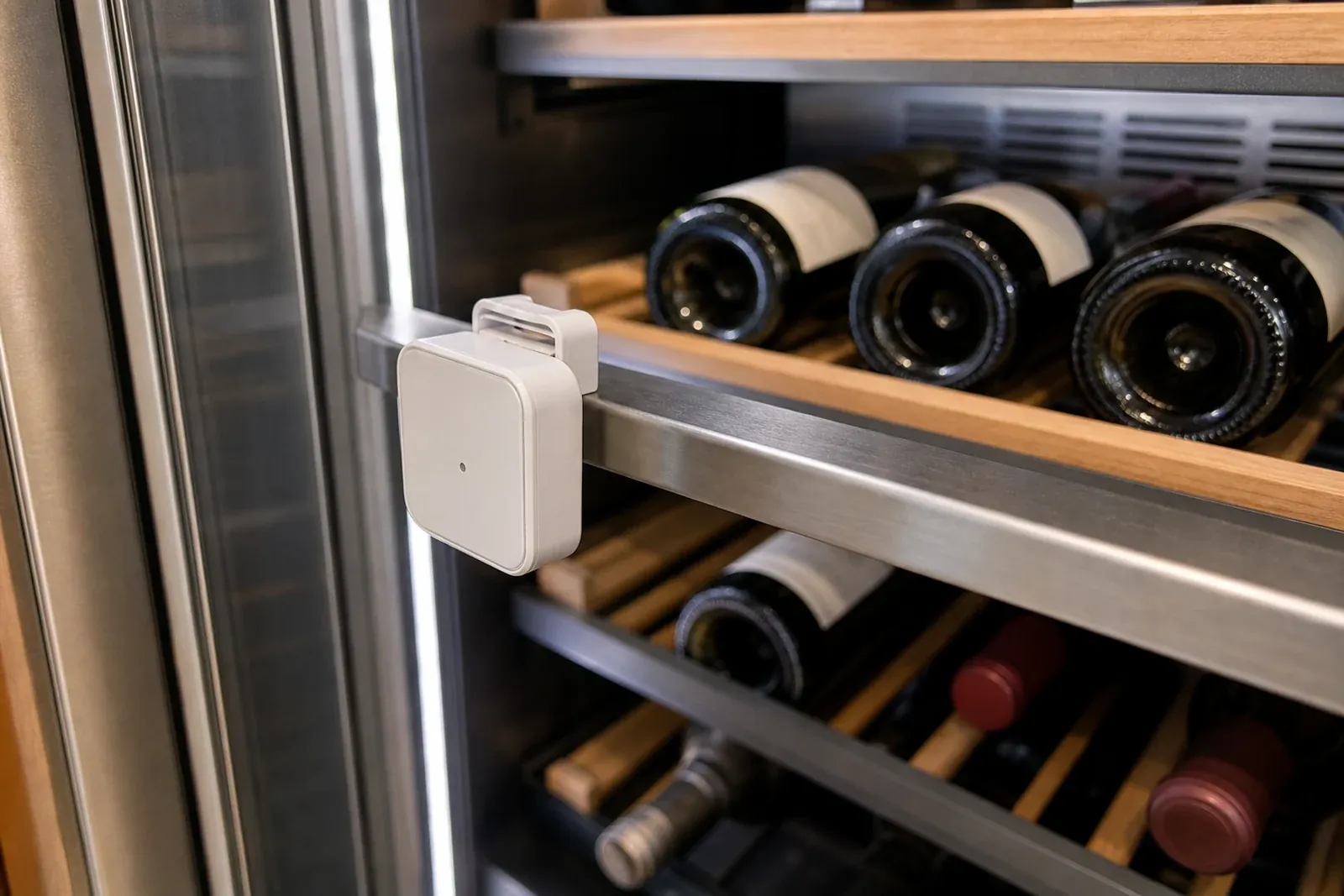
If your Bennett Valley Sub-Zero wine column is drifting, log the displayed temperature in each zone every few hours for one day before you call. A healthy column holds within about +/-2F of setpoint; wider swings usually point to a failing thermistor, a tired compressor, or an evaporator fan. We diagnose dual-zone faults on-site. Call (628) 209-6820.
Why us, why here
What temperature drift actually costs a Bennett Valley cellar
Bennett Valley and the Oakmont side of 95409 sit far enough from our core downtown route that we book these calls in a longer appointment window on purpose. We would rather give a wine-column diagnosis the unhurried time it needs than rush a temperature-stability problem that only reveals itself over hours. A wine column is not a beverage fridge with a Sub-Zero badge; it is a precision-controlled box whose entire job is to not change. The owners we meet out here have often built their collections deliberately over many years, and the cabinet exists to protect that patience.
The damage from drift is cumulative and quiet. Bottles cooked at 60F+ for a few summer weeks lose freshness and age prematurely; bottles that swing repeatedly between zones push the cork in and out and eventually weep past the capsule. Humidity that falls too low dries corks from the outside in, while humidity that sits too high invites label mold on bottles you may one day want to sell or gift. Collectors here often do not notice any of it until they open something special and find it flat or oxidized. That is why our first ask is always the same: give us a day of readings so we can see the pattern, not just the number on the display the moment we walk in.
Most wine-column repairs we handle in this area land in the $200-$650 range; if the diagnosis points to the sealed system, expect $900-$1,800. Either way you get a flat-rate quote approved before any work begins, and the $95-$150 diagnostic is credited toward the repair. We work cabinet-safe, fit genuine OEM parts, and we are an independent shop - we use the Sub-Zero name only to identify the appliance we are repairing.
Do this first
Log your readings for a day before we arrive
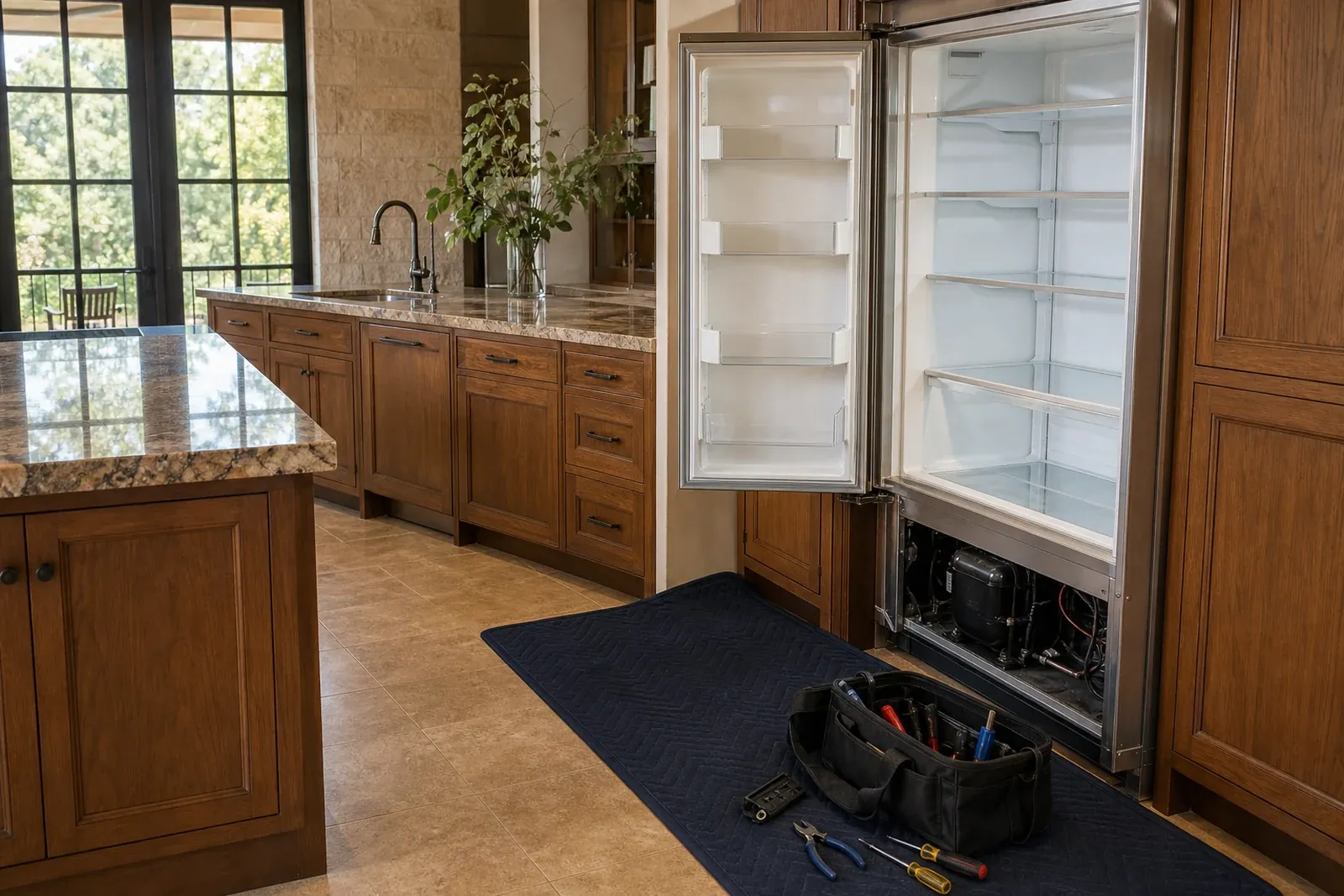
The single most useful thing a Bennett Valley owner can do is keep a short temperature log for 24 hours. It turns a vague "it feels off" into data we can act on, and it often shortens the on-site visit considerably. You do not need special equipment, though an inexpensive standalone probe thermometer placed mid-rack tells us more than the panel alone.
- Read every zone on the display, top and bottom, and write down the setpoint next to it.
- Note the time and the kitchen's ambient temperature, especially during the hot part of a Bennett Valley afternoon.
- Repeat roughly every three to four hours across a full day and evening.
- Flag the compressor: jot down whether you can hear it running constantly, cycling, or silent.
- Watch the door: record how often the column is opened, since frequent access in a busy estate kitchen skews everything.
When you call (628) 209-6820, read us the log. A column whose displayed temperature barely moves but whose contents feel warm is a very different fault from one whose display itself swings five degrees between morning and night, and your log lets us bring the right parts the first time.
The +/-2F standard
What stable actually means, and how we test it
A correctly functioning Sub-Zero wine column should hold each active zone within roughly +/-2F of its setpoint under normal household conditions. That tolerance is the line we test against. Small, slow breathing around the setpoint as the compressor cycles is normal and even healthy. What is not normal is a steady climb, a sawtooth that overshoots the setpoint by several degrees each cycle, or one zone that simply will not reach its target.
On-site we do not rely on the front panel alone, because the panel reports the sensor's view of the world, and a drifting sensor is one of the most common faults we find. We place an independent calibrated probe in the cabinet, run the column through cycles, and compare the panel's reading against ground truth. That comparison is what separates a sensor problem from a refrigeration problem, and it is the difference between a thirty-dollar part and a major sealed-system job.
The table below maps the patterns we see most often in Bennett Valley columns to their likely causes and the path we take to confirm each one. Match your 24-hour log against the left column before you call and you will already have a strong sense of where this is heading.
| What you observe | Likely cause | Our diagnostic path |
|---|---|---|
| Holds within +/-2F of setpoint | Healthy cycling | Normal; monitor at your next filter change |
| Display reads correct, bottles feel warm | Thermistor reads low, system underworks | Sensor/thermistor diagnosis |
| Slow upward creep over hours | Condenser load or weak compressor | Condenser clean + sealed-system check |
| Sawtooth overshoot each cycle | Control or evaporator fan fault | Control board / fan diagnosis |
| One dual zone fine, other off | Damper, second sensor, or fan | Dual-zone split diagnosis |
The usual suspect
The thermistor and the ~8-year clock
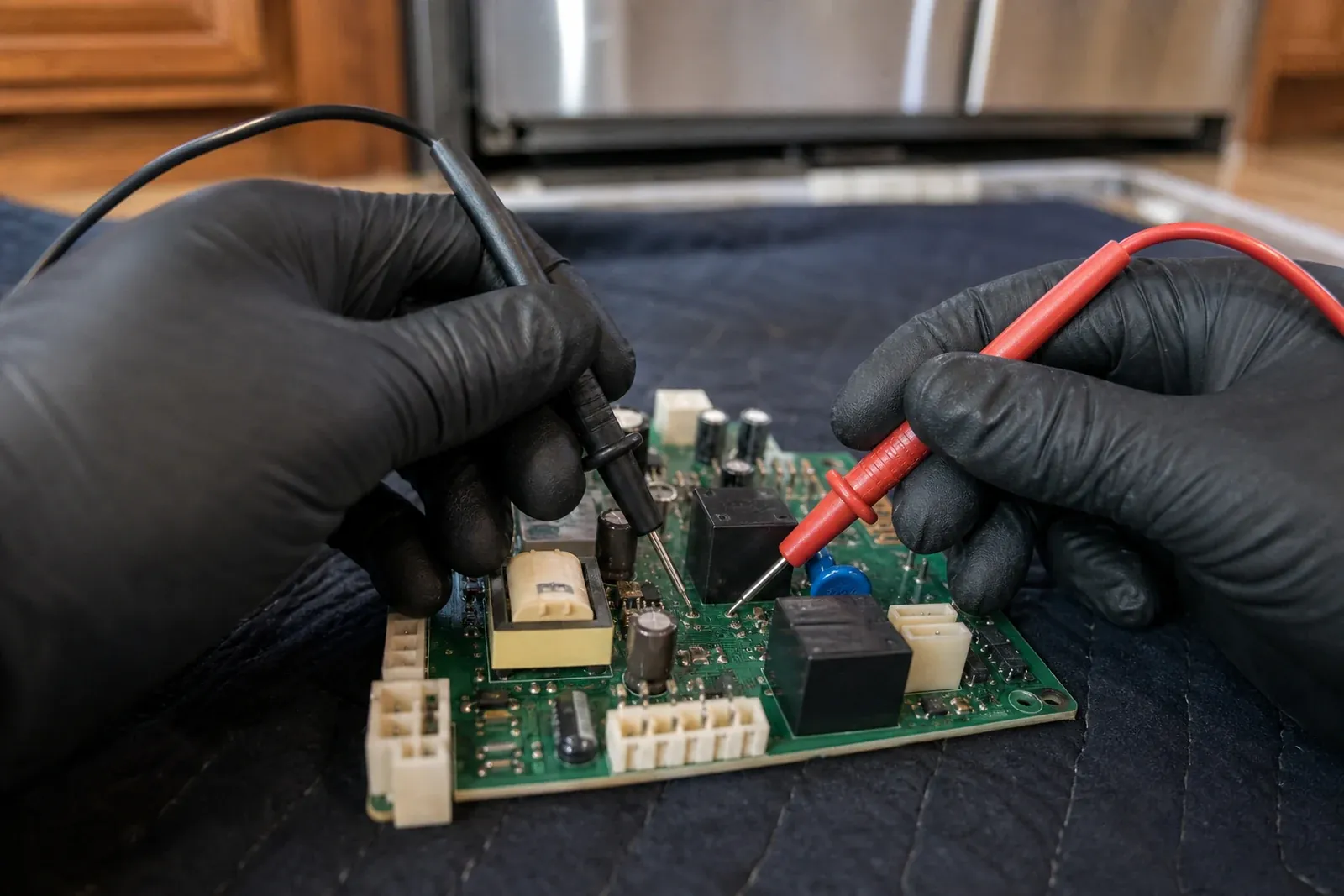
If we had to bet on one part behind wine-column drift, it would be the thermistor - the small temperature sensor that tells the control board how cold the cabinet really is. Thermistors do not fail dramatically; they drift. After roughly eight years of continuous duty, many begin reporting a temperature a few degrees off from reality. The board then over- or under-cools to satisfy a number that is already wrong, and the result is exactly the kind of slow, maddening drift collectors describe.
This is why a column can show a perfect 55F on its display while the bottles in the rack sit warmer or colder. The fix is usually straightforward and lands at the affordable end of the range, but the diagnosis matters enormously: replacing a compressor when the real problem is a $30 sensor is the kind of mistake we exist to prevent. We confirm a suspected thermistor by reading its resistance against spec at a known temperature before we recommend anything.
We fit genuine OEM sensors and verify the corrected reading against our independent probe before we leave, so you are not left wondering whether the drift will quietly return next August.
Two zones, two problems
Diagnosing dual-zone columns where only one half is wrong
Dual-zone wine columns are common in Bennett Valley and Oakmont because collectors want reds and whites held at different temperatures in one cabinet. They also generate a distinct class of complaint: one zone is perfect and the other is not. That split is actually good news for diagnosis, because it rules out anything shared by both zones - the compressor, the main door seal, and the overall refrigerant charge are almost certainly fine if one zone holds setpoint flawlessly.
When only one zone misbehaves, the short list is the damper that proportions cold air between zones, that zone's own thermistor, or its evaporator fan. We isolate it by forcing each zone to a target and watching which one responds and which one lags. A common real-world pattern: the upper white-wine zone holds beautifully while the lower red zone slowly warms, which points us straight at the lower damper or fan rather than a whole-system fault.
- Both zones drift together - look at shared causes: condenser, compressor, charge.
- One zone only - look at that zone's damper, sensor, and fan.
- Zones won't separate - control logic or a stuck damper holding both at one temperature.
Bring us your 24-hour log split by zone and this diagnosis goes faster still.
The Bennett Valley factor
Condenser load, dust, and our longer appointment window
Two local realities shape how we service this area. First, Bennett Valley summers run hot and dry, and an estate kitchen that bakes in the afternoon sun makes a wine column's condenser work harder than the same unit would downtown. A condenser clogged with dust simply cannot reject heat fast enough, and the symptom is that slow upward creep on your log during the warmest hours. We clean the condenser as part of most diagnoses and check airflow clearance around the cabinet.
Second, because Bennett Valley and Oakmont sit off our core route, we deliberately book a wider appointment window for these visits. It is not a scheduling apology - it is so the technician has room to run a wine column through real cycles and watch it stabilize rather than guessing from a single snapshot. Temperature-stability problems are time problems, and we give them time. If you are nearby in Rincon Valley or eastern 95405, ask and we will often fold you into the same trip so you are not waiting on a separate visit.
One more local note worth raising: many Oakmont homes were built to a common spec, so the wine columns we see there tend to be installed in similar cabinetry with similar airflow constraints. That familiarity helps - if a particular install consistently starves the condenser of air, we recognize it quickly and can recommend a clearance fix rather than chasing the same drift again next summer. Whether your column is a single-zone unit or a dual-zone cabinet, the goal is the same: get it back inside that +/-2F band and keep it there through the hottest weeks of the year. Call (628) 209-6820 and read us your log to get started.
Next step
Call with the Sub-Zero model number
Have the model-tag photo, current fresh-food and freezer temperatures, and the symptom timeline ready. That lets the Santa Rosa intake route the visit around the likely Sub-Zero part family instead of a generic appliance script.
FAQ
Questions Santa Rosa homeowners ask before scheduling
Why is my Sub-Zero wine column temperature drifting even though the display looks right?
A correct-looking display with warm bottles is the classic sign of a drifting thermistor. The sensor reports a wrong temperature, so the control board cools to satisfy a number that no longer matches reality. We confirm it by comparing the panel against an independent calibrated probe placed in the cabinet, then fit a genuine OEM sensor.
How much does Sub-Zero wine column repair cost in Bennett Valley?
Most wine-column repairs in the Bennett Valley and Oakmont area land between $200 and $650; sealed-system work runs $900-$1,800. The $95-$150 diagnostic is credited toward the repair, and you approve a flat-rate quote before any work starts. Call (628) 209-6820 for a window.
How stable should a Sub-Zero wine column be?
A healthy column holds each active zone within about +/-2F of its setpoint under normal conditions. Small breathing around the setpoint as the compressor cycles is normal; a steady climb, a multi-degree sawtooth, or a zone that never reaches target is not. Logging readings for a day is the fastest way to tell which you have.
Why is only one zone of my dual-zone wine column wrong?
When one zone holds perfectly and the other drifts, the shared parts - compressor, main charge, door seal - are almost certainly fine. The fault is usually that zone's damper, thermistor, or evaporator fan. That split actually makes the diagnosis faster, especially if you bring a 24-hour log separated by zone.
Do you service wine columns in Oakmont and the 95409 area?
Yes. We cover Bennett Valley, Oakmont, and Rincon Valley across 95405 and 95409. Because these addresses sit off our core downtown route, we book a slightly longer appointment window so the technician can run the column through full cycles rather than guessing from one reading.
Should I keep logging the temperature before you arrive?
Yes, please do. Reading each zone every three to four hours for a full day turns a vague complaint into a clear pattern and often shortens the visit. Note the setpoint, the displayed temperature, the kitchen's ambient temperature, and whether the compressor is running steadily or short-cycling, then read it to us when you call.
Related