4.9/5 · 1,699 verified customer reviews
Santa Rosa · Sonoma County wine-storage hub
Sub-Zero wine storage across Sonoma County: why wine country sees more of these calls
Sonoma County keeps more wine in more homes than almost anywhere in California, and a Sub-Zero wine column or undercounter unit is usually how that wine survives a hot Healdsburg afternoon. When one drifts, the question is not just what failed — it is why wine-country kitchens stress these units harder than a typical fridge ever sees.
Direct answer
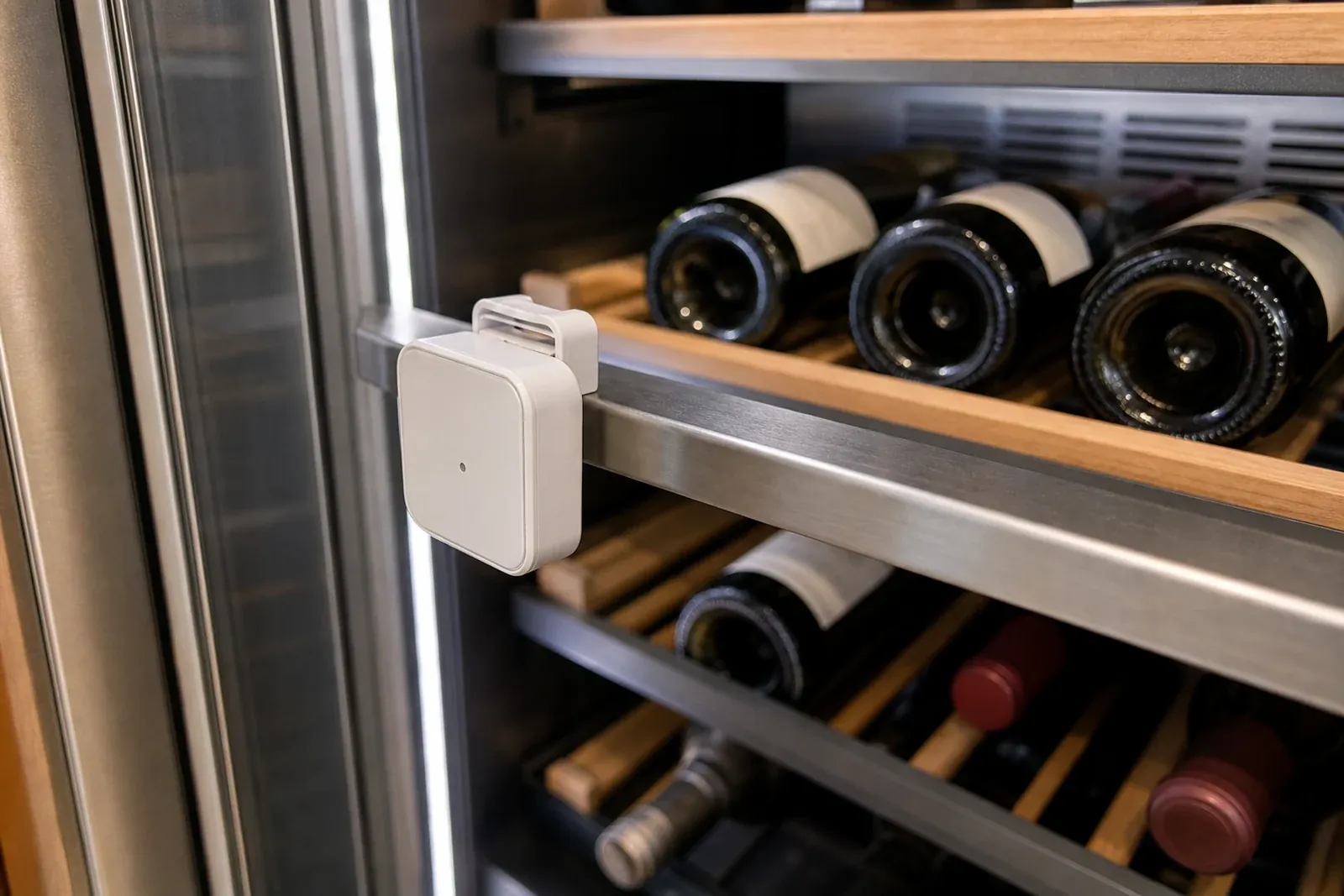
Sub-Zero wine storage drifts more across Sonoma County because wine-country homes run larger collections, bigger swings between Healdsburg heat and Sebastopol fog, and units that cycle hard year-round. The usual faults are an aging thermistor, a weak fan, condenser dust or a leaky door seal — rarely the sealed system. We diagnose with logged readings first, county-wide. Book at (628) 209-6820.
Why wine country
What makes Sonoma County hard on a wine column
Plenty of regions own Sub-Zero wine storage. Few ask as much of it as Sonoma County does. Three things compound here at once. First, collection size: a single-zone undercounter in a Cotati condo is a different load than a full-height dual-zone column packed to capacity in a Healdsburg estate, where the door opens dozens of times during a harvest-season dinner. A fuller cabinet has less air volume to buffer each opening, so the same fault that a half-empty unit would shrug off becomes visible drift. Second, ambient swing: inland Healdsburg and Geyserville can run well into the 90s on a summer afternoon while the unit's condenser is fighting that heat, and coastal-influenced Sebastopol and Occidental swing the other way with damp, foggy mornings that change humidity at the cabinet face. A unit that holds perfectly in a temperate month can struggle in a heat spike or a fog-heavy week. Third, duty cycle: many of these units never get a quiet season, because the collection is the point of the kitchen and the door sees use most weeks of the year.
None of that means the appliance is failing. It means the parts that wear — the thermistor that reads temperature, the evaporator fan that moves cold air, the condenser that sheds heat, the gasket that holds the band — reach the end of their life faster than the same parts would in a quieter setting. A wine column in a Sonoma County kitchen is, in effect, running a more demanding job than the brochure ever pictured. That is also why generic appliance advice tends to miss here: a setpoint nudge or a quick reset does nothing for a part that is simply worn from years of hard wine-country service.
Three classic faults
Drift, humidity, and the dual-zone split
Wine-storage complaints across the county fall into three families, and they are not interchangeable. Temperature drift is the most common: the display still says 55°F but a bottle thermometer says 60°F, or the reverse. That is usually a thermistor drifting out of calibration or a fan no longer moving enough air, not a dead compressor. The dangerous part is that drift is quiet — the unit looks fine on the display while the actual storage temperature creeps, which is exactly the kind of slow change that ages a collection without a single alarm.
Humidity trouble shows up as a damp cork smell, a sweating door edge, a foggy glass front or labels beginning to lift — often a tired gasket, a panel-reveal problem on a custom-front unit, or a door that no longer pulls fully shut. In foggier western Sonoma County this is the complaint we hear most, because damp ambient air finds every weak point in a seal. Dual-zone imbalance is its own animal: a warm reds zone over a still-correct whites zone points to a damper, a zone fan or an airflow path, not the whole machine, and replacing the wrong assembly is a classic way to pay twice. We confirm which family you are in before any part is discussed, because the wrong assumption on a wine column is an expensive mistake and, worse, leaves the real fault running under the collection. For the full drift workflow and how we read a logged record, see our wine storage temperature page.
Town by town
How each Sonoma County town changes the call
The same wine column behaves differently depending on where it lives. We dispatch from Santa Rosa across the county, and the local conditions below shape what we check first and how we schedule the visit. None of this is a guess made over the phone — it is a starting hypothesis we then confirm on site — but it does explain why a Healdsburg call and a Sebastopol call rarely begin with the same check, and why telling us your town and your access details up front gets the right parts onto the van.
Geography also changes the schedule, not just the diagnosis. Estates in the Healdsburg, Geyserville and Glen Ellen hills sit farther from the core Santa Rosa route and frequently down long private drives, so wine-column visits there are booked with a wider arrival window rather than squeezed between in-town calls. Windsor's newer subdivisions and panel-ready installs often need a moment to confirm whether a custom front can stay on for the diagnosis. Western Sonoma County addresses around Sebastopol and Occidental can mean narrower roads and slower travel. We would rather set the right expectation than rush a unit that is guarding a serious collection, so the booking conversation is part of getting it right.
| Town / area | Local condition | Most likely first checks |
|---|---|---|
| Healdsburg / Geyserville | Hot afternoons, large estate cellars | Condenser load, packed-cabinet airflow, drift |
| Windsor | Newer build-outs, panel-ready columns | Door/panel reveal, gasket humidity, zone balance |
| Sebastopol / Occidental | Coastal fog, damp mornings | Humidity, condensation, gasket and seal faults |
| Sonoma / Glen Ellen | Older homes, long-held collections | Aging thermistor, evaporator fan, sealed-system rule-out |
| Santa Rosa (core route) | Dry inland heat, hillside dust | Condenser dust, thermistor drift, fan wear |
How we diagnose
Logged readings before a part is named, anywhere in the county
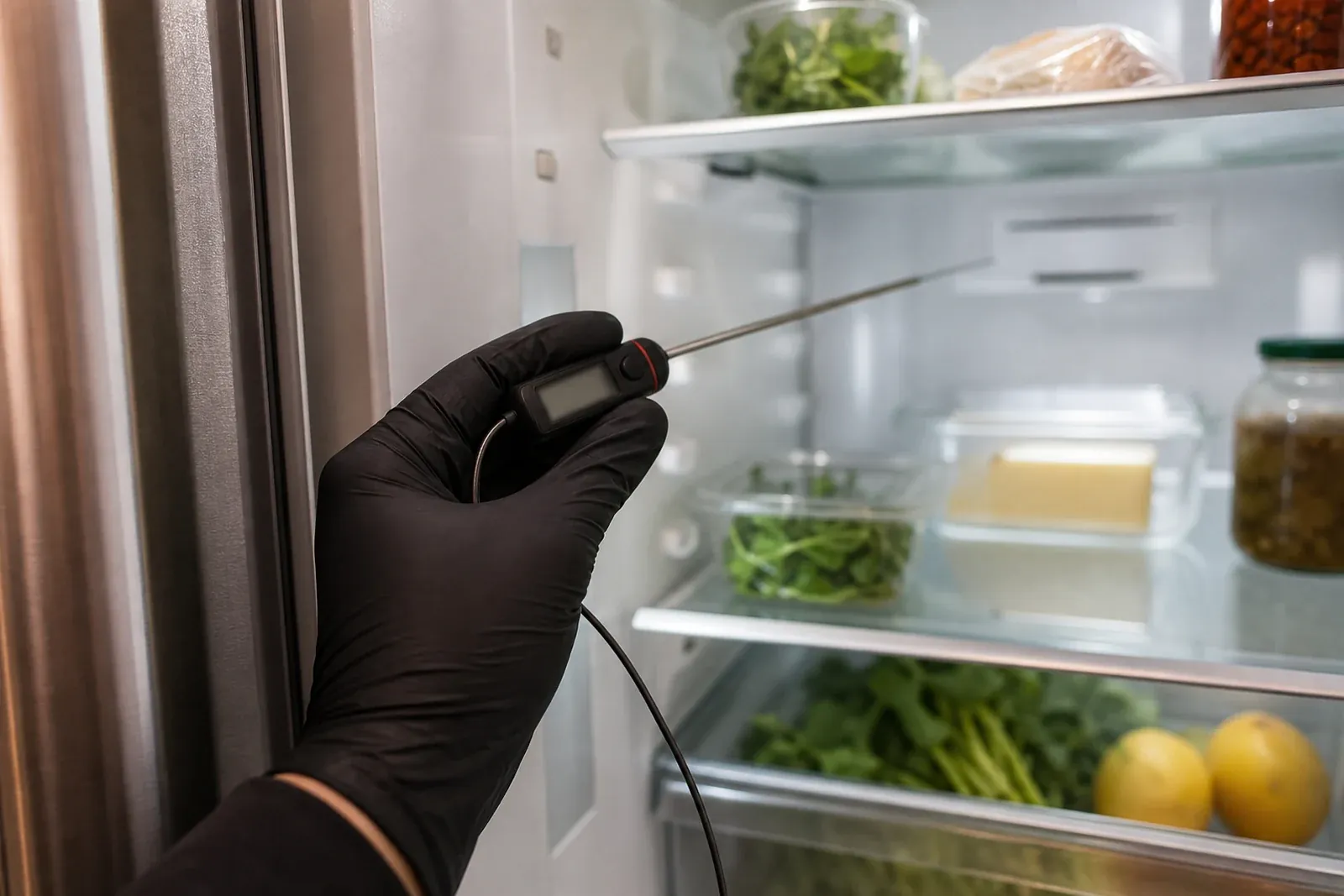
A wine column holds a narrow band, sometimes only a few degrees, so a single display reading proves almost nothing. Before we drive to Healdsburg or Sonoma we usually ask you to log the unit's reading two or three times a day for a day or so, plus a bottle-thermometer reading sitting on a middle shelf, and tell us when the door gets heavy use. That short record separates a genuine control fault from a harvest-dinner door cycle or a warm-kitchen stretch, and it often saves you a part you did not need. On site we compare your log against the control-board output, check the evaporator fan and airflow, read the thermistor against a reference, inspect and clean the condenser, test the door seal and panel reveal, and on dual-zone units run each zone independently so a single-zone fault is not mistaken for a whole-unit failure.
Refrigerant is the last suspect, not the first. A wine column that is genuinely down on charge or has a failed compressor is far less common than the worry suggests; most calls resolve at the sensor, fan, airflow or seal long before that. When sealed-system work truly is indicated, it is confirmed with gauges and amp draw and handled under EPA Section 608 rules, never quoted blind. See our sealed-system page for when that conversation is real. This evidence-first sequence matters more for wine than for groceries: a few degrees of drift over months is exactly what quietly ages a collection, so the goal is an accurate fix that protects the bottles, not a fast one that guesses.
What it costs
Honest ranges for wine-storage repair
We approve a flat quote before any work begins, and the $95–$150 diagnostic is credited toward the repair once you go ahead. Genuine Sub-Zero OEM parts only — an off-brand fan or board on a wine cabinet tends to fail again and put the collection at risk a second time, which is a poor trade on a unit guarding bottles you cannot replace. The ranges below cover the common wine-storage repairs we run county-wide; they are planning figures, and your exact quote depends on the model, the part revision tied to your serial number, and the access at your home. Most wine-storage faults land in the first three rows. The last row is the uncommon case, and we only get there after the sealed system is actually ruled in with measurements.
| What you notice | Usual cause | Planning range |
|---|---|---|
| Steady drift, a few degrees off | Thermistor / sensor (often around 8 yrs) | $300–$520 |
| Warm zone over correct zone | Zone fan, damper or airflow path | $320–$560 |
| Condensation, damp smell, labels lifting | Door gasket, seal, panel reveal | $240–$520 |
| Whole cabinet warming, long run times | Sealed-system rule-out, then quote | $900–$1,800 |
Where to go next
Pick the page that matches your situation
This is the county-wide overview — the shared physics, the town-by-town differences, and how we diagnose wine storage without guessing. If your situation is more specific, these pages will get you there faster:
- Watching a column slowly drift and want the full measurement method — Sub-Zero wine storage temperature.
- You are in the Bennett Valley corridor with a single high-value column — Bennett Valley wine column service.
- You have a walk-in or whole-room cellar cooling system, not just a cabinet — Santa Rosa wine cellar cooling.
- You are outside Santa Rosa and want to confirm we cover your town — Sonoma County service areas.
Whichever page fits, the principle behind all of them is the same: a wine column is not a small refrigerator, and a Sonoma County wine column is not even an average wine column. It holds a tighter band, carries more value, and works harder than the brochure assumes. So the right move when one starts to drift is to measure before you replace, ask for a flat quote before any work, and insist on genuine Sub-Zero parts so the fix lasts. If you are ready to book or just want a second opinion on a unit that is acting up anywhere in the county, call (628) 209-6820 and we will start with the questions that protect your collection.
Next step
Call with the Sub-Zero model number
Have the model-tag photo, current fresh-food and freezer temperatures, and the symptom timeline ready. That lets the Santa Rosa intake route the visit around the likely Sub-Zero part family instead of a generic appliance script.
FAQ
Questions Santa Rosa homeowners ask before scheduling
Do you service Sub-Zero wine storage outside Santa Rosa in Sonoma County?
Yes. Santa Rosa is our core route, and we dispatch wine-storage calls to Windsor, Sebastopol, Healdsburg, Geyserville, Sonoma and Glen Ellen, typically within one to two business days. Estate and rural addresses get a slightly longer arrival window so the visit is not rushed.
Why does my Sub-Zero wine column drift more in summer in Healdsburg?
Inland Healdsburg afternoons push well into the 90s, which loads the condenser and makes the unit run longer to hold its band. A coil packed with dust then struggles, and a thermistor at the end of its life reads the small change inaccurately. Cleaning the condenser and logging readings is the first, cheapest step before any part is replaced.
My wine column smells damp and the door edge is sweating — is that the sealed system?
Almost never. A damp or musty cabinet with a sweating door is a humidity-and-seal problem: a tired gasket, a misaligned panel-ready front common on Windsor build-outs, or a door that no longer pulls fully shut. The fix restores even seal compression, not a colder setpoint or refrigerant work.
How much does Sub-Zero wine storage repair cost across Sonoma County?
Most wine-storage repairs run $300 to $680 — a thermistor, a zone fan, a damper or a gasket. A genuine whole-cabinet sealed-system repair, which is uncommon on these units, runs $900 to $1,800. You get a flat quote before work starts, and the $95 to $150 diagnostic is credited toward the repair.
Should I worry about a few degrees of drift on my collection?
For a serious collection, yes, but in a measured way rather than a panicked one. A steady few-degree drift over months quietly ages wine, so it is worth diagnosing, but it is usually a sensor or fan, not a failed machine. Log readings for a day and book a diagnostic before assuming the worst.
Do you handle dual-zone wine columns differently?
Yes. Each zone is checked on its own, because a warm reds zone above a correct whites zone points to a zone fan, damper or airflow path rather than a whole-unit failure. Treating it as one fault is how owners pay for the wrong repair.
Related