5.0/5 · 1,355 verified customer reviews
Santa Rosa · Railroad Square / historic downtown · 95401 / 95404
Sub-Zero service for the older downtown homes around Railroad Square
In the old neighborhoods around Railroad Square, a Sub-Zero is usually the newest thing in a kitchen that may be a century older than the appliance. That gap — vintage house, mature built-in — is the whole story of a downtown historic-home call.
Direct answer
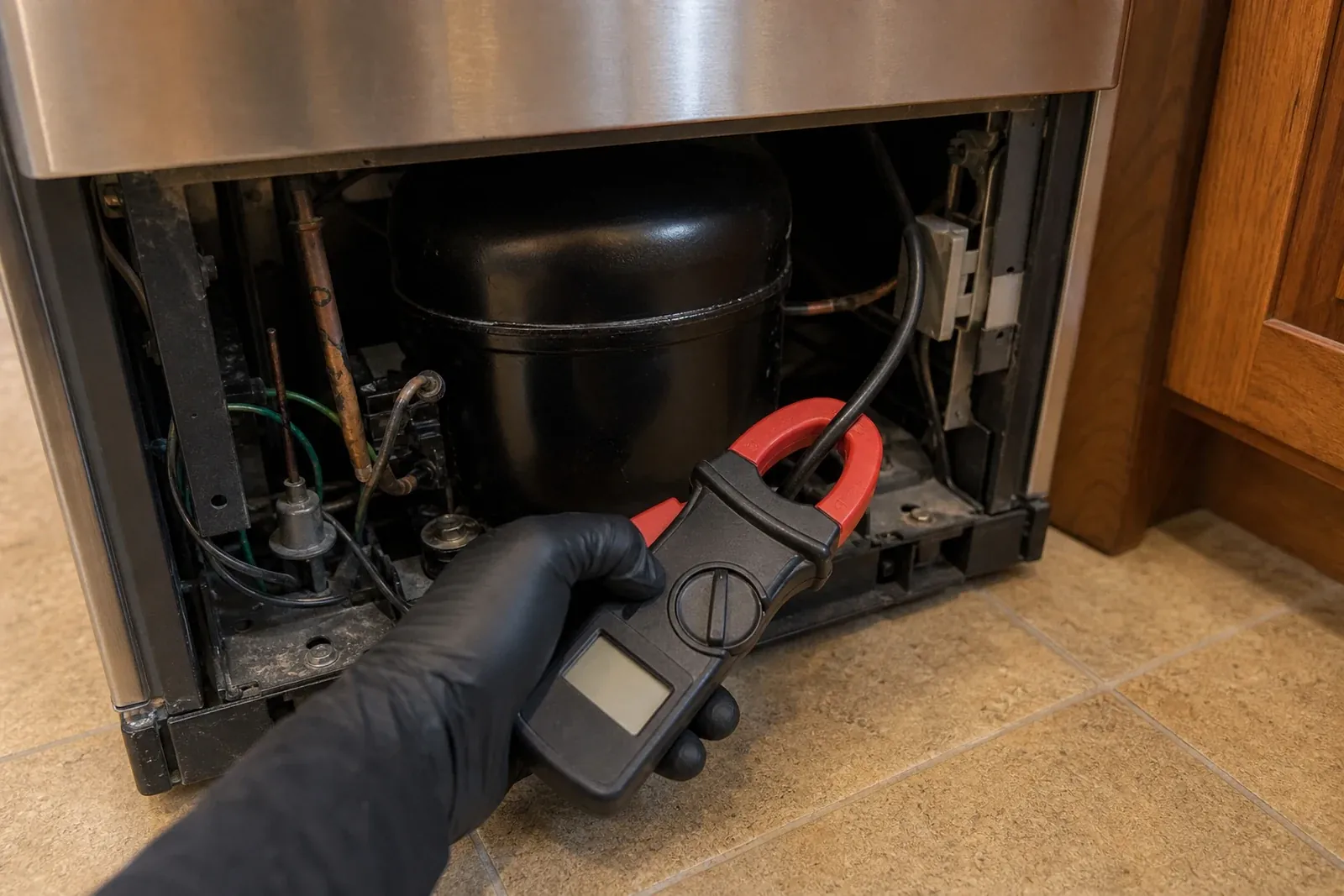
A Sub-Zero in an older home near Railroad Square is often a long-lived built-in feeding off period wiring and decades-old water lines, in a kitchen too tight to pull freely. We read its refrigerant era from the model tag, check the circuit and supply line serving it, and give an honest repair-versus-replace number before any work. Call (628) 209-6820.
Why a historic-home call is its own thing
An old house, a mature built-in, and the space between them
The streets around Railroad Square Historic District — the brick depot district, the Queen Anne and Craftsman blocks of the West End, and the older West Ninth and Fifth Street homes inside 95401 and 95404 — hold some of Santa Rosa's oldest housing stock. These kitchens were not designed around a built-in refrigerator; the built-in was fitted in later, often during a 1990s or 2000s remodel that worked a modern Sub-Zero into a footprint laid out generations earlier. So a downtown historic-home call almost always involves a capable appliance living inside a house that predates it by decades, and the friction between the two is where the real diagnosis lives.
That gap shows up three ways, and they recur house after house in this part of town. The built-in itself is frequently a mature unit — a Classic BI installed twenty or twenty-five years ago that has run quietly long enough that no one remembers the model. The kitchen is tight, scribed into an old wall line with little side clearance and a finished floor that won't forgive a careless drag. And the house systems feeding the unit are old: the branch circuit and the water line that serve the refrigerator may be original to a remodel that is itself aging, or older still. None of that changes the refrigeration physics, but all of it changes how a repair is planned, priced, and judged.
This is why we treat a Railroad Square call differently from a new-build estate in Fountaingrove or a uniform panel fleet in Oakmont. The appliance is only half the system. The other half is a hundred-year-old house, and a good repair respects both. Everything below is about reading that whole picture before naming a part — the diagnostic-first approach from our Sub-Zero repair method, applied to a vintage downtown kitchen.
Reading the era
What the model tag tells you about an older Sub-Zero's refrigerant
The first thing we do on a downtown vintage call is find and read the model and serial tag, because on an older built-in it does more than name a part — it dates the sealed system, and the refrigerant era is central to the repair-versus-replace math. Sub-Zero built-ins in these homes fall across three refrigerant generations, and which one you have changes both the cost and the practicality of a sealed-system repair. The table below is the planning shorthand we use; it is not a quote, and the era is always confirmed by the tag on site, never guessed from the doorway.
| What's likely in the home | Refrigerant era | What it means for the repair |
|---|---|---|
| Older estate / early built-in era | R-12 sealed system | Legacy refrigerant; recovery and any charge must be handled under EPA Section 608; parts and refrigerant scarcer, so repair-vs-replace gets weighed harder |
| Mid-era built-in (common downtown) | R-134a sealed system | Most widely serviceable era we see in Railroad Square homes; sealed-system parts and refrigerant generally available |
| Newer built-in / recent remodel | R-600a isobutane | Current generation; efficient, but charge and component handling differ from the older systems |
| Any era, sealed-system suspicion | Measured on site only | Refrigerant work is never phone-diagnosed; gauges, leak check and amp draw under Section 608 come first |
Not just the fridge
The wiring and water lines an old house puts behind the unit
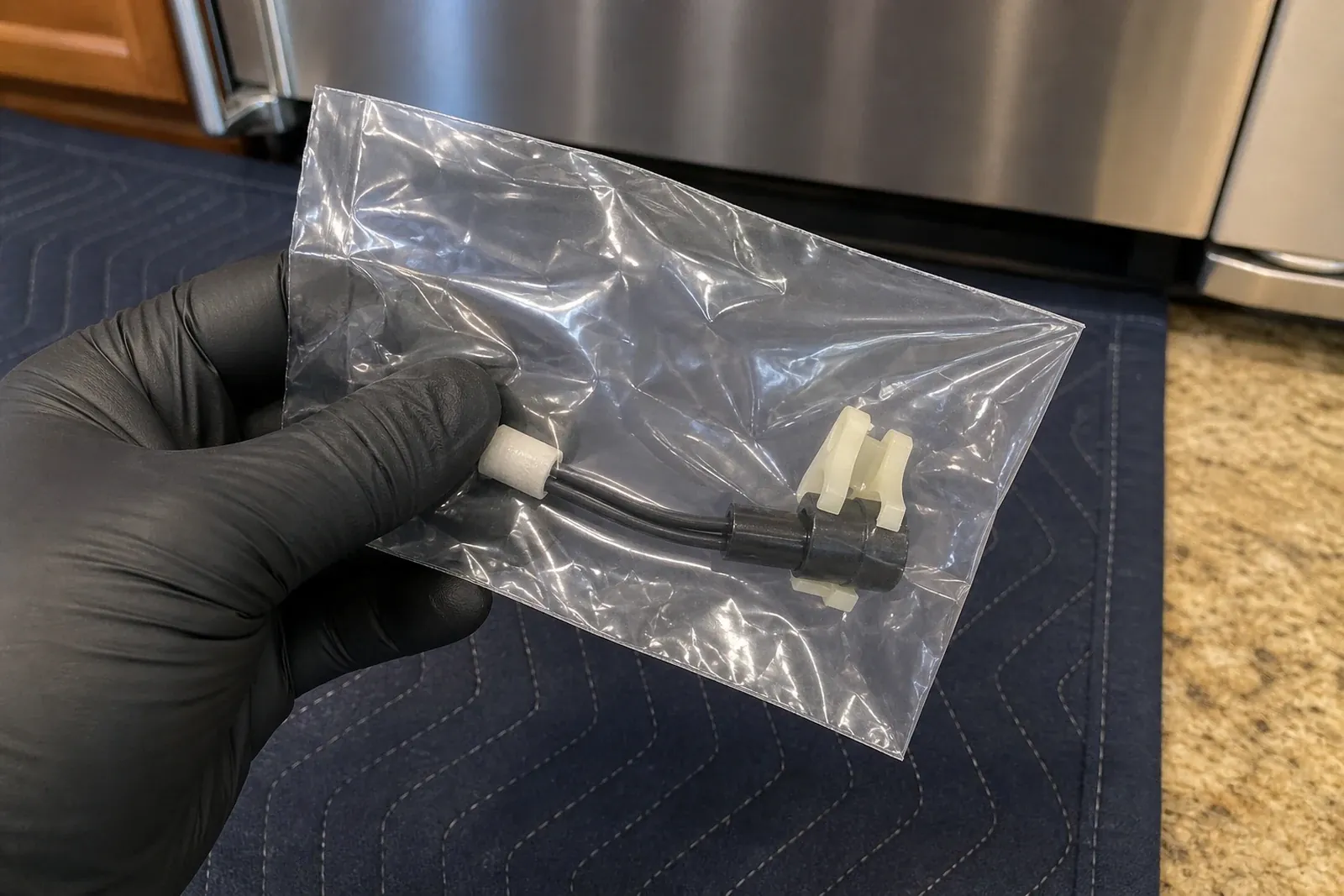
A built-in refrigerator is only as steady as the circuit and the water line behind it, and in a Railroad Square home both are often decades old. We see two recurring downtown issues that look like appliance faults but live in the house:
- The branch circuit. Older homes were not wired for a modern built-in's draw, and even where a remodel added a dedicated circuit, that work may now be twenty-plus years old. A shared circuit, a tired outlet, or a marginal connection can produce intermittent symptoms — a control that resets, a unit that nuisance-trips — that no amount of appliance parts will cure. We check that the unit is on a sound, dedicated circuit before we chase a control board, because swapping a board into a flaky supply just relocates the problem.
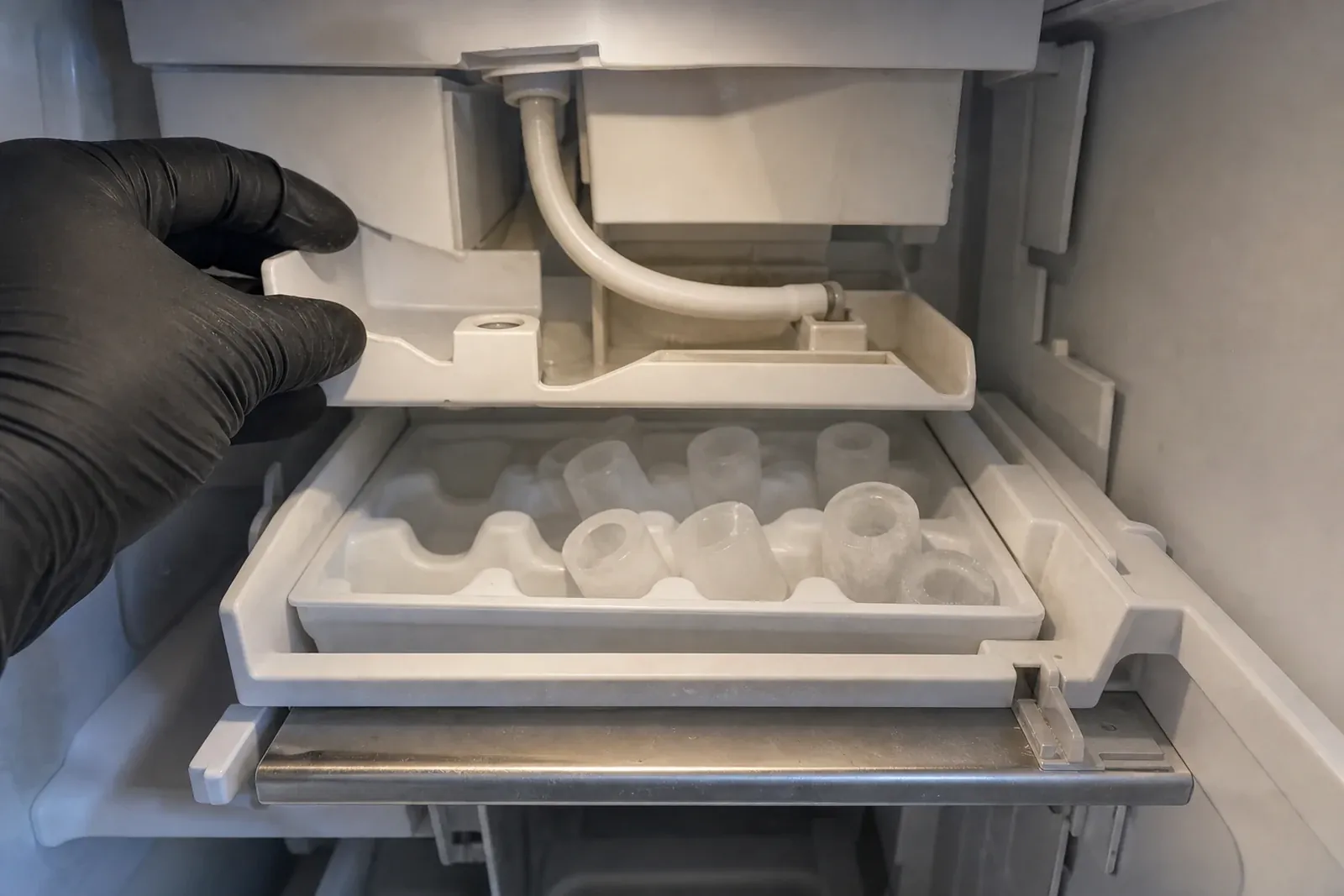
- The water supply. The ice maker and dispenser on a downtown built-in are usually fed by a saddle valve or an old copper or poly line run during the remodel. Decades of moderately hard Santa Rosa water scale the inlet valve and shorten filter life to roughly six to nine months, and the original shutoff is sometimes a corroded saddle valve in a cramped cabinet or a basement crawl. A slow or hollow ice complaint here is as often the old line, the valve, or an exhausted filter as it is the ice maker, so we read the water history before we condemn a component. The fuller water-side picture is on our hard-water ice maker guide.
The honest point is that an old house can make a healthy appliance look sick. Part of a good downtown diagnosis is separating the Sub-Zero's faults from the home's, so you are not paying for refrigeration parts to fix a wiring or plumbing problem — or the reverse.
Tight period kitchens
Working cabinet-safe where the cabinetry came first
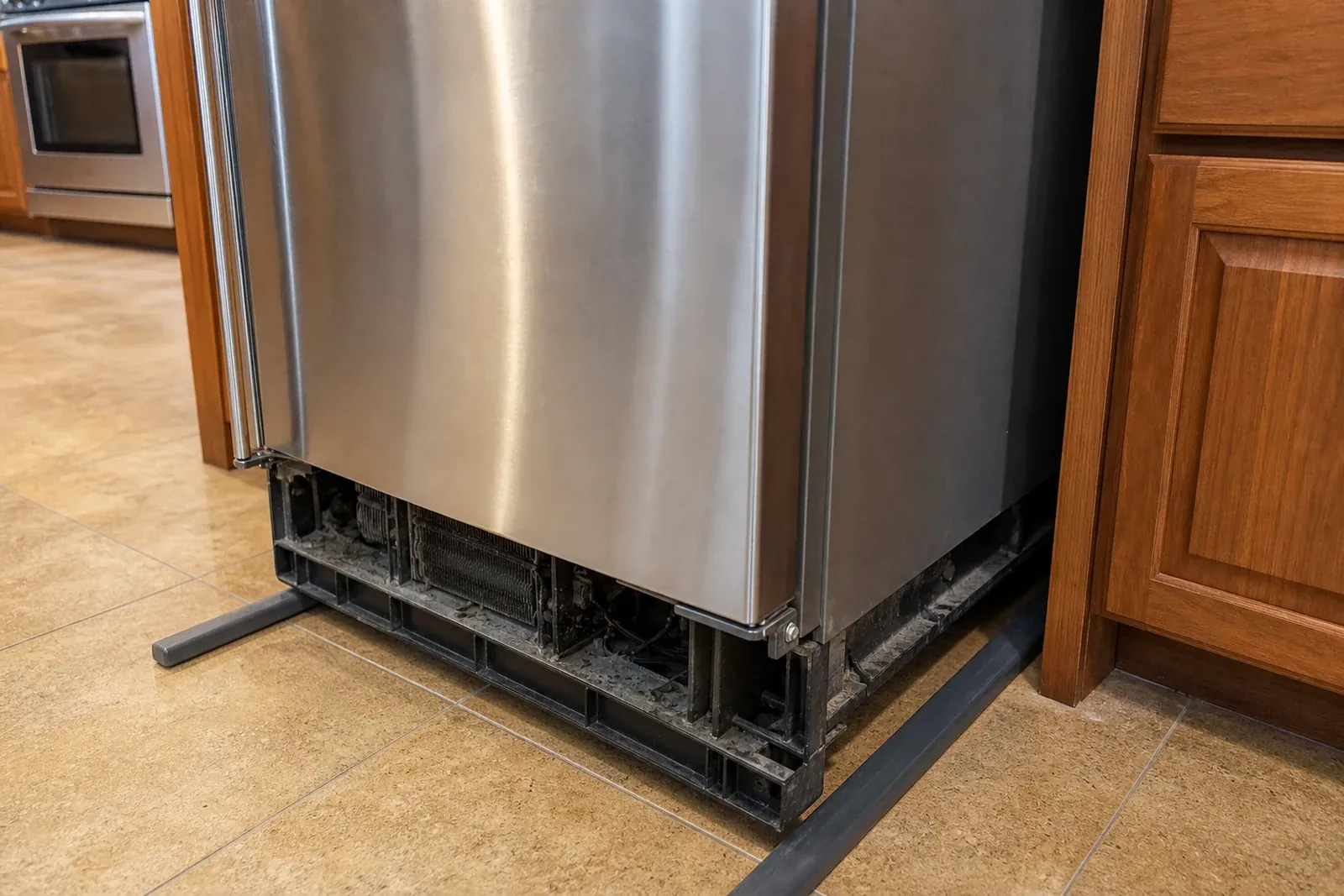
Historic-home kitchens are tight in a particular way. The Sub-Zero was set into an opening cut to the millimeter against an old, sometimes out-of-square wall, often over original or refinished fir, oak, or fragile period tile. Side clearances are slim, the toe-kick may have been trimmed into trim that matches the house, and there is rarely the generous run-off room a newer kitchen gives. That makes the cabinet-safe discipline from our cabinet-safe service protocol non-negotiable here — in a period kitchen there is no margin for a scuff or a dragged appliance.
So we do as much as possible from the front, without moving the unit. On a downtown vintage built-in that covers a surprising share of the work:
- Condenser cleaning through the lower grille — downtown's tree-lined older blocks drop pollen and fine litter, and inland summer heat loads the coil, so a warm fresh-food side is very often an airflow story first.
- Gasket, hinge and seal checks at the door, where a two-decade-old gasket has usually lost some compression — see door gasket and seal repair.
- Control, thermistor and display reads from the interior and toe-kick.
- Many evaporator-fan and sensor repairs reachable without disturbing the cabinetry or the floor.
When a pullout is genuinely required — a sealed-system access or a rear component — we lay continuous runners over the old floor, pad every contact edge, and ease the unit out rather than drag it, then verify the reseat and door swing before we leave. In a house this old, protecting what is already there is part of the repair, not an extra.
The honest number
Repair or replace, weighed for a vintage built-in
The question every downtown historic-home owner eventually asks is whether a mature Sub-Zero is worth fixing. There is no honest blanket answer — it depends on the fault, the refrigerant era, and what replacement would actually cost in a period kitchen — but there is an honest method, and we walk it through with you before any work. The fuller framework lives on our repair-versus-replace page; here is how it weighs in a Railroad Square home.
Most of what fails on a mature built-in is bounded and worth repairing: gaskets, evaporator fans, thermistors, defrost components, control boards, ice-maker valves. These are typically $200–$650, genuine OEM parts, and they restore a cabinet-grade refrigerator for a fraction of replacement. The harder conversations are sealed-system faults — a leak, a restriction, or a failing compressor — which run $900–$1,800 and weigh differently across the refrigerant eras: an R-134a system is usually straightforward to repair, while an older R-12 unit gets weighed harder because legacy refrigerant and parts are scarcer.
What tips the math toward repair in these old homes is the thing people forget to count: replacing a built-in in a period kitchen is rarely just buying an appliance. The opening was scribed to an old, possibly out-of-square wall; a new unit may not drop into the same footprint, and matching a panel or re-trimming to the historic cabinetry can cost more than the refrigerator. When the cabinetry, the floor, and the carpentry are counted, a sound sealed-system repair on a downtown built-in very often beats replacement — but it is a measured call we make with you, on evidence, never a default. The $95–$150 diagnostic is credited toward the repair once you approve a flat-rate quote.
Booking a downtown visit
What helps a Railroad Square appointment go in one trip
Downtown is on our core central Santa Rosa route, so reaching 95401 and 95404 is quick — the planning is about the house, not the distance. A few details from you turn a vintage call into a one-trip repair instead of a return for the right part:
- A photo of the model and serial tag. On a Classic BI it sits along the upper interior wall of the fresh-food compartment or behind the lower grille. It dates the unit and its refrigerant, and it pins the exact gasket, fan, or board revision your unit takes.
- The symptom, specifically. A frost line at a door corner, water under the crisper, hollow ice, a display code, or a thermometer reading sitting in the fresh-food section — the actual evidence, not just "it's warm."
- The house notes. Whether the unit is on a known dedicated circuit, where the water shutoff is, and how tight the cabinet reveal and side clearance look. In an old home these decide whether a cabinet-safe pullout needs a second set of hands staged into the same window.
- Parking and access. The older downtown blocks have narrow streets and street parking; a note about where the van can sit and any rear-kitchen access keeps the first half hour on diagnosis rather than logistics.
With that, we load the likely parts and protection for your exact unit before leaving. For the full pre-visit list, see the repair preparation checklist.
Next step
Call with the Sub-Zero model number
Have the model-tag photo, current fresh-food and freezer temperatures, and the symptom timeline ready. That lets the Santa Rosa intake route the visit around the likely Sub-Zero part family instead of a generic appliance script.
FAQ
Questions Santa Rosa homeowners ask before scheduling
Who repairs older Sub-Zero built-ins in the historic homes near Railroad Square?
We focus exclusively on built-in Sub-Zero refrigeration across Santa Rosa, and the older downtown homes in 95401 and 95404 are on our core central route. Mature Classic BI units in period kitchens are a regular call for us, and we plan the visit around the house as much as the appliance. Book at (628) 209-6820.
Is it worth repairing a 20-year-old Sub-Zero in an older downtown home?
Usually yes. Most faults on a mature built-in — gaskets, fans, thermistors, controls, ice-maker valves — are bounded $200 to $650 repairs in genuine OEM parts. Even sealed-system work often beats replacement once you count what re-fitting a new unit into a scribed period opening would cost. We give you the honest number, measured first, before any work.
How do I tell what refrigerant my old Sub-Zero uses?
The model and serial tag dates it: older estate-era built-ins ran R-12, the mid-era units common in downtown homes use R-134a, and newer ones use R-600a isobutane. We confirm the era from the tag on site, because it changes the sealed-system repair cost and how hard the repair-versus-replace decision weighs. Send a photo of the tag when you book.
Could my Sub-Zero problem actually be the old wiring or water line, not the fridge?
Often, yes. In a historic home, a marginal branch circuit can cause a control to reset or nuisance-trip, and a decades-old water line or scaled saddle valve can mimic an ice-maker fault. We check the circuit and the supply that serve the unit before condemning appliance parts, so you are not paying refrigeration prices to fix a house problem.
Can you service a Sub-Zero in a tight historic kitchen without damaging the cabinets or floor?
Yes, and it is the whole point of our protocol here. We do condenser, gasket, control and many fan and sensor repairs from the front without moving the unit. If a pullout is truly needed, we lay continuous runners over the old floor, pad every edge, ease the unit out rather than drag it, and verify the reseat before leaving.
Why is my historic-home Sub-Zero making slow or hollow ice?
On a downtown built-in, slow or hollow ice is frequently the old water line, a scaled inlet valve, or an exhausted filter rather than the ice maker itself — Santa Rosa's moderately hard water shortens filter life to about six to nine months. We read the water history before replacing a component, so the fix matches the actual cause.
Related