Seasonal guide · 6 min read
Wildfire-season care for a Sub-Zero condenser in Santa Rosa
Smoke, ash and triple-digit September heat are hard on a built-in Sub-Zero in Santa Rosa. A Sonoma County seasonal-care guide for the months that matter most.
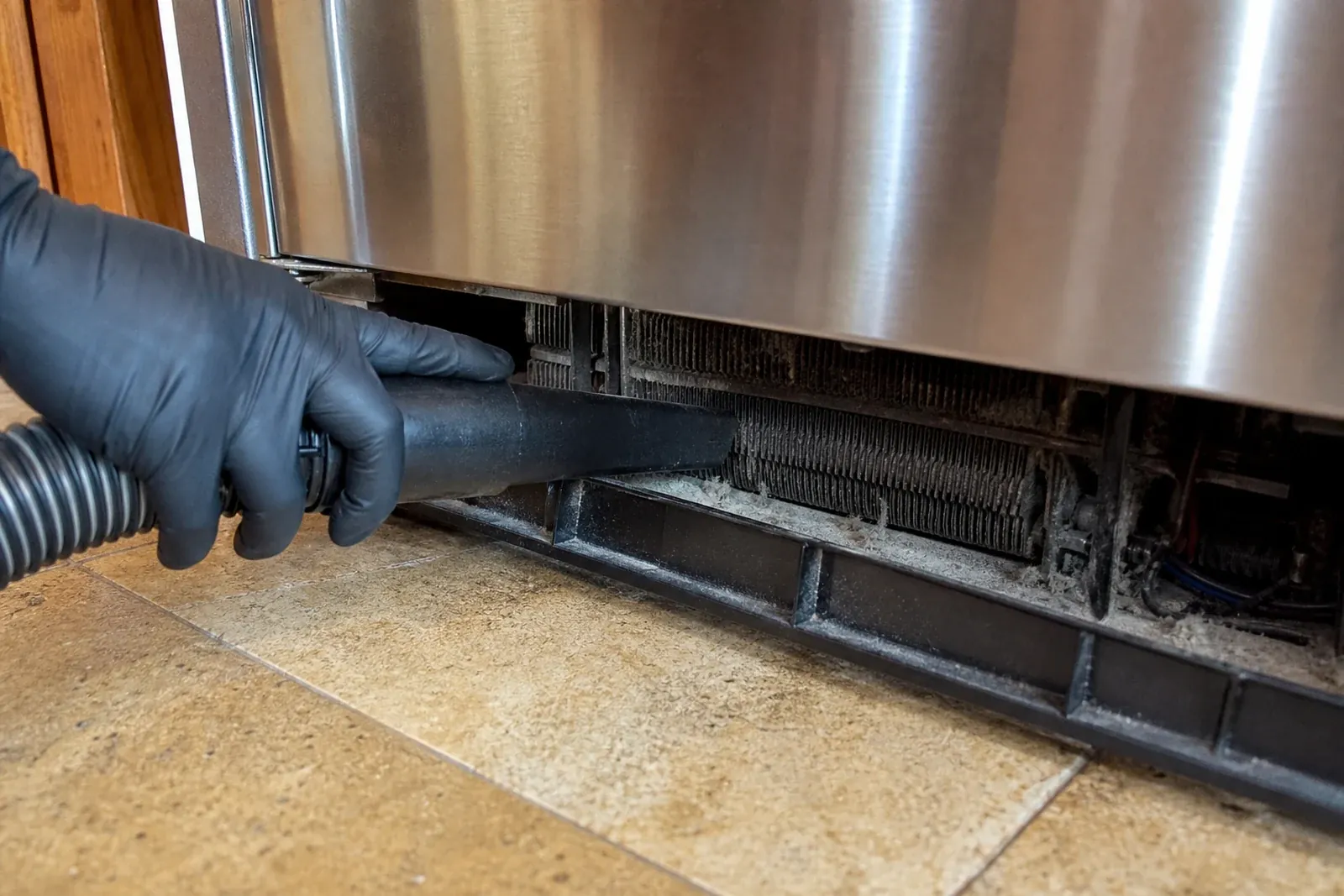
Santa Rosa runs a different calendar than the coast. Our inland Sonoma County summers are long, dry and genuinely hot — September afternoons in Fountaingrove and Rincon Valley regularly push past 100°F — and that same stretch is wildfire season, when the air carries fine ash for days at a time.
A built-in Sub-Zero has to shed all of its heat into that air, through a condenser coil mounted behind the grille. Hot, smoky air is the worst combination a sealed system faces all year, and it explains the cluster of "not cooling" calls we take every late summer here.
Why September is the hard month
A condenser works by pulling room air across the coil to carry compressor heat away. The hotter the incoming air, the harder the compressor runs to hold a 38°F box. On a 105°F day in a Bennett Valley kitchen, a coil that's even half-loaded can leave the fresh-food section drifting warm by evening.
Now add ash. Wildfire smoke is loaded with ultra-fine particulate that drifts indoors through every gap, and it cakes onto a condenser far faster than ordinary household dust. We've pulled grilles in Coffey Park and Mark West homes after a smoke event and found a coil that looked weeks-neglected after only a few days.
Clean the coil before the heat arrives, not after
The single most useful thing a Santa Rosa owner can do is clean the condenser in late spring, before the first heat spike — vacuum and brush the coil behind the lower grille, and check that the condenser fan spins freely. A clean coil entering July buys you margin for the whole hot stretch.
If a smoke event rolls through mid-season, it's worth a second look. You don't need tools to see a heavily fouled coil through the grille; if it looks furred or grey, it's working against you on the next hot day.
Keep the air around the unit moving
Many Santa Rosa kitchens close up tight during smoke season — windows shut, doors sealed. That protects your lungs but it also raises the kitchen's ambient temperature, which the refrigerator then has to fight. Where it's safe, run the kitchen's exhaust and ceiling fans to keep air from stacking up hot around the unit, and don't let cabinetry or stored boxes block the lower grille's intake.
Know when it's past maintenance
If the box won't recover after a coil clean — it's running constantly, the freezer frosts unevenly, or temperatures keep climbing on a normal day — that's no longer a cleaning problem. It usually points to a tired condenser fan, a failing evaporator fan, or a sealed-system issue that needs gauges on it. We diagnose with real readings before we quote, and the $89 service call goes toward the repair.
FAQ
Questions & answers
Does wildfire smoke really damage a refrigerator?
It doesn't damage the cabinet, but the fine ash loads the condenser coil quickly, which makes the compressor run hotter and longer. Cleaning the coil after a smoke event restores normal cooling margin.
When should I clean my Sub-Zero condenser in Santa Rosa?
Late spring, before the first heat spike — and again after any significant smoke event. Entering our hot July and September stretch with a clean coil is what prevents most warm-box calls.
Guides
More Santa Rosa guides
Next step
Rather leave it to a specialist?
Call with the Sub-Zero or Wolf model number and current temperatures for a flat quote before any visit.