5.0/5 · 840 verified customer reviews
Santa Rosa · diagnostic method
Keep a one-day temperature log before you call your Sub-Zero compressor dead
Before anyone names a $1,500 sealed-system repair, a Sub-Zero deserves a day of written readings. A single warm snapshot during a Santa Rosa heat spike or a routine defrost cycle is the most common reason a perfectly good compressor gets blamed.
Direct answer
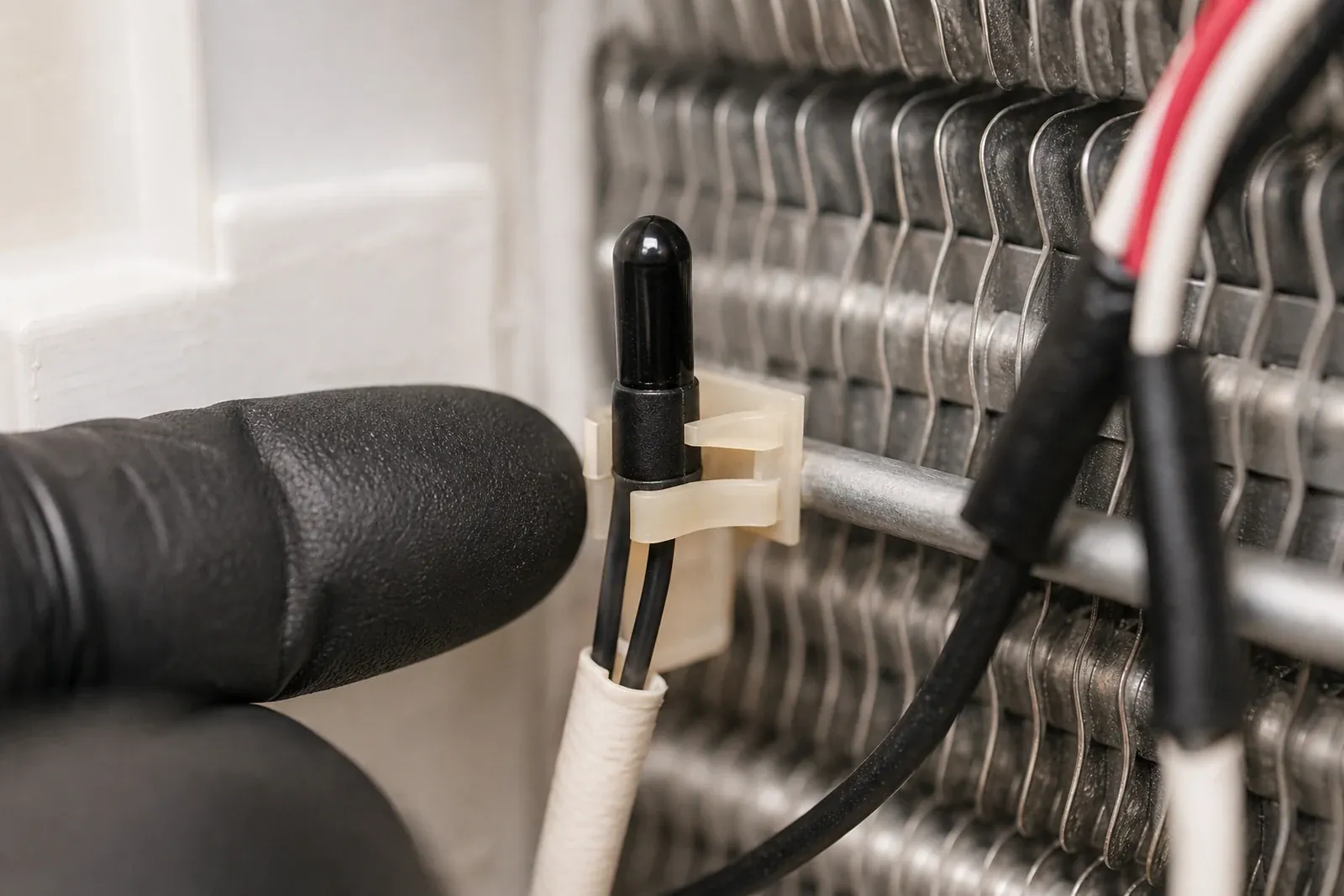
Log your Sub-Zero's fresh-food and freezer temperatures every two to three hours for one full day, plus the kitchen ambient. A steady fresh-food band near 38°F with brief, recovering rises points to defrost or airflow, not the compressor. Only a slow both-sides climb that never recovers suggests the sealed system. Bring the log when you book at (628) 209-6820.
Why a log beats a snapshot
One reading can lie; a day of readings tells the truth
A Sub-Zero is a cycling machine, not a fixed box. The compressor runs and rests, a defrost heater fires on a timer and briefly warms the cabinet, the evaporator fan pauses while the doors are open, and the kitchen around the unit can swing fifteen or twenty degrees between a cool Santa Rosa morning and a 95°F Bennett Valley afternoon. If you open the door once, see 44°F, and decide the unit is failing, you may have caught it mid-defrost, right after a teenager stood at the open door, or at the very peak of an afternoon heat load — none of which means anything is broken.
This is exactly how good compressors get condemned by mistake. A homeowner panics at a single warm number, a generic appliance tech lowers the setpoint and leaves, the unit "seems fine" for a day, and the cycle repeats — until someone reaches for the most expensive answer on the menu. Sealed-system and compressor work runs $900–$1,800 because it involves recovering and recharging refrigerant under EPA Section 608 rules. Nobody should be guessing their way into that bracket.
A written log over a full day turns the noise into a pattern. It shows whether the fresh-food side recovers after each rise, whether the freezer ever actually loses its grip, and whether the warm readings line up with the hottest part of the afternoon or appear at random. That pattern is the single most useful thing you can hand a technician, and on Santa Rosa calls it routinely keeps a $280–$600 fan or thermistor job from being mistaken for sealed-system failure. The log costs you a sheet of paper; the wrong diagnosis costs four figures.
The method
How to log it: a simple one-day schema
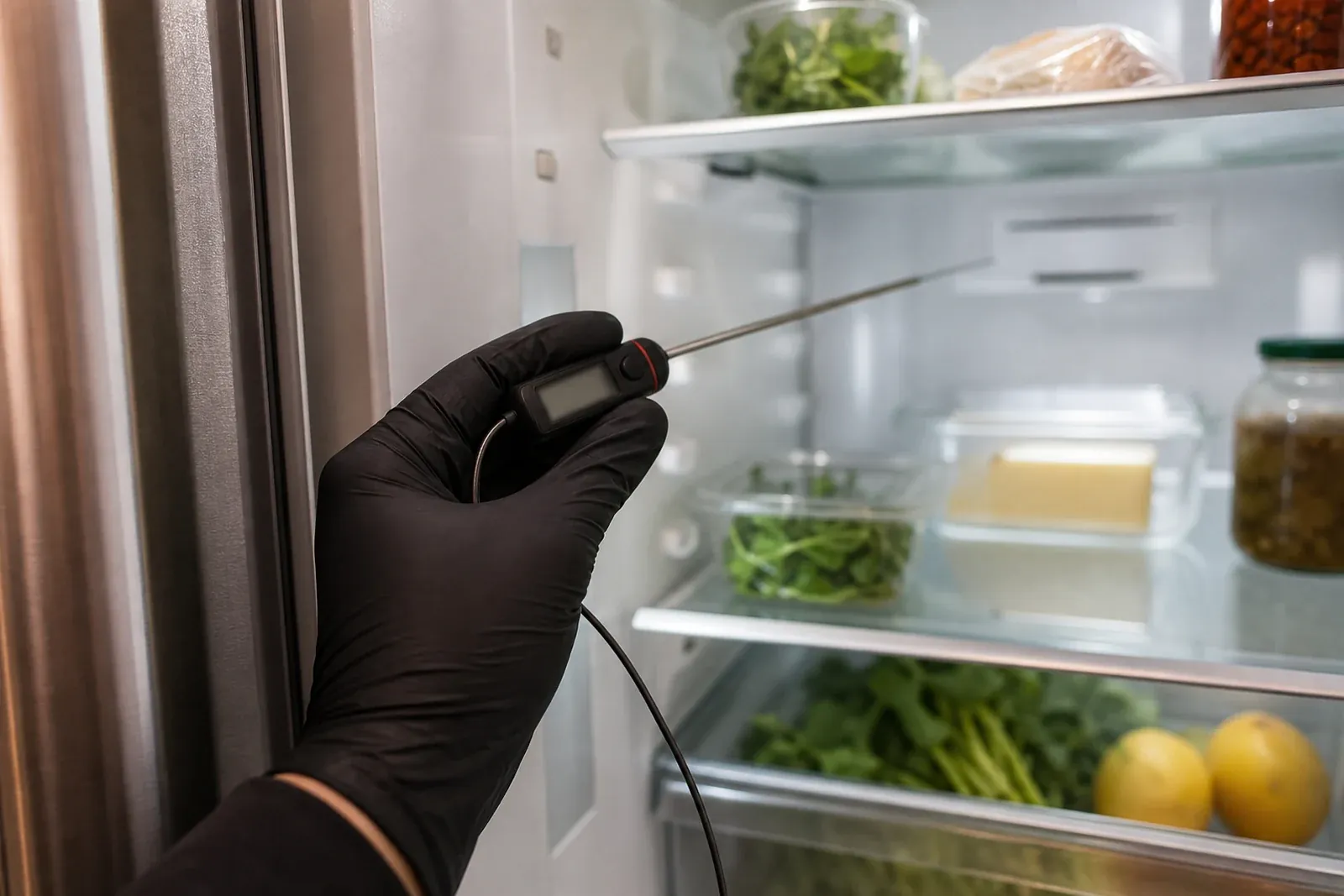
You do not need lab gear — a cheap appliance thermometer (or two) and a sheet of paper are enough. The one trick that makes the readings meaningful is to measure stored-food temperature, not air. Place one thermometer in a glass of water in the middle of the fresh-food section; the water buffers the brief swing every time the door opens, so you record what your food is actually experiencing rather than a spike of room air. Put a second thermometer on a center freezer shelf, away from the door and the ice maker. Then write down the numbers on a fixed rhythm and, critically, leave the setpoint exactly where it is for the whole day.
- Read every 2–3 hours from morning until late night, including one reading after the kitchen has cooled down so you capture the unit's best-case performance.
- Record four columns each time: the time, the fresh-food number, the freezer number, and the kitchen room temperature next to the unit.
- Note events in a fifth column: a long door opening, a big grocery load put away warm, the oven or dishwasher running hot nearby, a power blip, or an audible defrost hum.
- Do not adjust the dial. Lowering the setpoint mid-test erases the pattern you are building and can frost the evaporator, manufacturing a brand-new fault.
Keep the sheet taped to the cabinet or a nearby cupboard so anyone in the house can add a line as they pass. If you would rather automate it, a small wireless fridge/freezer sensor that logs to your phone works well too — the goal is the same eight to ten honest data points. By the next morning you will have a record that tells a story no single glance ever could, and that is what we read first.
Reading the numbers
What the readings actually mean
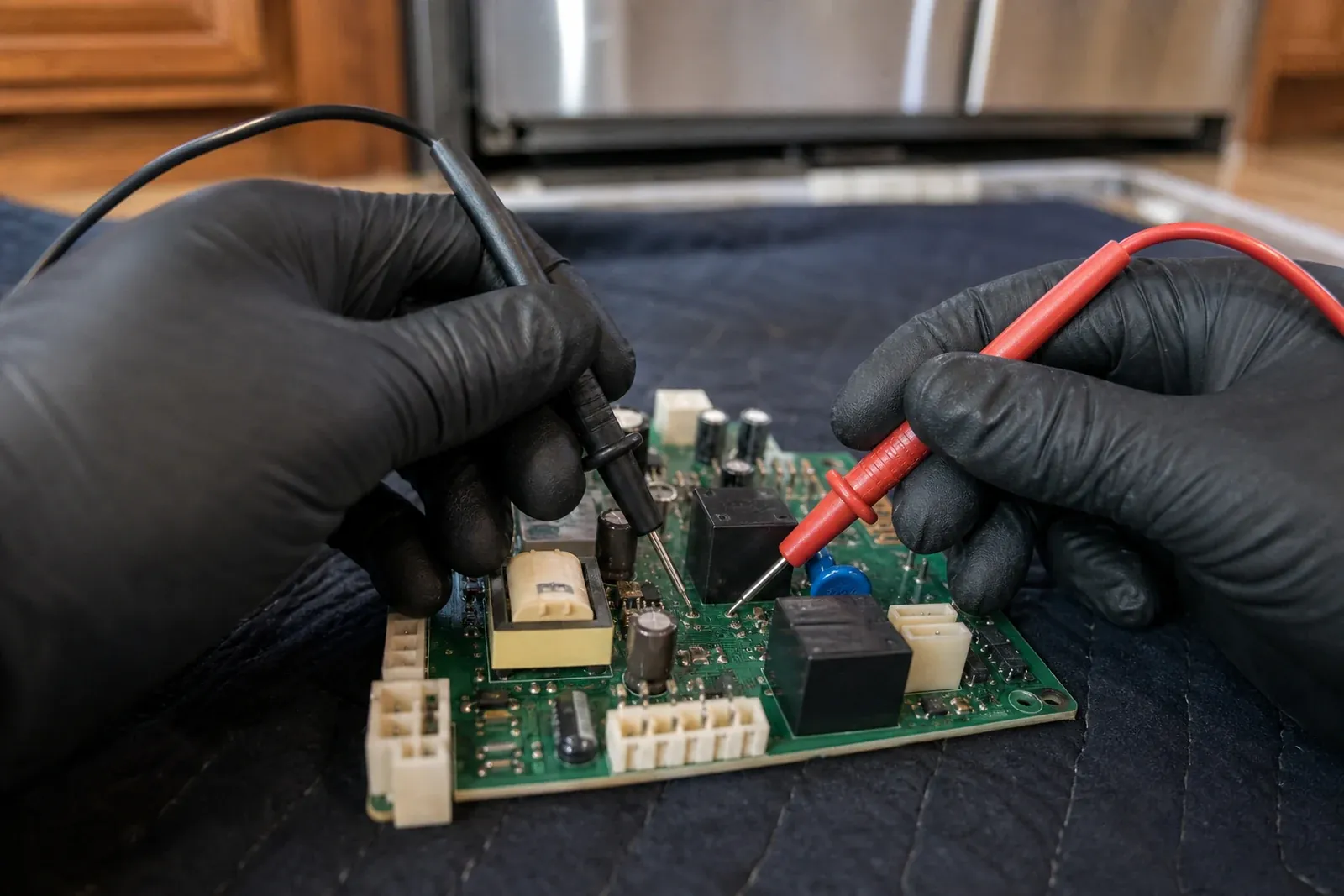
Sub-Zero's targets are tight: a fresh-food section should sit close to 38°F and a freezer near 0°F. The shape of the day matters far more than any one figure. A reading is only alarming if it fails to recover — a rise that drops back within an hour is the unit doing its job, while a number that climbs and stays climbing is the one to act on. Pay special attention to the relationship between the two compartments, because Sub-Zero's dual refrigeration is the clue a single-box fridge cannot give you: a warm fresh-food side with a freezer still locked at 0°F almost never means a dead compressor. Use the table to translate your logged pattern into a likely cause before you ever pick up the phone.
| Pattern in your log | What it usually means | Planning range |
|---|---|---|
| Fresh-food steady 36–40°F, freezer steady near 0°F | Normal cycling — no fault, re-check the original complaint | — |
| Brief rise to 45°F then drops back within an hour | Defrost cycle or a door event — expected behavior | — |
| Fresh-food drifts warm, freezer stays at 0°F all day | Evaporator fan, airflow, defrost or thermistor | $280–$600 |
| Both sides climb slowly and never recover, runs constantly | Condenser load or sealed system / compressor | $900–$1,800 |
| Warm readings only during the hottest afternoon hours | Condenser dust or ash load — clean and re-log | $95–$280 |
The Santa Rosa variable
Why the room-temperature column matters here
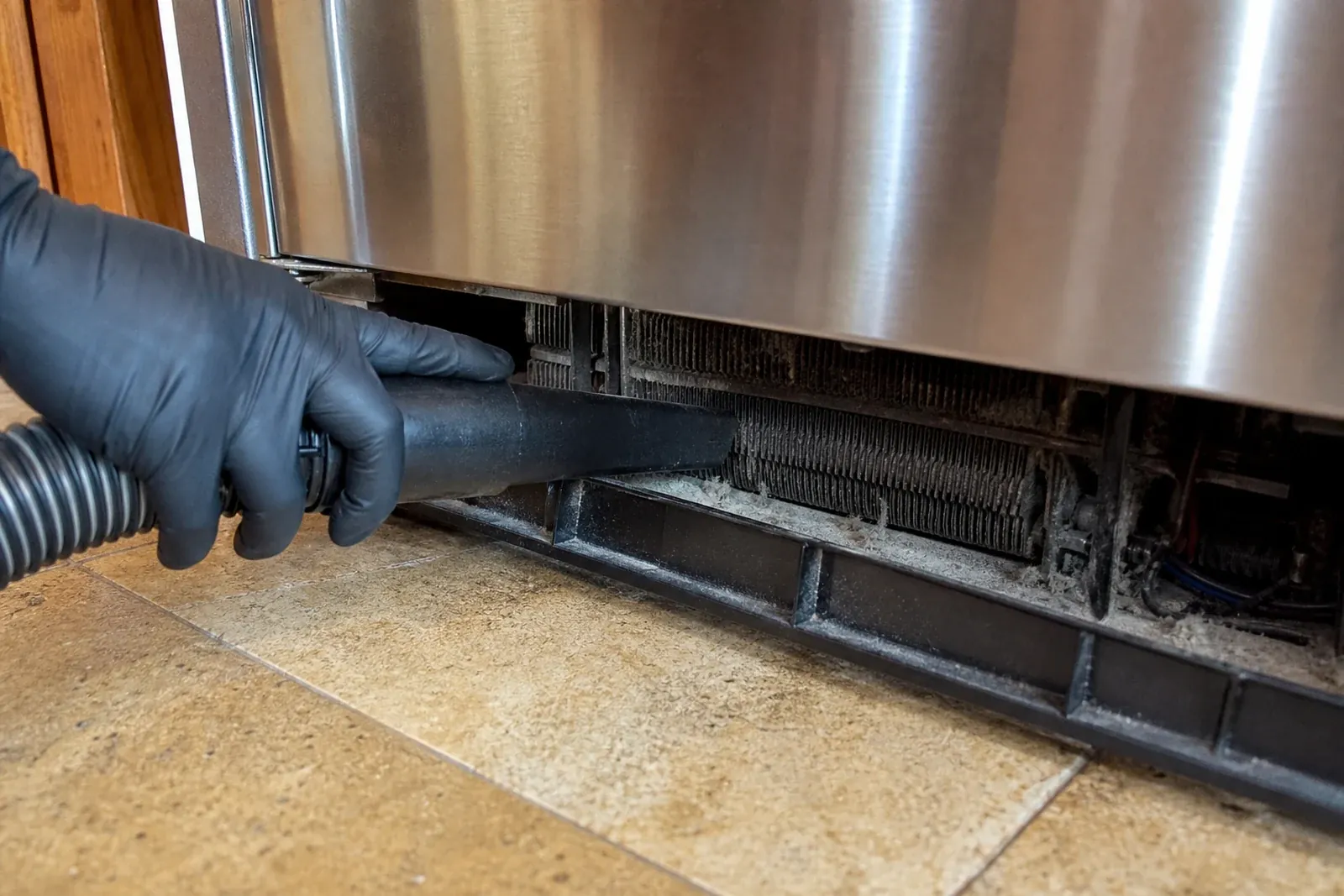
The room-temperature column is the one most people skip, and in Santa Rosa it is the column that prevents the most wasted service calls. A built-in refrigerator rejects its heat through a condenser, and that condenser only works as well as the air moving across it. Inland Sonoma County summers push kitchens genuinely hot, and a condenser packed with hillside dust in Fountaingrove, Skyfarm or the Mark West foothills — or a fine film of wildfire-season ash drawn in after a smoke event — will let the cabinet drift only when the afternoon load peaks, then quietly recover overnight once the kitchen cools. That signature is unmistakable in a log: in band at 9 a.m., warm by 4 p.m., back to normal by midnight, repeating with the heat day after day.
If your warm readings track the hottest hours and clear when the kitchen cools, the fix is almost never the compressor — it is airflow. The same unit that held perfectly through a mild winter can start drifting in July without a single internal part having failed. Cleaning the condenser path and re-logging for another day is the honest, cheap first move, and it is exactly what we would do on site before ever reaching for refrigerant gauges. A log that does not follow the heat — one that stays warm at 2 a.m. with the kitchen at 68°F — tells the opposite story and builds a real case that something internal needs measured diagnosis. Either way, the room-temperature column is what lets us tell those two situations apart without guessing.
Avoid false alarms
Logging mistakes that fake a failure
A log is only as honest as the way you take it, and a handful of common mistakes manufacture scary numbers that have nothing to do with the refrigeration. The most frequent is measuring air instead of food — pointing an infrared gun at the back wall or reading the door display the instant after opening will show a panic number that a glass-of-water probe never would. Another is logging the day you restock from a Sonoma County grocery run, when a cabinet full of room-temperature bottles and produce naturally takes hours to pull back down; that recovery curve is normal, not a fault.
- Reading right after a long door event — wait a few minutes for the fan to recover before recording.
- Logging during or just after defrost — note the hum and expect a brief, self-correcting rise.
- Confusing the panel display with reality — the display is a setpoint and a sensor reading; your independent thermometer is the truth, and a gap between them is itself a useful clue.
- Only one bad day on record — if the pattern is borderline, log a second day so a one-off heat wave or party does not get mistaken for a trend.
Avoid those and your log becomes evidence rather than anxiety. If the numbers still look genuinely wrong after a clean test — food slumping below the band overnight, a freezer that will not hold — that is exactly when the data is worth acting on, and worth bringing to a technician.
Hand-off
What to send us, and what we do with it
When you book, send a photo of the log along with your model and serial tag. The log tells us whether to stock fan and thermistor parts for a likely airflow repair, or to schedule the longer, gauge-based sealed-system diagnosis — which is never quoted from a phone call. Either way you arrive at an accurate, flat quote instead of a guess.
On site we confirm your numbers with our own instruments: an independent fresh-food and freezer reading, condenser and airflow inspection, amp draw if the sealed system is in question, and a seal check if the warm side suggests a gasket leak. The diagnostic is $95–$150 and is credited toward the repair once you approve it. Your day of homework usually shortens that visit and keeps the repair pointed at the real cause.
Next step
Call with the Sub-Zero model number
Have the model-tag photo, current fresh-food and freezer temperatures, and the symptom timeline ready. That lets the Santa Rosa intake route the visit around the likely Sub-Zero part family instead of a generic appliance script.
FAQ
Questions Santa Rosa homeowners ask before scheduling
How do I know if my Sub-Zero compressor is bad or just cycling?
A failing compressor shows as a slow, both-sides warming that never recovers, with the unit running almost constantly. Normal cycling and defrost produce brief rises that drop back within an hour. A one-day temperature log makes the difference obvious, which is why we ask for one before discussing any sealed-system work.
What temperature should a Sub-Zero fresh-food and freezer hold in Santa Rosa?
Aim for about 38°F in the fresh-food section and near 0°F in the freezer. On hot inland afternoons a brief drift is normal as long as it recovers by evening; a reading that stays warm overnight, when the kitchen is cool, is the one worth logging and reporting.
How long should I log temperatures before calling for service?
One full day, with readings every two to three hours including a late-night check, is enough to reveal the pattern. If warm readings only appear during the hottest afternoon hours, clean the condenser and log a second day before booking — that alone resolves many Fountaingrove and Skyfarm calls.
Why does a single warm reading not mean my Sub-Zero is broken?
You may have opened the door mid-defrost, right after loading warm groceries, or during the hottest part of a Santa Rosa afternoon. Sub-Zeros cycle by design, so one snapshot cannot prove a fault. Only a sustained pattern across a logged day distinguishes a real failure from a normal swing.
Should I lower the temperature setting while I am testing?
No. Changing the setpoint mid-test erases the pattern you are trying to capture and can frost the evaporator, creating a new problem. Leave the dial alone, log the numbers as they are, and let the readings show whether airflow, a sensor or the sealed system is responsible.
Can a temperature log really save me money on a Santa Rosa repair?
Often, yes. The most expensive mistake is paying for sealed-system work on a unit that only needed a condenser cleaning or a $280–$600 fan. A clear log frequently redirects the call away from refrigerant and toward the true, cheaper cause — and shortens the on-site visit.
Related