4.9/5 · 1,865 verified customer reviews
Santa Rosa · seasonal mechanism
Why a Santa Rosa Sub-Zero that held all winter starts drifting warm in July
A Sub-Zero is a heat pump, not a cold box — it can only stay cold by moving heat out of the cabinet and into your kitchen. When a Santa Rosa summer raises the temperature on both ends of that exchange, a unit that coasted through January can quietly run out of margin in July.
Direct answer
A Santa Rosa Sub-Zero that held in winter but drifts warm in summer is usually losing margin, not failing. Hotter kitchen air and a dusty condenser shrink how much heat it can reject, so run times stretch and the interior creeps up on hot afternoons. Clean the condenser and log temperatures. If both sections stay warm overnight, it has crossed into sealed-system territory — call (628) 209-6820.
The mechanism
Why winter forgives and summer exposes
A Sub-Zero does not create cold. Its compressor and sealed system pull heat out of the cabinet and dump it through the condenser coil into the surrounding air. How well that works depends on the gap between the inside temperature you want and the air the coil has to push heat into. In a Santa Rosa winter, your kitchen might sit at 65°F, so the unit only fights a modest temperature gap and rejects heat easily — even a half-clogged coil keeps up. The compressor cycles, rests, and the interior never wavers. Owners take that steadiness for granted, which is exactly why the summer change feels like a sudden failure when it is really a slow squeeze.
Then July arrives. Inland Santa Rosa afternoons routinely hit the mid-90s, and a closed-up kitchen behind the unit can sit even warmer. Now the condenser has to shove heat into much hotter air, which it does far less efficiently. The same coil, the same charge, the same compressor — but the margin between what the unit can remove and what summer dumps into the cabinet has shrunk to almost nothing. Open the door a few times during a barbecue, let warm groceries in, and the interior drifts up because the system simply cannot catch back up before the next disturbance.
There is a compounding effect, too. As the kitchen heats up, the compressor runs longer to keep pace, and a hard-working compressor gives off its own heat. In a dual-refrigeration Sub-Zero the freezer side often holds while the fresh-food side slips first, because the fresh-food evaporator has the smaller temperature gap to lose. That split is a useful clue: a freezer that is still hard-frozen while the upper section drifts is the signature of a margin problem, not a dead sealed system.
This is why so many warm-Sub-Zero calls across the city cluster in a heat wave and then vanish in fall. Nothing failed. The appliance ran out of headroom, recovered as soon as the weather broke, and the owner is left wondering whether to trust it next August. Understanding the mechanism is what tells you whether to clean a coil or budget for a sealed-system repair.
Heat-load math
The numbers behind a unit running out of headroom
You do not need engineering to see the pattern. The work a Sub-Zero must do scales with two things: the temperature gap it fights, and how much warm air and food enter the cabinet. Both move in the wrong direction during a Santa Rosa summer. The gap grows because the kitchen is hotter, and the load grows because people open the door more, store more, and bring in groceries and wine that arrive at room temperature or warmer.
The table below is illustrative, not a spec sheet, but it shows how a unit that looks perfectly healthy in winter has almost no reserve on a hot day — and how a dirty condenser pushes it over the edge. Read it as a progression: each row removes a little more of the headroom that kept the interior steady. By the bottom row, the unit is doing everything it can and still losing, which is the point at which most owners pick up the phone.
Notice that the difference between a coil that holds and one that drifts is often nothing more than a season of dust. That is genuinely good news, because it means the most common cause of summer warming is also the cheapest to correct — if you catch it before the constant running stresses other parts.
| Condition | Air at the condenser | Compressor run pattern | Interior result |
|---|---|---|---|
| Winter, clean coil | ~65°F kitchen | Short, with long rests | 37°F, rock steady |
| Summer, clean coil | ~85°F kitchen | Long, brief rests | 38–40°F, holds |
| Summer, dusty coil | ~90°F+ kitchen | Near-constant | 42–46°F, drifting |
| Heat wave, blocked airflow | Trapped hot air at coil | Constant, no rest | Warm both sides |
Owner steps
What you can check before booking a visit
The good news about a margin problem is that the cheapest fixes recover the most margin. Before you assume a failure, work through these in order — they are all cabinet-safe and cost nothing but a little time. Do them in sequence rather than all at once, so you can see which one actually helped.
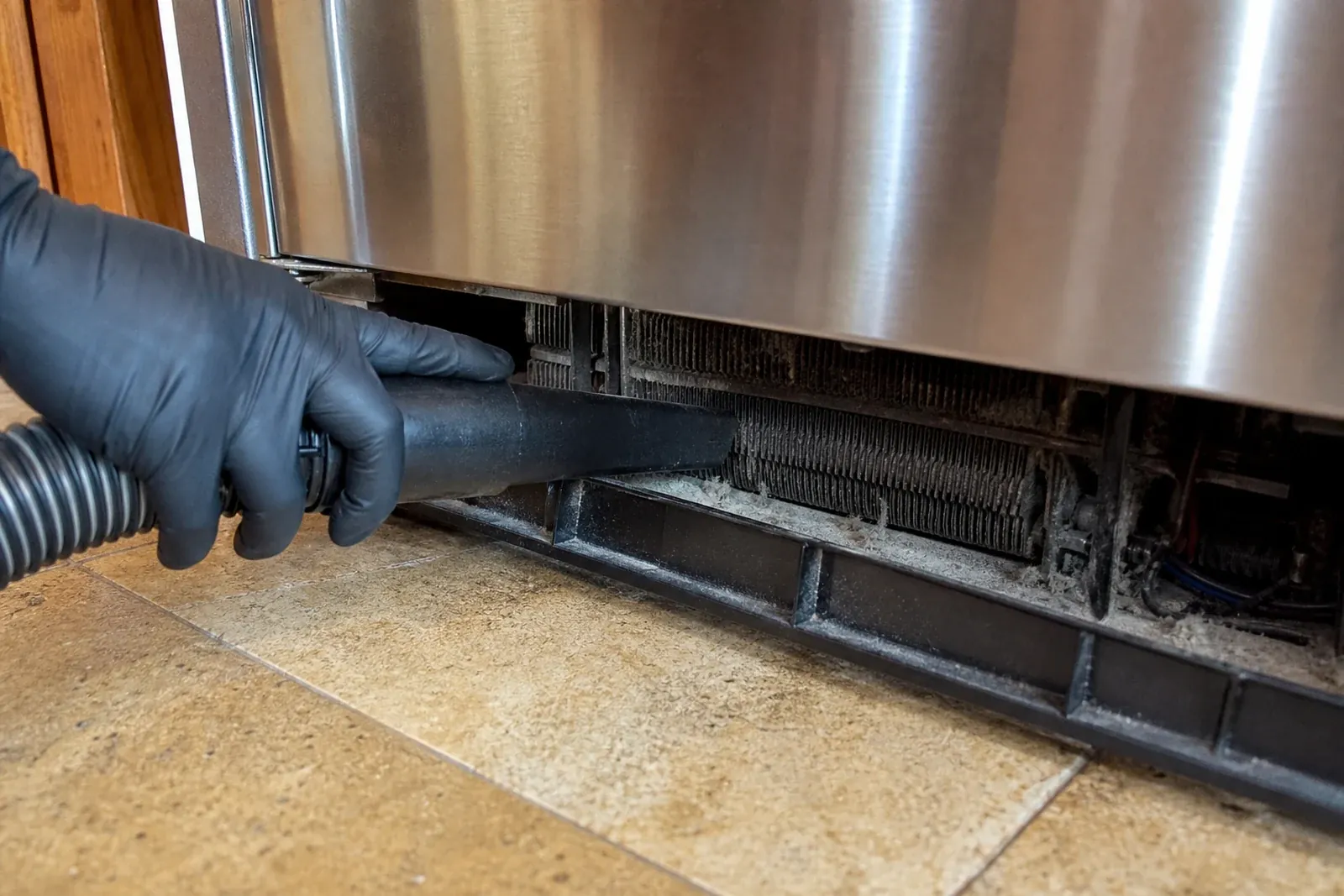
- Clean the condenser path. On most built-in Sub-Zeros the condenser sits behind the upper grille. A season of Santa Rosa dust, hillside grit or wildfire ash on the coil directly cuts heat rejection. Vacuum and brush it gently — this single step resolves a large share of summer warm calls. If you have not done it since last spring, assume it needs doing.
- Give it breathing room. Confirm the grille is not blocked by a cabinet panel, towel or stacked items, and that hot air can actually escape upward. A unit boxed into a hot, unventilated run of millwork is recirculating its own exhaust and fighting itself. This matters more in summer than any other time of year.
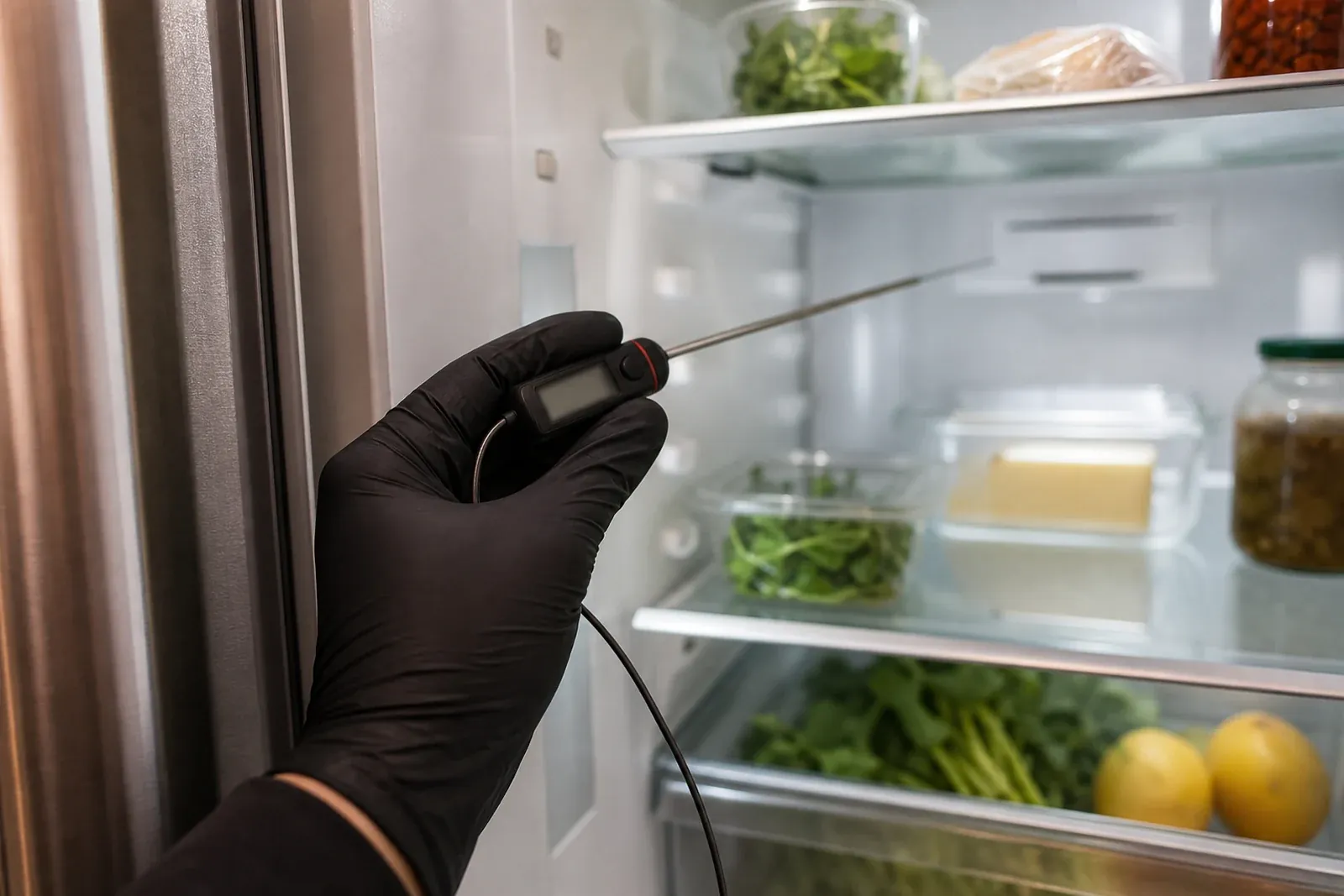
- Log temperatures twice a day. Put a thermometer in the fresh-food section and write down morning and late-afternoon readings for three days. A unit that reads 37°F at 7am but 44°F at 5pm is telling you it is a margin problem, not a dead compressor. That written record is also the single most useful thing you can hand a technician, because it captures behavior a single visit cannot.
- Stop lowering the setpoint. Cranking it colder asks for even more margin you do not have and can frost the evaporator, which chokes airflow and makes things worse. Leave it at the factory setting and let the diagnosis tell the real story.
- Reduce the load during heat waves. Fewer door openings, no loading warm cases of wine or groceries at 4pm, and letting hot leftovers cool on the counter first all give the unit a fighting chance. None of this fixes a broken appliance, but it buys a stressed one enough room to keep your food safe until the weather breaks or a technician arrives.
If you complete this list and the interior still drifts on a cool morning — not just a hot afternoon — you have ruled out the easy causes, and it is time for a diagnostic rather than another round of cleaning.
The dividing line
When summer drift becomes a real failure
Margin loss and genuine failure look similar for an afternoon, but they diverge overnight. A margin problem recovers when the kitchen cools after sunset: by the next morning the interior is back near setpoint. A real failure does not recover, because the cause is inside the appliance rather than out in the room. Here is how to tell them apart before you call:
- Still margin (cheaper fix): warm in the late afternoon, cool by morning; freezer stays cold; run times stretch but the compressor still rests; the coil was visibly dusty. Cleaning and ventilation usually settle it — often a $95–$280 service.
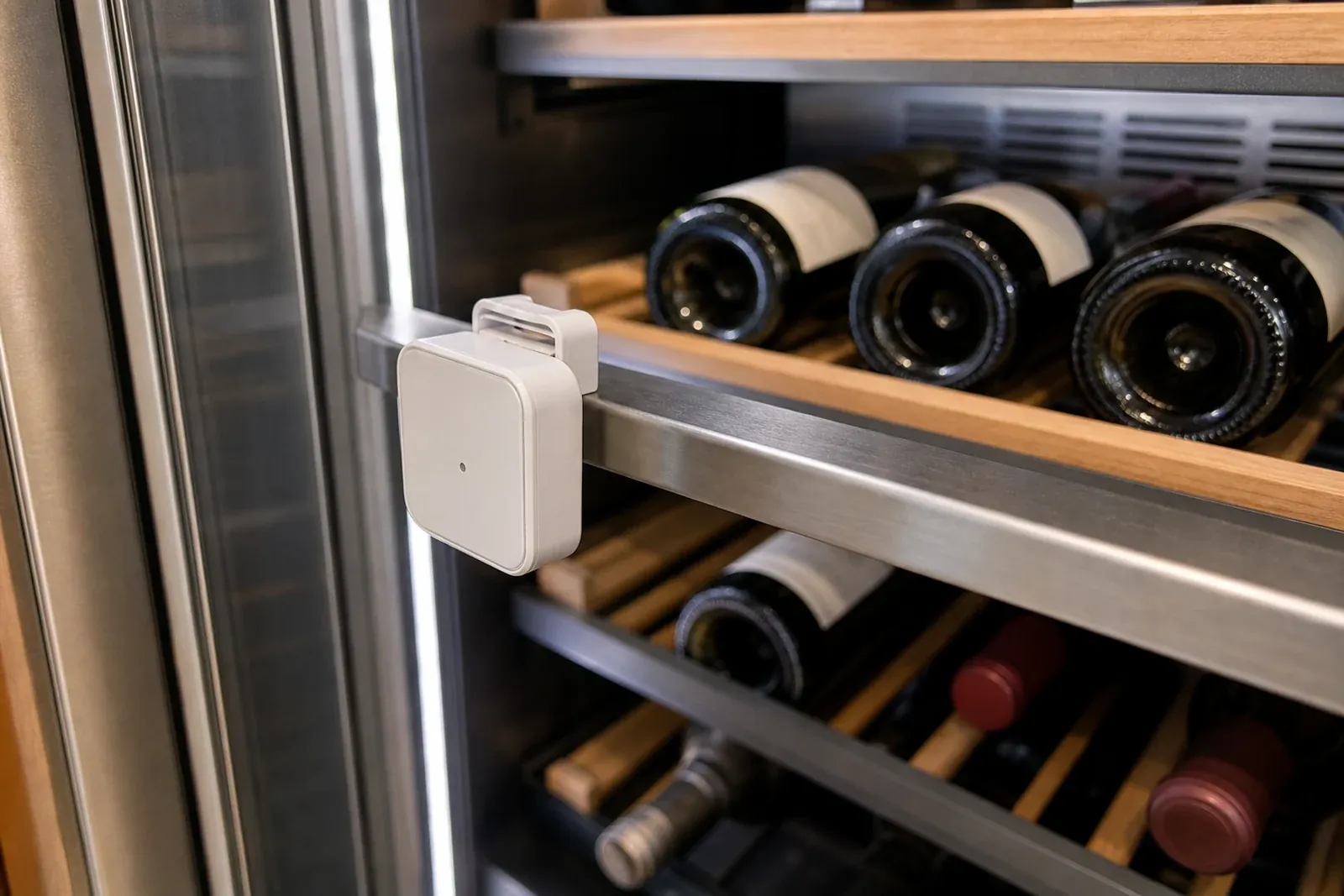
- Now a failure (sealed-system territory): both sections stay warm overnight; the compressor runs constantly and never rests even at 5am; the coil is already clean; you hear no change after cleaning. This points to refrigerant charge, a restriction, or the compressor itself.
Sealed-system work is not a guess and not a DIY job. It needs EPA Section 608 certification to handle refrigerant legally, and across Santa Rosa's mix of older estate units on R-12, mid-era R-134a and newer R-600a, the correct procedure differs by unit. Sealed-system repairs typically run $900–$1,800; most other Sub-Zero repairs land between $200 and $650. We approve a flat-rate quote before any work, and the $95–$150 diagnostic is credited toward the repair.
Wine columns
Why a heat wave shows up first in your wine storage
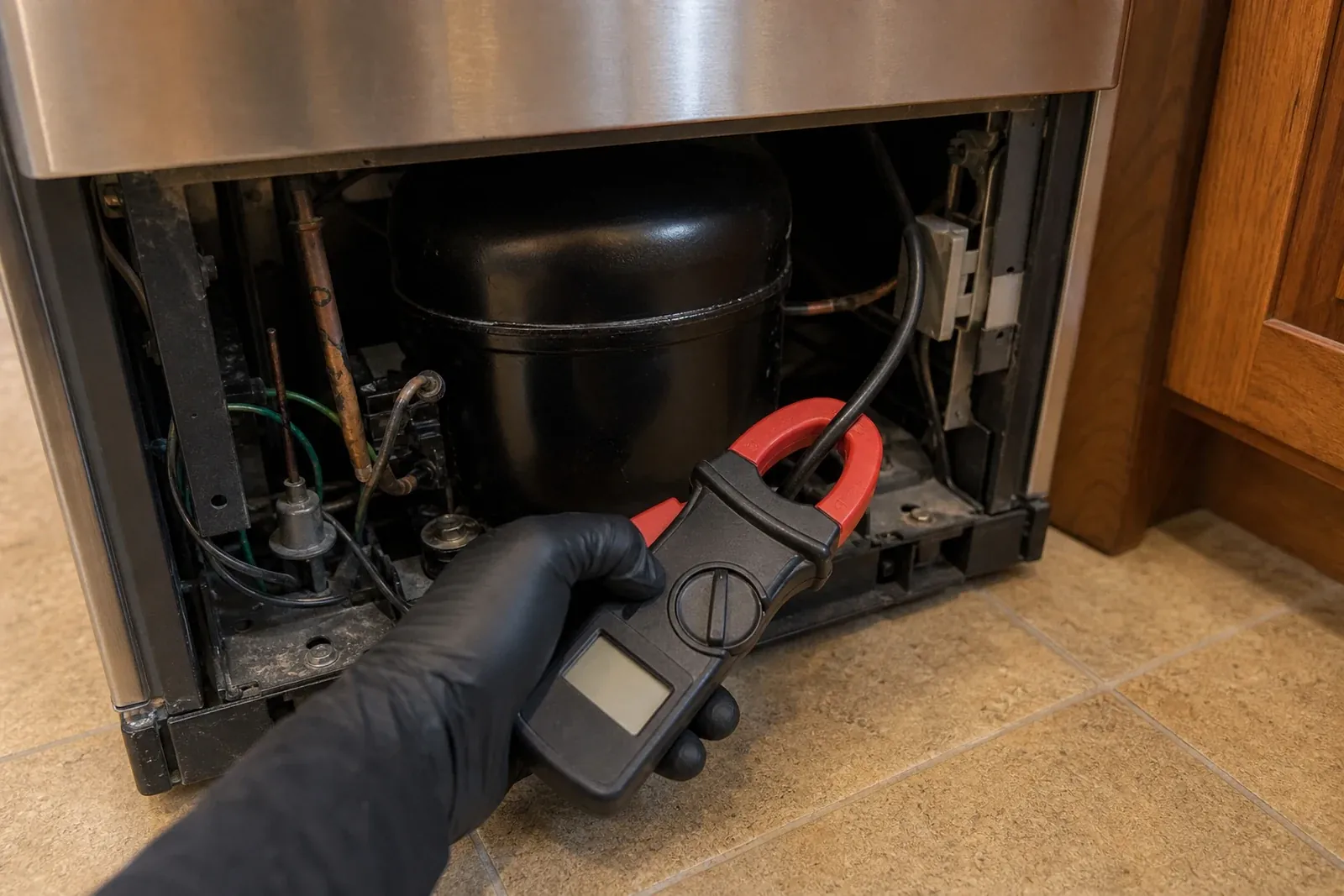
In a wine-country city, the appliance that complains first in a heat wave is often the wine column, not the refrigerator. Wine storage targets a tight band — commonly around 55°F for a cellar zone — and the whole point is stability, so even a couple of degrees of drift matters to a collector when it would go unnoticed in a fresh-food drawer. Because the acceptable swing is so small, a wine column has even less margin to give away when summer air loads its condenser.
If your refrigerator is holding but your dual-zone wine unit is creeping up on hot afternoons, that is the same heat-load mechanism, just revealed by a stricter target. The first steps are identical: clear the condenser path, confirm the unit can ventilate, and log the temperature across a few days before assuming the worst. Many wine-column owners discover the column was simply sharing a hot, enclosed cabinet bank with a dishwasher or oven that pushed the local air temperature up during evening cooking — a ventilation fix rather than a sealed-system one.
Where a wine column truly differs is in tolerance. A collection does not forgive repeated swings the way a carton of milk does, so it is worth acting sooner. If a wine unit cannot hold its setpoint after a clean coil and good airflow on a mild day, treat that as a real diagnostic priority rather than waiting out the season. The diagnosis is the same disciplined process — tie the symptom to measured temperatures and airflow — but the stakes behind the glass are higher.
Next step
Call with the Sub-Zero model number
Have the model-tag photo, current fresh-food and freezer temperatures, and the symptom timeline ready. That lets the Santa Rosa intake route the visit around the likely Sub-Zero part family instead of a generic appliance script.
FAQ
Questions Santa Rosa homeowners ask before scheduling
Why is my Sub-Zero warm in summer but it was fine all winter?
Because a Sub-Zero only stays cold by rejecting heat into your kitchen, and a hot Santa Rosa afternoon makes that much harder. The unit may have coasted in winter on a half-dirty coil, then run out of margin in July. Clean the condenser and log temperatures — the fix is often cheap if you catch it early.
How hot does it have to get before a Sub-Zero starts to drift?
There is no single number; it depends on coil cleanliness, ventilation and how much the cabinet is opened. In practice, inland Santa Rosa kitchens that push past the mid-80s during peak afternoons are where we see clean units start to lose ground and dusty ones drift several degrees.
Should I move food out of my Sub-Zero during a heat wave?
Only if it has clearly drifted into the danger zone — check with a thermometer rather than guessing. If the fresh-food section is reading above about 40°F into the evening, move perishables and book a visit. If it recovers overnight, it is a margin problem and your food is generally safe.
Will adding refrigerant fix a Sub-Zero that warms up in summer?
Almost never, and you should not try. A properly charged sealed system does not leak refrigerant seasonally; summer warming is usually airflow and heat-load, not low charge. Adding refrigerant to a system that is not low can cause new problems, and the work legally requires EPA Section 608 certification.
How do I know if my summer drift is the condenser or the compressor?
The overnight test sorts it. A condenser or margin issue recovers once the kitchen cools after dark and reads near setpoint by morning. A compressor or sealed-system failure stays warm overnight and runs constantly even at dawn. If cleaning a visibly dusty coil restores it, you had the cheaper problem.
Can a clean condenser still cause warm temperatures in Santa Rosa summers?
Yes, if the unit cannot ventilate. A clean coil still has to dump heat somewhere, so a Sub-Zero boxed into a hot, sealed run of cabinetry or blocked at the grille will struggle on the hottest days. Clearing the grille and improving airflow around the unit can recover the lost margin.
Related