Santa Rosa · Skyfarm · 95409
Skyfarm Sub-Zero running long in the heat? Start with the air around the cabinet, not the compressor
On Skyfarm's ridge lots, the problem is rarely a tired compressor in June — it is the ambient air the condenser has to reject heat into. Elevation, west-facing glass and long afternoon sun raise the temperature right around the unit before anything inside it fails.
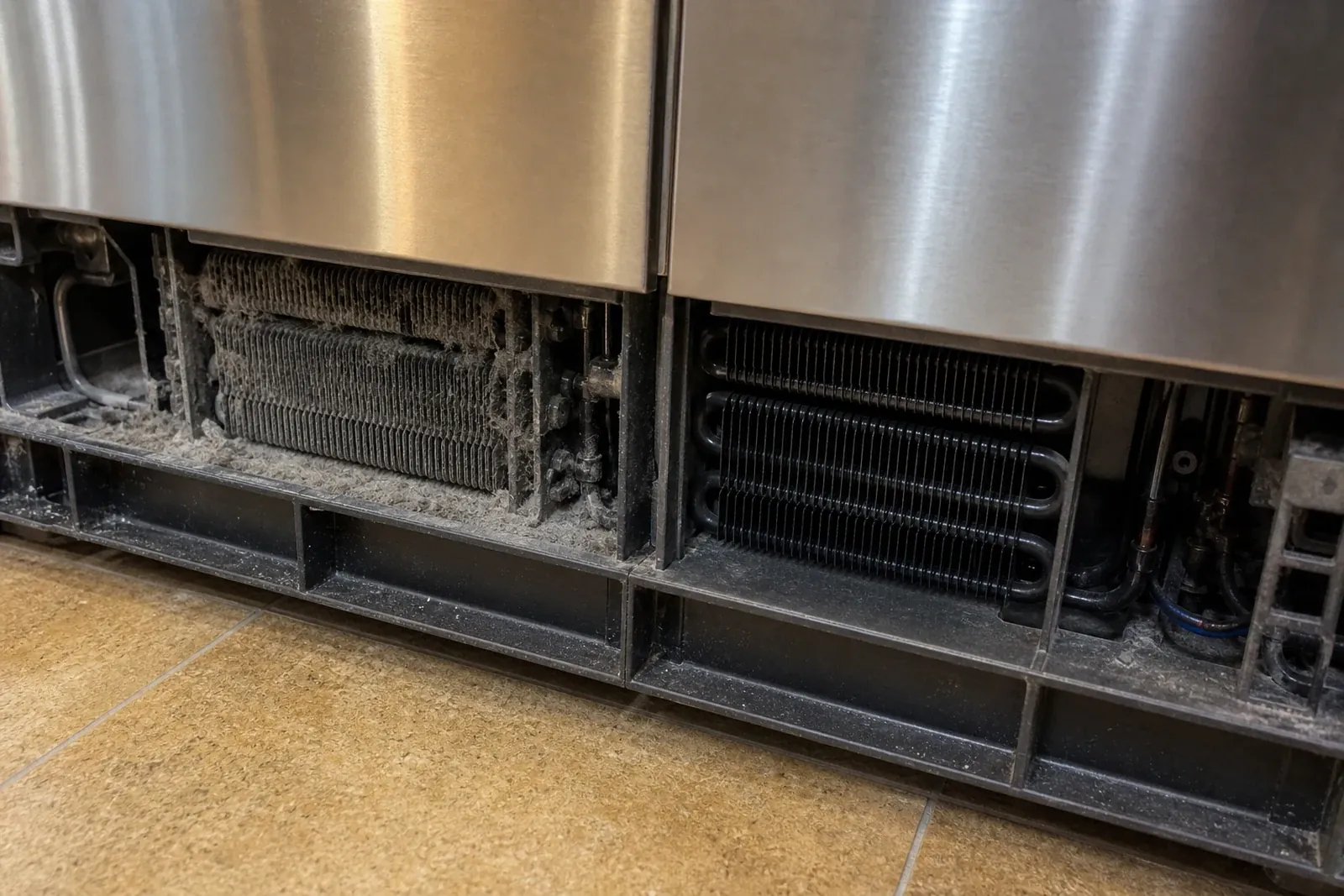
Direct answer
A Skyfarm Sub-Zero that runs long in peak summer usually has a heat-load problem, not a sealed-system failure. At ridge elevation with strong afternoon sun, the air around the cabinet climbs, so the condenser works harder to reject heat. We confirm the coil is clean and the cabinet is ventilated before gauges touch the sealed system. Book at (628) 209-6820.
The Skyfarm difference
Elevation and west sun change the math before the appliance does
Skyfarm sits on the higher shoulders above Fountaingrove in the 95409 corridor, where ridge lots were laid out to capture the Santa Rosa Plain and Mayacamas views — which in practice means walls of west- and southwest-facing glass and very little afternoon shade. By two or three o'clock in July, that orientation turns the kitchen into a solar collector. A built-in Sub-Zero is engineered to reject heat into the room around it; when that room air is already running warm from radiant gain through the glass, the condenser has a smaller temperature gap to work with, and the compressor simply runs longer to hold the same setpoint.
Elevation compounds it in a quieter way. Higher on the ridge, kitchens catch direct, unfiltered sun later into the evening than homes tucked down in the valley, so the peak-heat window that loads the condenser is stretched out rather than cut short by an early shadow. The same square footage of glass that makes a Skyfarm kitchen beautiful is also a large, sustained heat source aimed at the wall where the refrigeration usually lives.
This is a deliberately different failure story than the one on the Fountaingrove dust-and-heat page. There the headline is fine hillside dust packing the coil. On Skyfarm the coil is often reasonably clean and the unit is still struggling, because the limiting factor is the ambient heat load — the temperature of the air the coil is trying to dump heat into. Both can be true at once, but the order in which we check them matters, and on a ridge lot we weigh radiant gain and cabinet ventilation before we assume the coil is the villain.
Why it runs long
What a high ambient temperature actually does to a built-in
Refrigeration is just moving heat from inside the box to outside it. The bigger the difference between the cabinet temperature and the air the condenser exhausts into, the easier that transfer is. Raise the surrounding air and you shrink that gap, so the system compensates: it runs longer cycles, drops less often into a full off state, and recovers more slowly after the door opens. None of that means a part has failed — it means the unit is doing exactly what it was designed to do under a harder condition. A Sub-Zero rated to hold its setpoint in a normal kitchen is still bound by physics when the room around it climbs past what the engineers assumed.
The trouble is that long run times also describe a genuine sealed-system fault, so the two get confused, and a long-running unit on a hot afternoon is the single most common reason a Skyfarm owner reaches for the word "compressor." The way we separate the two is to read the freezer first, log run behavior against the actual room temperature measured at the unit rather than at the thermostat across the house, and watch whether the long cycles ease as the evening cools. A heat-load unit relaxes when the sun drops behind the ridge; a sealed-system or charge problem does not care what time it is and runs hard at midnight just as it did at noon.
We also pay attention to the fresh-food and freezer split, because dual refrigeration gives away the difference. Under pure heat load the freezer usually stays firm while the fresh-food side gives up a degree or two during the peak window, then recovers. When the freezer also loses ground and stays soft overnight, the explanation has moved past ambient air. The signs we weigh on a Skyfarm visit:
- Longer compressor cycles through the hottest part of the day that visibly ease after sunset.
- Slower recovery after the door is opened during a warm afternoon, normalizing in the cool of the evening.
- Fresh-food side drifting up a degree or two while the freezer still holds firmly.
- Warm exhaust at the lower grille when the surrounding cabinetry or a sun-baked wall radiates absorbed heat back at the unit.
- Behavior that tracks the weather — bad on a 100-degree day, normal on a mild one.
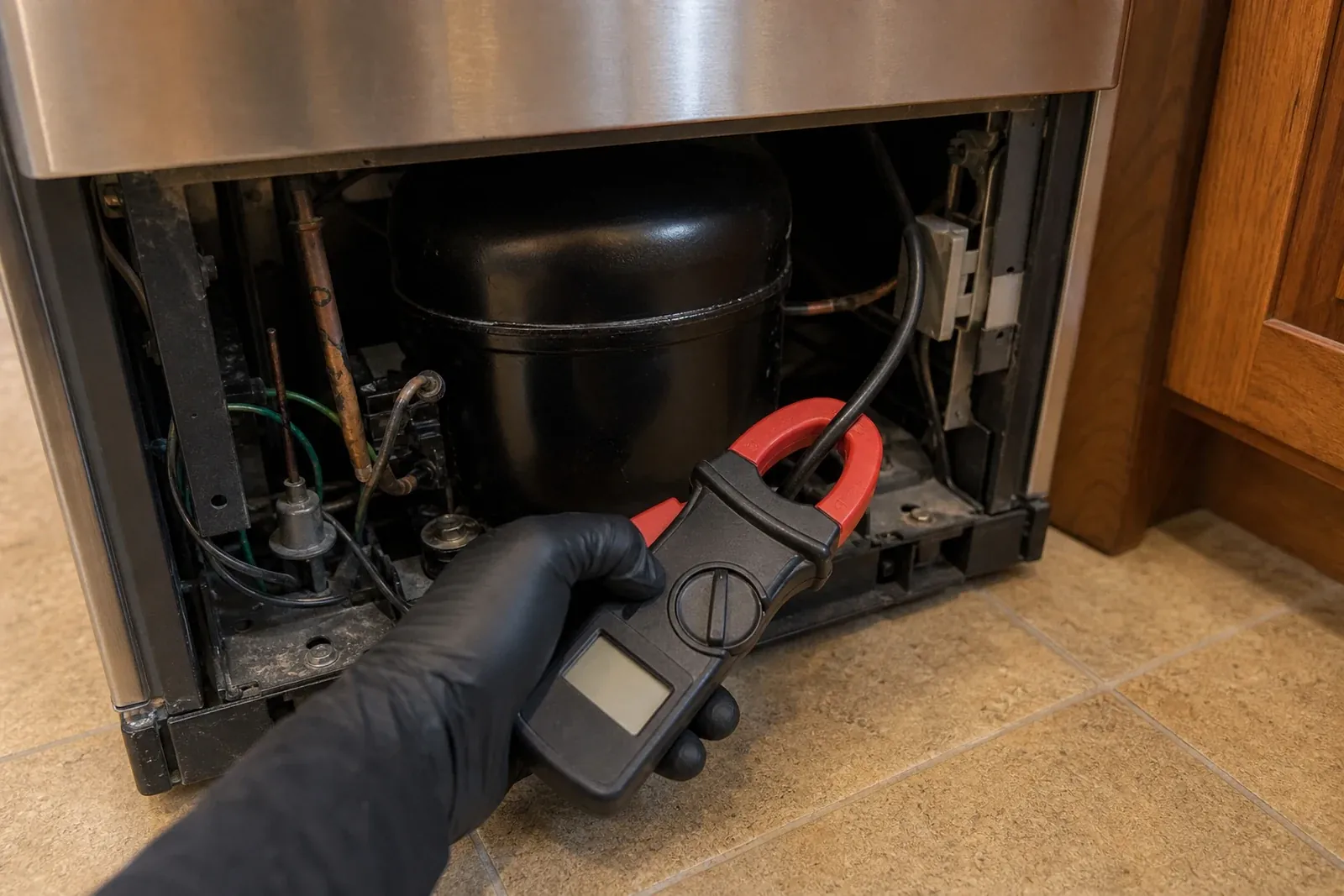
Diagnostic order
Coil first, cabinet ventilation second, sealed system last
On a long-running Skyfarm call we follow a deliberate sequence so the most expensive possibility is also the last one we reach for. Most ridge-lot summer complaints are resolved in the first two or three steps, which keeps a $95–$150 diagnostic from turning into a sealed-system conversation it never needed to be. The discipline matters because, once gauges come out, the urge to find a refrigerant explanation for every long cycle is strong — and on a hot Skyfarm afternoon that explanation is usually wrong.
The point of the table below is that two cheap checks come before any gauges touch the unit. A clean coil paired with adequate clearance and real airflow through the cabinet removes the heat-load explanation entirely. Only when the unit still runs constantly with clean airflow, a clear coil and verified clearance — and the long cycles refuse to ease overnight — do we open the sealed system and measure pressures and amp draw, the work covered on the sealed-system and compressor page. That last step is also where EPA Section 608 certification applies, because any refrigerant recovery or recharge is legally certified work, not something we approach casually to chase a summer symptom.
| Step | What we check | What it tells us | Planning range |
|---|---|---|---|
| 1. Read the split | Freezer firm, fresh-food slightly warm, long cycles in the heat | Points to heat load, not a dead compressor | Included in diagnostic |
| 2. Clean the condenser | Coil and lower-grille airflow, fan operation | Restores rejection capacity | $95–$280 |
| 3. Verify cabinet ventilation | Top, side and rear clearances; trapped exhaust; sun exposure | Removes the ambient-heat cause | Included / cabinet-safe |
| 4. Sealed-system test | Gauges, amp draw, leak check (only if 1–3 are clean) | Confirms charge or compressor fault | $900–$1,800 |
Cabinet airflow
On Skyfarm, a starved cabinet is as common as a dirty coil
A built-in Sub-Zero pulls cooling air through the lower grille and pushes warm exhaust out the same area; it relies on the cabinet surround leaving room for that air to move freely. In Skyfarm's newer view-home kitchens, we regularly find the unit boxed into a tight custom surround, a sun-baked exterior wall directly behind it, or a toe-grille partly obscured by a flush millwork detail the cabinetmaker prized for its clean look. The coil can be spotless and the unit will still overheat, because its own warm exhaust has nowhere to go and ends up recirculated back through the intake — a closed loop of its own waste heat. That is a ventilation problem masquerading as a refrigeration problem.
It shows up in predictable spots. A peninsula or island install with cabinetry crowding the sides. A panel-ready surround built tight enough that the specified top and rear clearances were quietly lost during the remodel. A unit set against the same west wall that bakes all afternoon, so the wall itself is a radiant source pressed against the back of the cabinet. None of these are appliance faults, but every one of them lengthens run times in exactly the way a charge problem does.
Checking it is part of cabinet-safe service: we confirm the grille is clear, measure the clearances the model actually needs, and look for trapped or recirculated exhaust before recommending anything mechanical. Where a west wall is dumping radiant heat into the surround all afternoon, the cheapest durable fix is sometimes about shade, clearance or restoring grille airflow rather than a refrigeration part at all — and we will say so plainly rather than reaching for a quote you do not need.
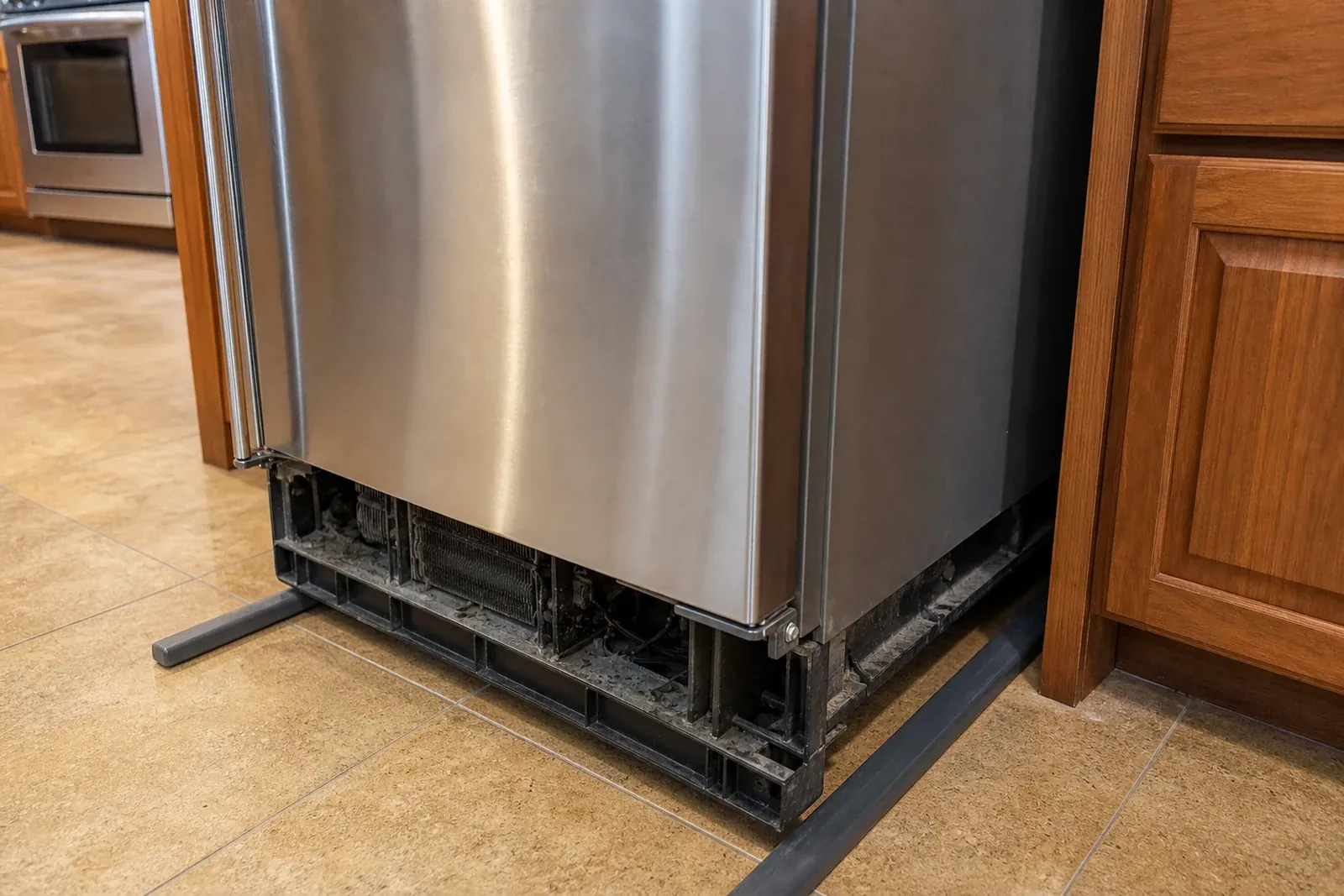
Repair vs heat load
How we keep a hot summer from being misdiagnosed as a failure
The honest version of this service is conservative: a Sub-Zero that holds firmly through the cool morning, drifts a degree under the peak-afternoon sun, and recovers in the evening is not broken, and we are not going to sell you a compressor for it. What that unit needs is a clean coil, verified clearance, and sometimes a maintenance cadence tuned to the season — the schedule on the Santa Rosa maintenance calendar, which on a ridge lot means tightening the condenser-cleaning interval before summer rather than waiting for an annual habit.
That conservatism is also why we measure before we quote. A flat-rate price is only approved after the diagnosis, the diagnostic fee is credited toward any repair, and we will tell a Skyfarm owner that the right answer is shade and clearance if that is what the evidence says. Selling a sealed-system repair into a heat-load symptom would be the easy money and the wrong call, and a unit that was never actually faulty would simply run long again the next hot week.
The cases that do cross into repair are the ones where the freezer also gives ground, the long cycles never let up after dark, or the unit fails to recover overnight with clean airflow and clearance already confirmed. That pattern, walked through on the not-cooling diagnostic, earns the sealed-system test and an honest repair-versus-replace conversation if a compressor or charge fault is found. Sorting one from the other on the first visit is the whole value of a diagnostic-first approach on a Skyfarm ridge lot, where the easy and the expensive explanations look nearly identical in July but cost an owner ten times apart.
Next step
Call with the Sub-Zero model number
Have the model-tag photo, current fresh-food and freezer temperatures, and the symptom timeline ready. That lets the Santa Rosa intake route the visit around the likely Sub-Zero part family instead of a generic appliance script.
FAQ
Questions Santa Rosa homeowners ask before scheduling
Why does my Sub-Zero in Skyfarm run constantly in summer but seem fine in winter?
On Skyfarm's ridge lots, west-facing glass and long afternoon sun raise the air temperature right around the cabinet, so the condenser has less of a gap to reject heat into and the compressor runs longer to hold the same setpoint. In the cooler winter air it cycles normally. If the freezer still holds firmly and run times ease after sunset, it is usually heat load rather than a failed part.
Is a long-running compressor on a hot Skyfarm afternoon a sign of a sealed-system failure?
Not by itself. A heat-load unit runs long through the peak-sun window and relaxes as the evening cools, while a sealed-system or charge problem runs long regardless of the time of day. We read the freezer, log the cycles against the actual room temperature, and only open the sealed system if the coil is clean, clearance is verified and the unit still will not recover.
How is this different from the Fountaingrove dust-and-heat condenser problem?
Fountaingrove's headline is fine hillside dust packing the condenser coil. On Skyfarm the coil is often reasonably clean and the limiting factor is elevation plus radiant gain through west-facing glass raising the ambient air the coil has to dump heat into. Both can happen together, but on a ridge lot we weigh cabinet ventilation and sun exposure first.
Can the cabinet around my Sub-Zero be the reason it overheats?
Yes, and on Skyfarm it is common. A unit boxed into a tight custom surround, a sun-baked wall directly behind it, or a partly blocked toe-grille can recirculate its own warm exhaust even with a spotless coil. We verify the grille is clear and measure the clearances your model needs as part of cabinet-safe service before recommending any mechanical repair.
What can I do before the technician arrives in 95409?
Note the fresh-food and freezer temperatures, and whether the long run times ease after sunset. Keep the doors closed during the hottest hours, do not lower the setpoint repeatedly, and clear anything stacked against the lower grille. If you can shade the west-facing glass during peak afternoon, that alone often shortens the cycles while you wait for the visit.
How much does it cost to diagnose a Skyfarm Sub-Zero that runs long?
The diagnostic visit is $95 to $150 and is credited toward any repair you approve. Most Skyfarm heat-load calls resolve at the condenser-cleaning and cabinet-airflow stage, roughly $95 to $280. A genuine sealed-system or compressor repair runs $900 to $1,800, and we only reach that step after the cheaper causes are ruled out on site.
Related