5.0/5 · 1,362 verified customer reviews
Santa Rosa · Rincon Valley · 95403 / 95405
Sub-Zero not cooling in Rincon Valley: start at the condenser, not the compressor
A warm Sub-Zero in Rincon Valley is more often a heat-and-dust story than a dead compressor. On the east-side flats, a summer afternoon and a coil that has not been cleaned in a couple of years explain most not-cooling calls we take on this side of town.
Direct answer
If a Sub-Zero is not cooling in Rincon Valley, read both compartments first: a warm fresh-food side with a still-cold freezer usually means airflow, a stalled fan or a thermistor — not the compressor. Clean the condenser, keep the doors shut, log both temperatures, and stop dropping the setpoint. If both sides run warm, suspect the sealed system: (628) 209-6820.
The Rincon Valley pattern
Why warm calls cluster here in summer
Rincon Valley sits on the warm east side of Santa Rosa, in the 95403 and 95405 ZIPs along the Calistoga Road and Hoen Avenue corridors. Many of the single-story ranch and split-level homes here were built or remodeled between the late 1970s and the 1990s, which means a lot of mature built-in Sub-Zeros installed into tight cabinet bays with the condenser packed up behind a toe-grille that rarely gets touched. A unit that has run quietly for fifteen or twenty years in a Middle Rincon home has usually never had that coil cleared.
Two local realities drive most of the not-cooling calls we answer in this neighborhood. First, the valley traps afternoon heat — kitchens near Montgomery Village or backing onto Howarth Park can sit several degrees warmer than the coastal-cool homes out west, and that heat lands on the condenser exactly when the compressor is already working hardest. A west-facing Rincon Valley kitchen taking direct late-day sun makes it worse, because the room the coil dumps heat into is the hottest room in the house at the worst possible hour. Second, household dust and the fine grit that blows in off the dry hillsides above Rincon Ridge settle on the coil over the years. A coil that held fine all winter starts losing the fight by July.
None of that is a failed compressor — it is airflow, and airflow is the cheapest thing to fix. That is exactly why we do not let a Rincon Valley caller jump to the worst-case diagnosis over the phone. The unit may be telling you it is overheating, not dying, and the difference between those two readings is the difference between a twenty-minute cleaning and a sealed-system quote.
Read the split
Warm fresh-food vs both-sides-warm
Sub-Zero's dual refrigeration is your single best diagnostic clue, and it is the first thing we ask a Rincon Valley caller to check. Open the freezer and read its number, then read the fresh-food side. The relationship between the two points you at a price band before anyone schedules a visit.
If only the fresh-food side is warm and the freezer is still holding near zero, the problem lives in the freshfood evaporator path — its fan, the defrost cycle, a blocked airflow vent or a thermistor reading a few degrees off. That is typically a $280–$600 repair. If both compartments drift warm and you can hear the compressor running almost constantly, the conversation moves to the condenser load first, then the refrigerant charge and the compressor — sealed-system territory. The table below is the shorthand we use over the phone.
| What you observe | Most likely cause in Rincon Valley | Planning range |
|---|---|---|
| Fresh-food warm, freezer still cold | Evaporator fan, defrost, thermistor or blocked vent | $280–$600 |
| Both sides warm, compressor runs nonstop | Dust-loaded condenser, then sealed system / compressor | $95–$1,800 |
| Warm only during a heat wave, recovers at night | Condenser airflow can't shed the valley heat load | $95–$280 |
| Warm right after summer entertaining | Door traffic plus a marginal coil; clean and re-measure | $95–$280 |
Condenser first
The airflow checks that come before any part
On a Rincon Valley call we do not name a part until the air path is proven clean, because here it so often is the whole story. The owner-safe checks, in order:
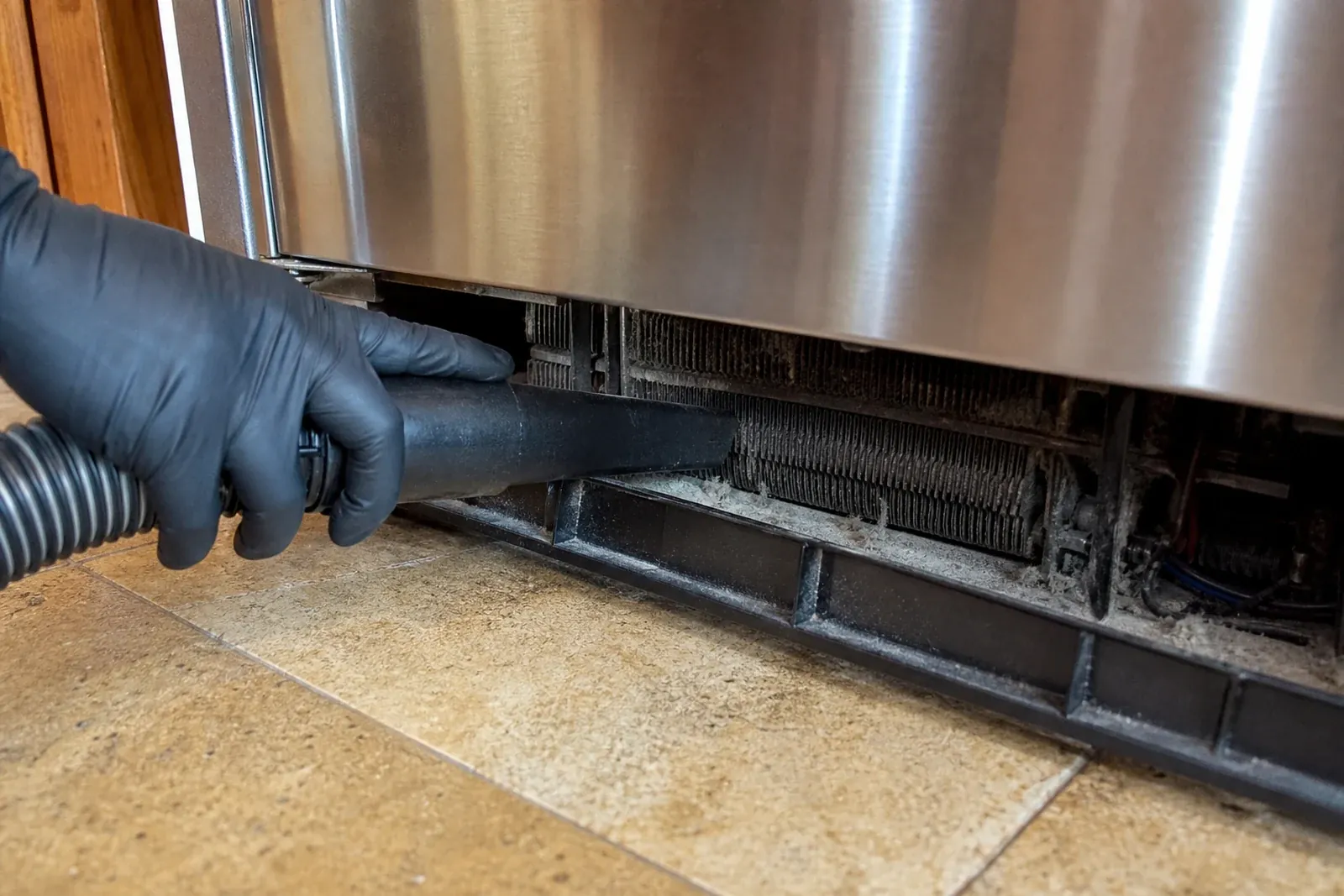
- Find the toe-grille and look at the coil. On built-in BI units it sits behind the grille at the base of the cabinet. If it looks like grey felt rather than metal fins, that is your culprit — common on the older installs along Hahman Drive and Brush Creek Road that have run a decade between cleanings.
- Brush and vacuum gently. Clear the felt off the fins without bending them, then vacuum the dust that drops. Do not blast it deeper into the cabinet.
- Check clearance and room heat. A coil cannot dump heat into a kitchen sitting at 85°F with no airflow. If the unit recovers overnight when the house cools, that is a strong sign the coil is marginal rather than the compressor failed.
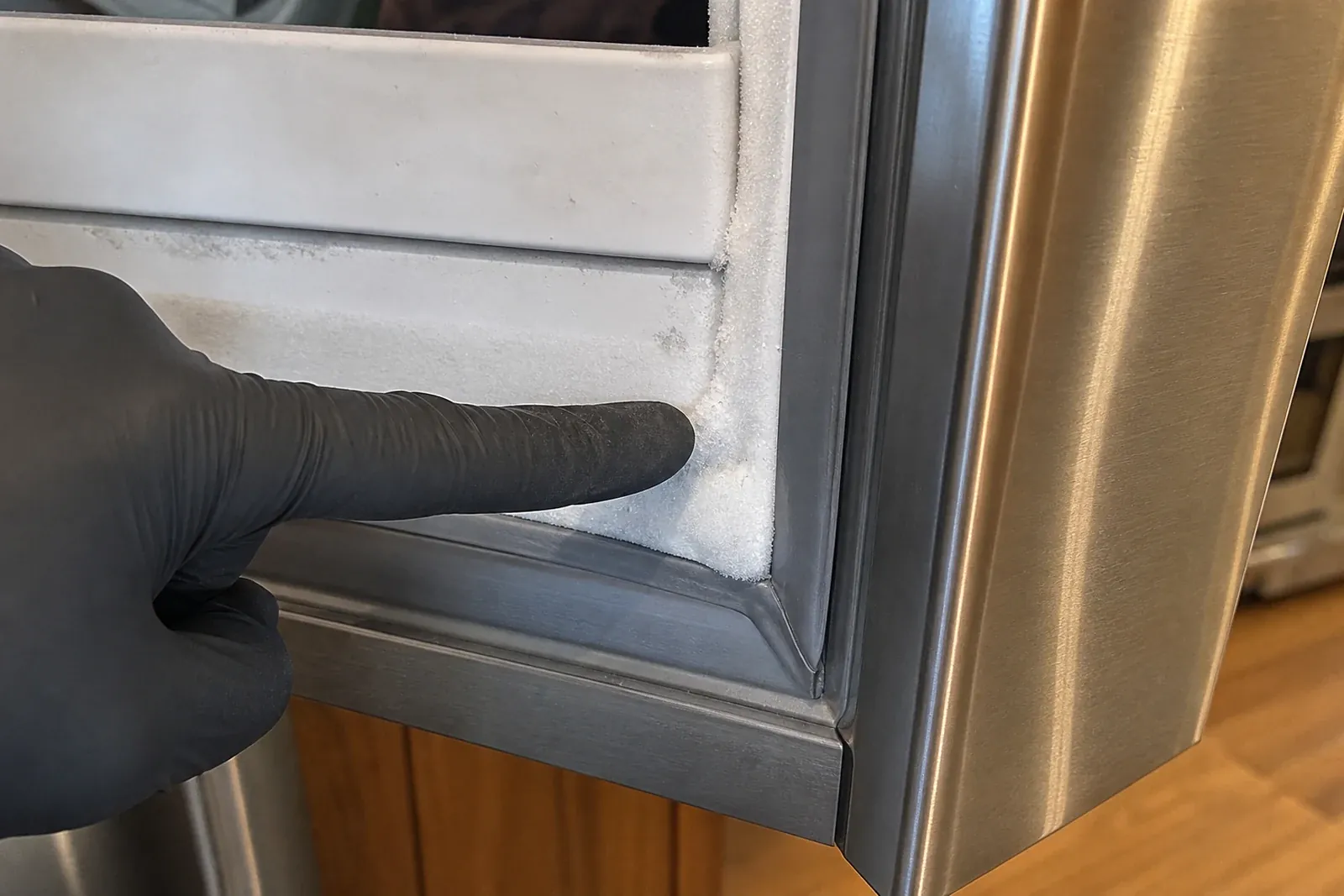
- Confirm the doors are sealing. A frost line at the door edge or a door that does not snap shut lets warm valley air leak in and mimics a cooling fault.
- Write down both temperatures and the time. A reading before the cleaning and one a few hours after tells the technician whether airflow was the fix or just one factor.
If a clean coil and sealed doors bring the fresh-food side back into range within a day, you may have solved it for the cost of twenty minutes. If it does not recover, you have given us exactly the evidence we need to go further without guessing. See the seasonal cadence on our Sub-Zero maintenance calendar.
When to stop
Where owner steps end and a technician begins
Cleaning the condenser path and confirming the door seals are the two things a Rincon Valley homeowner should do. Stop there. The steps below are where DIY stops helping and starts hiding the evidence a diagnosis depends on:
- Do not add refrigerant. A sealed Sub-Zero system does not "run low" without a leak, and topping it off is illegal without EPA Section 608 certification and useless without finding the leak. See our notes on sealed-system and compressor diagnosis.
- Do not keep dropping the setpoint. Forcing the unit colder masks the pattern and can frost the evaporator solid, turning a fan repair into a defrost-and-fan repair.
- Do not bypass a thermistor or reset a returning alarm on a loop. One reset to test is fine; a code that comes back is data, not a nuisance.
- Move the food if the fresh-food side climbs above 45°F and book promptly rather than waiting to see if it self-corrects through another hot afternoon.
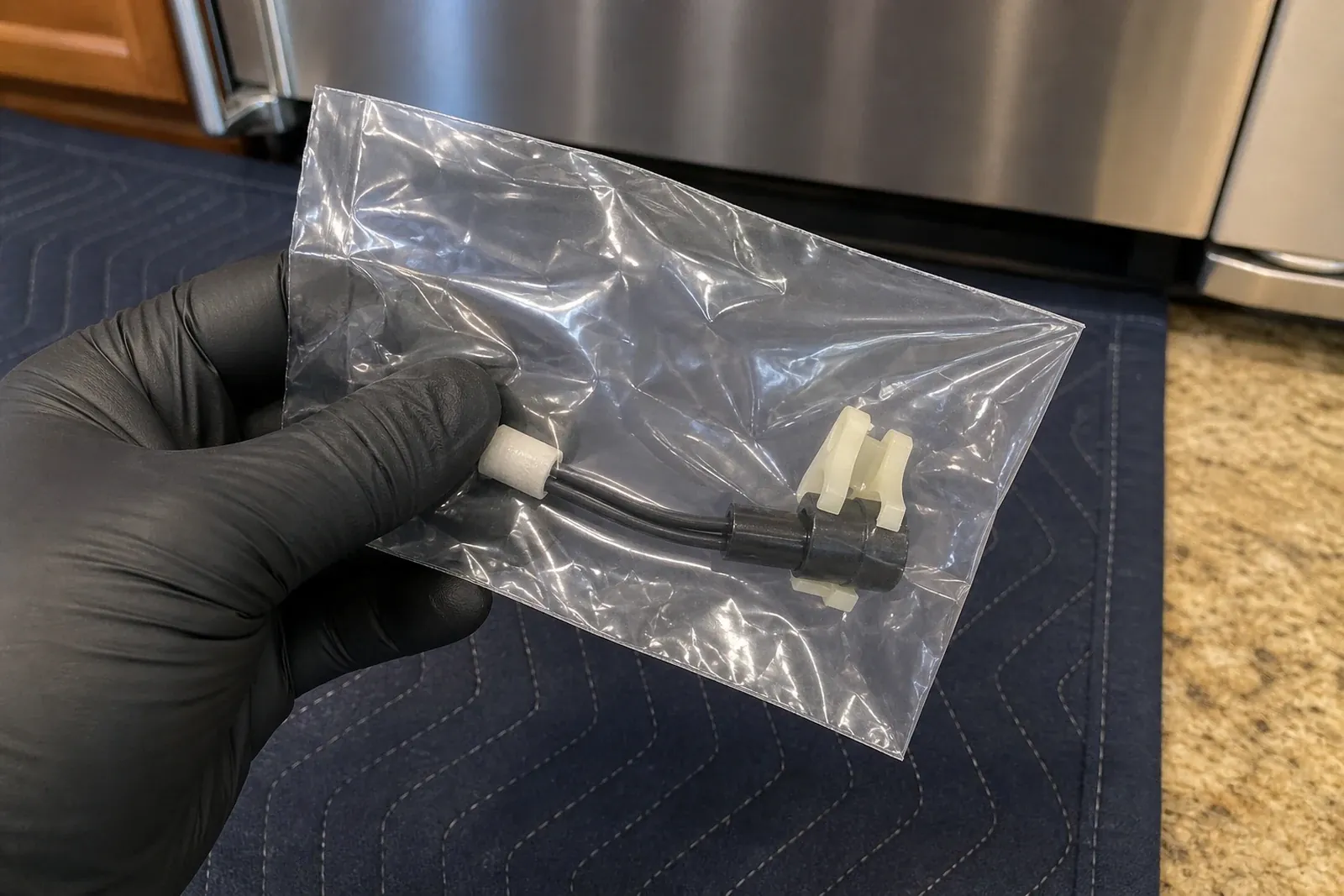
When you call, have a photo of the model tag, both current temperatures, when the warming started, and whether the unit recovers overnight. For the east-side Rincon Valley route that intake detail is what lets us bring the likely fan, thermistor or gasket on the first trip. The broader symptom logic lives on our not-cooling diagnostic hub.
Timing the read
What the overnight recovery test tells us
One Rincon Valley-specific check is worth doing before you book anything: watch whether the unit recovers after the house cools down. Because the valley heat pocket is the variable here, the behavior of a marginal coil and a genuinely failing system look different across a single day.
A unit struggling only with heat load will often claw back several degrees overnight, when the kitchen drops from the high 80s into the 60s and the condenser can finally shed its heat. By morning the fresh-food side reads closer to normal, then it slides again through the next afternoon. That sawtooth pattern is the signature of a coil that is matted or a kitchen that is simply too hot for the airflow available — both fixable, both inexpensive. A unit with a real sealed-system fault, by contrast, does not recover overnight; it stays warm at 3 a.m. with the house cool, because the problem is the refrigerant loop, not the room.
So the most useful thing a Rincon Valley owner can hand a technician is two timestamped readings: one in the late afternoon at peak heat, one first thing the next morning. If the gap is large, we arrive expecting an airflow and fan job and pack accordingly. If the readings barely move, we arrive with gauges. Either way you have turned a guess into a plan, and you have not paid for a sealed-system diagnosis on a problem a brush and a vacuum would have solved.
Two real shapes
How a Rincon Valley not-cooling call usually resolves
Most of what we see on this side of town falls into one of two shapes, and telling them apart at the door saves an owner real money.
The heat-and-dust shape. A 1990s built-in in a cul-de-sac home off Middle Rincon Road runs warm for the first time during a string of 95°F afternoons. The freezer is still cold; only the fresh-food side has drifted. The coil behind the grille is matted. A cleaning, a door-seal check and a re-measure bring it back into range — airflow, not a compressor, and a fraction of the cost the owner feared. This is the common case here.
The sealed-system shape. An older estate-style unit near Rincon Ridge has both compartments warm, the compressor never seems to stop, and the coil is already clean. That is when measurement matters: gauges, amp draw and a leak check, performed under EPA-608 rules, decide whether it is a leak, a restriction or the compressor itself. Even then, repair usually beats replacing a built-in once the cabinetry is counted — but it is a measured call, never a phone guess.
Next step
Call with the Sub-Zero model number
Have the model-tag photo, current fresh-food and freezer temperatures, and the symptom timeline ready. That lets the Santa Rosa intake route the visit around the likely Sub-Zero part family instead of a generic appliance script.
FAQ
Questions Santa Rosa homeowners ask before scheduling
Why is my Sub-Zero fresh-food side warm but the freezer still cold in Rincon Valley?
That split almost always points to the fresh-food evaporator path — its fan, the defrost cycle, a blocked vent or a thermistor reading wrong — rather than the compressor. On the warm east side, a dust-loaded condenser is often a contributing factor. Clean the coil, note both temperatures, and book a diagnostic; it is commonly a $280 to $600 repair.
Can Santa Rosa's summer heat in Rincon Valley actually make a Sub-Zero stop cooling?
Yes. Rincon Valley sits in a warm east-side pocket where kitchens can run several degrees hotter than coastal homes, and that heat lands on a condenser already loaded with household dust and hillside grit. A coil that held all winter can lose the fight in July. If the unit recovers overnight as the house cools, that is a strong sign the coil is marginal, not the compressor.
Should I clean the condenser myself before calling?
Cleaning the coil behind the toe-grille and confirming the doors seal are the two owner-safe steps worth doing — gently brush and vacuum the fins without bending them. Stop there. Do not add refrigerant, bypass a sensor, or keep lowering the setpoint, since those hide the evidence and can turn a small repair into a larger one.
Who repairs Sub-Zero refrigerators in Rincon Valley?
We focus exclusively on built-in Sub-Zero refrigeration across Santa Rosa, and Rincon Valley in the 95403 and 95405 ZIPs is on our core east-side route. Same-day visits are often available when you call before midday. Bring your model tag and both temperatures so we can stock the van for your unit. Call (628) 209-6820.
Both sides of my Sub-Zero are warm and it runs constantly — is the compressor dead?
Not necessarily. Both-sides-warm with nonstop running first points to a condenser that cannot shed heat, especially in a hot Rincon Valley kitchen. Only after the coil is confirmed clean does the sealed system become the suspect, and that requires gauges and amp draw on site — never a phone diagnosis. Sealed-system repairs run $900 to $1,800 when they are genuinely needed.
How fast can you reach Rincon Valley for a warm Sub-Zero?
Rincon Valley is part of our core Santa Rosa route, so same-day service is often possible when you call before midday, and most bookings land within one to two business days. If the fresh-food side is climbing above 45 degrees, move the food and call promptly rather than waiting through another hot afternoon.
Related