Santa Rosa · Montecito Heights · 95404
Montecito Heights Sub-Zero service: hillside access and protecting the millwork it lives in
In Montecito Heights, two things shape a Sub-Zero visit before the diagnosis even starts: a wooded hillside lot that decides how gear reaches the door, and a remodeled kitchen where the cabinetry was built to the millimeter around the appliance.
Direct answer
Sub-Zero service in Montecito Heights is planned around two local realities: steep, tree-lined driveways with little level parking, and remodeled kitchens with flush-inset custom millwork and heavy panel-ready doors fitted tight around the unit. We confirm the driveway grade, panel weight and reveal gaps before dispatch, do as much as possible from the front, and protect every contact edge before any pullout. Call (628) 209-6820.
Why this neighborhood is different
Wooded slopes and remodels set the rules before the wrench
Montecito Heights sits on the oak-shaded hillsides east of downtown Santa Rosa, inside the 95404 core. The homes here are overwhelmingly remodels — mid-century and 1980s houses whose kitchens have been rebuilt around a built-in Sub-Zero, often with flush-inset cabinetry, integrated panel-ready doors, and custom grilles cut to match the surrounding wood. That combination produces a very specific service problem that the general cabinet-safe protocol only frames in the abstract: here the reveal gaps are unusually tight, the panels are unusually heavy, and the unit was set when the floor and the cabinet faces were brand new.
Why does that matter for a repair? Because a flush-inset Sub-Zero is not a standalone box you can walk away from the cabinet. The face frame, the toe-kick, the adjoining drawer banks and the side returns were scribed to the unit during the remodel, so the appliance and the woodwork now share tolerances. A panel-ready door carries a heavy slab of finished cabinetry, which adds weight to the hinges and changes how the seal compresses. None of that shows up in a generic appliance call, and it is exactly where an unprepared technician does cosmetic damage that costs more than the repair.
The second variable is the lot itself. These streets climb, curve and narrow under mature canopy, so where the van parks, how far tools are carried, and whether a second technician is staged are decided from the address, not discovered on arrival. We treat access as part of the repair plan, not a surprise that eats the appointment window. The neighborhood is on the central Santa Rosa route, so reaching it is quick — the work goes into protecting what is already there, not into travel time.
Front-first on a tight reveal
How much we do without ever moving the unit
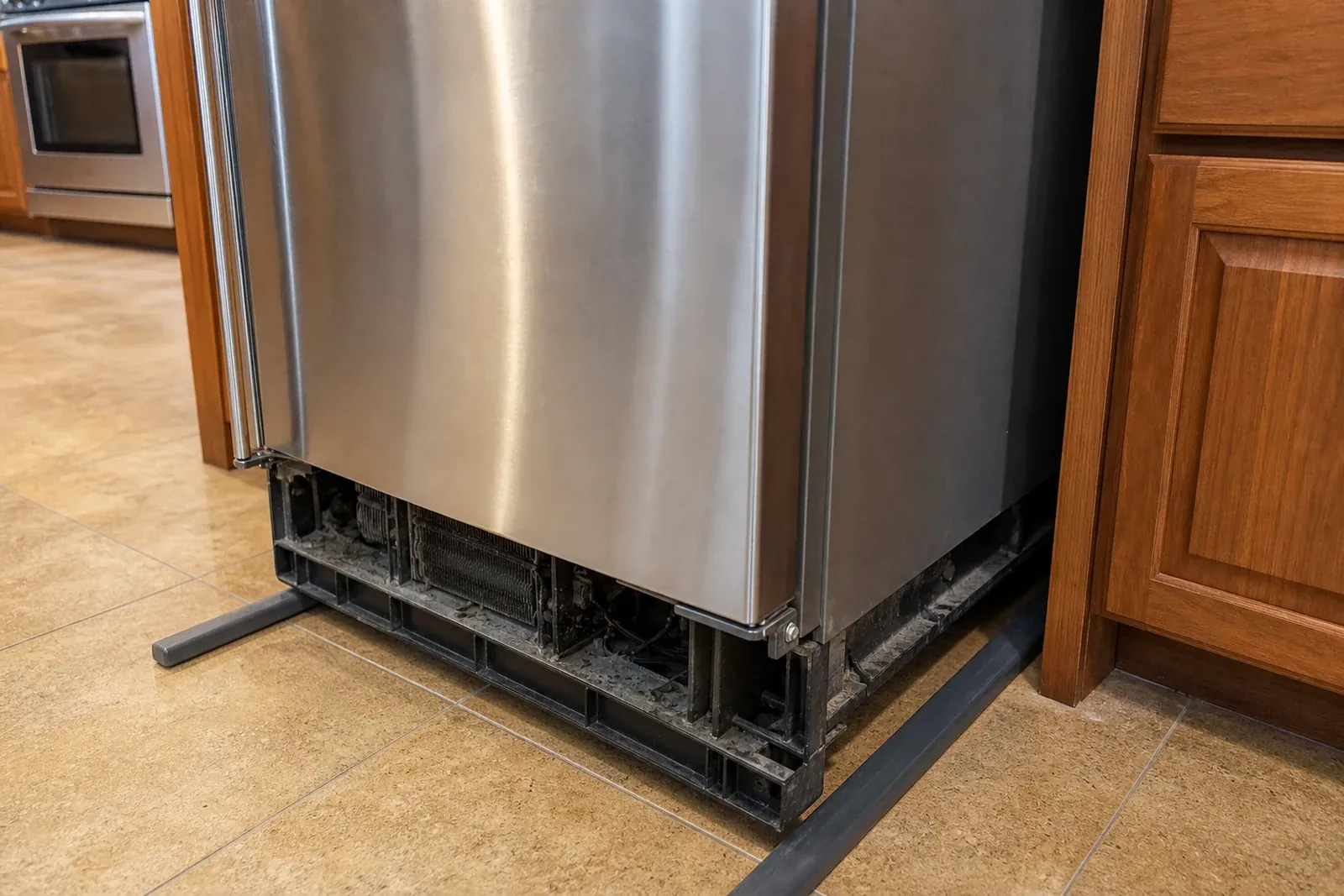
The safest pullout is the one we never do. On a Montecito Heights flush-inset install, the panel is set so close to the cabinet face that sliding the unit even an inch can scuff a finished edge — so we exhaust front access first. A surprising share of repairs finish without the appliance leaving its opening:
- Condenser cleaning through the lower grille, including the oak-pollen and dry-season dust these wooded lots load onto the coil.
- Gasket, hinge and reveal checks at the door — critical when a heavy custom panel has pulled the seal slightly out of true (see door gasket and seal repair).
- Control, thermistor and display reads from the interior and the toe-kick area.
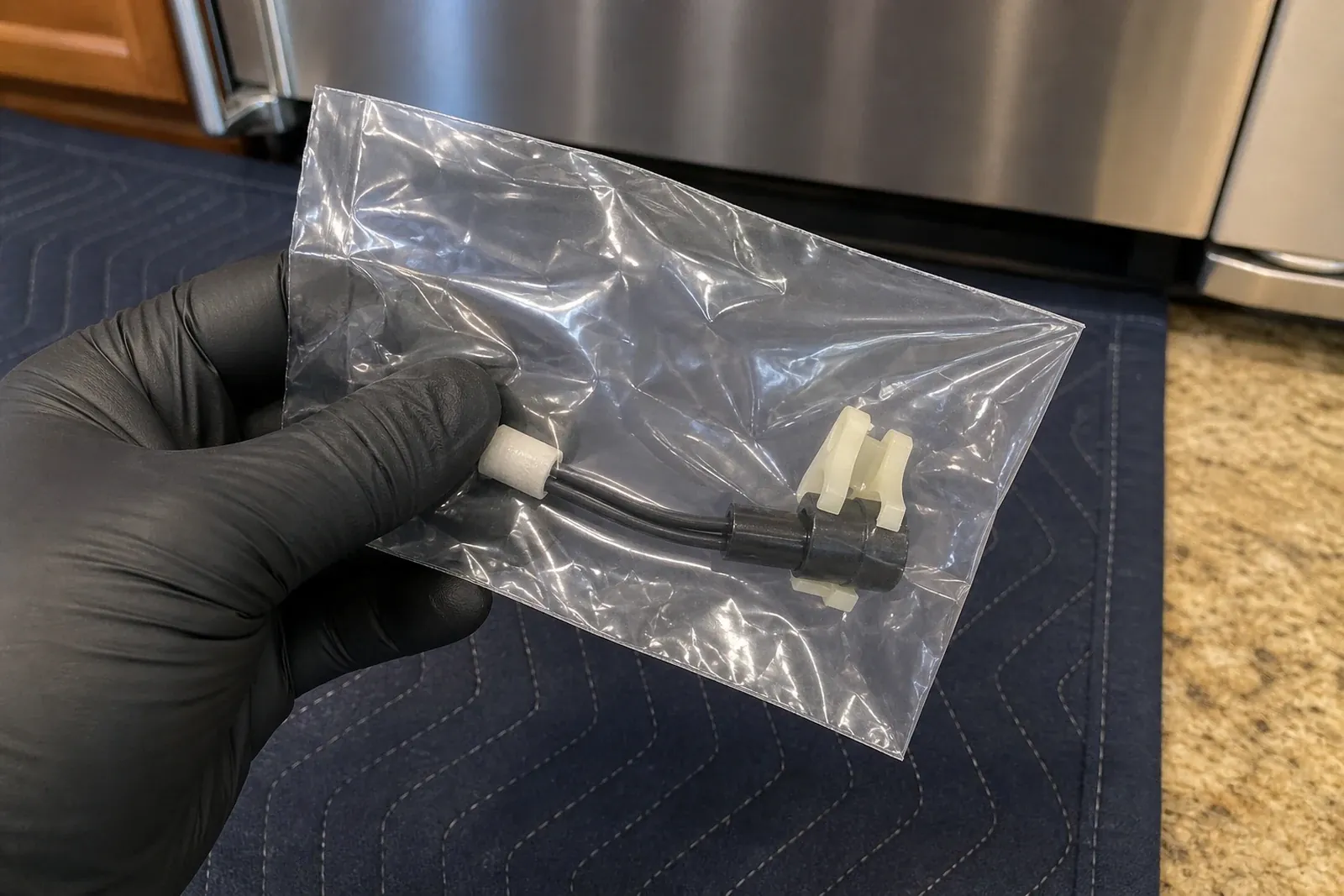
- Many evaporator-fan and sensor repairs that reach from the front without disturbing the cabinetry.
The custom grille is the unsung hero of front access on these remodels. Because it was cut to match the cabinetry, it is also the panel we treat most gently: it lifts away to expose the condenser and the lower compartment, then returns to its exact seat. Cleaning and most lower-compartment checks run through that opening, which is why a loaded condenser — the most common cause of a warm Montecito Heights call — is also one of the least invasive to fix.
Only sealed-system access or a rear component forces a pullout — and on a remodel, that decision is made deliberately, with the homeowner, and with a named reason. We never move a flush-inset unit on a hunch. If both compartments are running warm with the compressor cycling constantly, that earns a measured look behind the appliance; a warm fresh-food side with a cold freezer almost never does, because that pattern lives at the front in the airflow, the fan or a thermistor. Matching the symptom to the right access level is how we keep the cabinetry untouched on the large majority of visits. For the broader diagnostic-first method behind that judgment, see our Sub-Zero repair approach.
The protocol
The Montecito Heights cabinet-safe access protocol
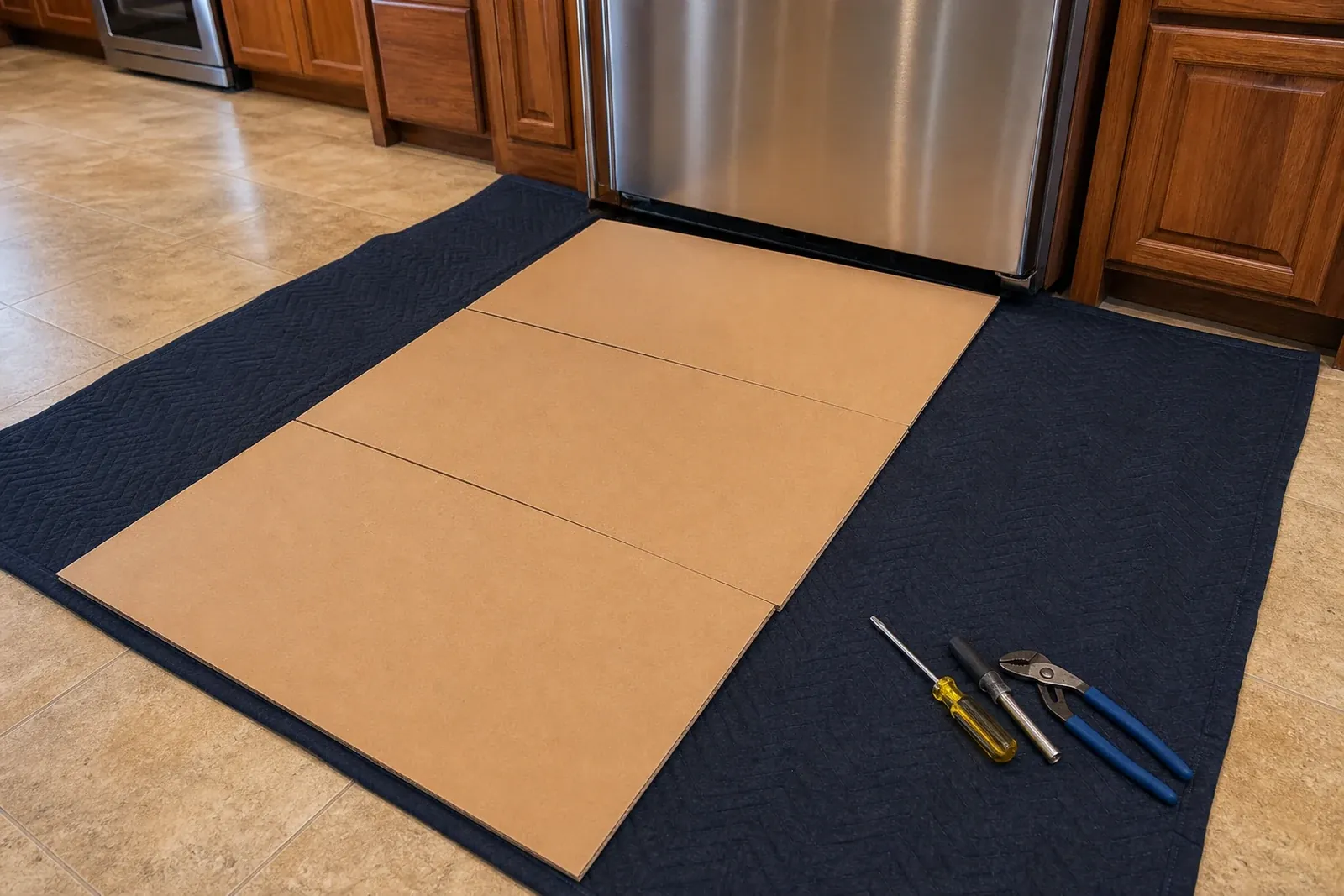
When a pullout is genuinely required, the protection is staged for a remodeled kitchen specifically. The table below is the working checklist we run on a Montecito Heights call — it is built around custom millwork and a hillside approach, not a generic appliance pull.
| Access factor | Montecito Heights condition | What we do about it |
|---|---|---|
| Driveway grade & parking | Steep, tree-lined, little level shoulder | Confirm grade and staging point before dispatch; plan a second tech for a long carry |
| Panel weight & door style | Heavy integrated panel-ready front | Document weight and hinge cams; preserve alignment for reseat |
| Reveal gap measurement | Flush-inset, tolerances in millimeters | Measure and note the cold reveal before moving so the reseat matches exactly |
| Floor surface | Refinished hardwood or stone from the remodel | Lay continuous runners; never drag across a finished floor |
| Cabinet face & edges | Custom grille and adjoining cabinet returns | Pad contact edges; protect the grille cutout during removal |
| Reseat verification | Unit must return square to the opening | Re-check reveal, door swing and seal compression after reseating |
Hillside logistics
Getting the gear to the kitchen on a wooded lot
Access in Montecito Heights is rarely about the kitchen door alone. A typical call involves a driveway that climbs and bends under oaks, a parking spot that is uphill or downhill of the entry, and a carry that runs through a few interior turns. Each of those affects whether floor runners, a panel cart and a second set of hands are loaded before we leave the shop. Telling us the approach up front is what keeps the visit to one trip.
- Parking and grade: note whether the van can sit level near the entry, or whether tools and protection must be carried up or down a slope.
- Path to the kitchen: stairs, narrow halls and turns decide how a panel and the unit can be safely walked, if a pullout is needed.
- Canopy debris: the same oaks that shade the lot drop pollen and fine litter that the condenser pulls in — worth mentioning, because it often explains a warm-section call before we arrive.
- Gate or keypad access: anything between the street and the door belongs in the booking note.
The grade is the detail homeowners forget to mention and the one that matters most for a pullout. Floor runners, a panel-handling cart and the unit itself all behave differently on a driveway or entry that is not level, and a long carry from a downhill parking spot is the difference between a one- and two-person job. When we know the approach in advance, the right protection and the right crew arrive together; when we do not, a hillside lot is where a single-tech visit quietly turns into a return trip. None of this is exotic — it is simply the realism a wooded Santa Rosa slope demands, and planning for it is part of protecting the kitchen rather than improvising once the appliance is already moving.
For the full prep list that makes any Santa Rosa visit finish in one trip, see the repair preparation checklist, and for how Montecito Heights fits the wider route, the Santa Rosa service areas page maps the 95404 core against the outlying foothill runs.
Documented, not improvised
What gets written down before and after a pullout
On a remodel, protection only counts if it is recorded. Before any flush-inset unit moves, we note the measurements that prove the kitchen left the way it arrived: the cold reveal gap on each side of the door, the panel weight and hinge-cam setting, the door swing clearance against the adjoining cabinet, and the floor surface under the runners. Those notes are not bureaucracy — they are the reference the reseat is checked against, and they are what lets a homeowner see that the woodwork was treated as carefully as the appliance.
The same documentation keeps the diagnosis honest. A flush-inset install rewards an evidence-first approach because the cost of guessing wrong is not just a wasted part — it is a needless pullout on cabinetry that did not need disturbing. So the repair record on a Montecito Heights call reads as a short chain: the symptom and both temperatures, the model and serial from the tag, the front-access proof, whether a pullout was justified and why, the OEM part installed, and the verification that the unit recovered temperature and reseated square. If the cabinetry was touched, the before-and-after reveal numbers sit in that record too. That standard is the same diagnostic-first method we apply across every Sub-Zero repair in Santa Rosa — here it simply carries the extra weight of a kitchen built to the millimeter.
Protecting the remodel
Why a reseat is the part homeowners worry about most
On a remodel, the appliance and the cabinetry were installed together, so the reveal you see today is a record of how square the unit sat when everything was new. Move it carelessly and reseat it a few millimeters off, and the door swing, the panel line and the seal compression all tell on it. That is why our protocol treats the reseat as a measured step, not an afterthought: we record the cold reveal before the unit moves, protect the grille cutout and the adjoining cabinet returns during removal, and re-check the reveal, the door swing and the gasket compression once it is back in. A clean reseat is the difference between a repair you forget about and a frost line that shows up a month later because the panel no longer pulls the seal shut evenly. Montecito Heights is a 95404 core-route neighborhood, so these visits schedule quickly — the planning is about protection, not distance.
Next step
Call with the Sub-Zero model number
Have the model-tag photo, current fresh-food and freezer temperatures, and the symptom timeline ready. That lets the Santa Rosa intake route the visit around the likely Sub-Zero part family instead of a generic appliance script.
FAQ
Questions Santa Rosa homeowners ask before scheduling
Can a Sub-Zero be serviced in a Montecito Heights remodel without scuffing the custom cabinets?
Yes. On a flush-inset remodel we exhaust front access first — condenser, gasket, controls and many fan and sensor repairs reach without moving the unit. If a pullout is truly needed, we measure the reveal, lay continuous floor runners, pad the grille and cabinet edges, and verify the reseat is square before we leave.
How do you handle the steep, wooded driveways in Montecito Heights?
We confirm the driveway grade and a level staging point before dispatch, and stage a second technician when the carry is long or the parking is well above or below the entry. Telling us the approach when you book is how a hillside visit stays to one trip rather than a return for gear left on the van.
Should a panel-ready Sub-Zero be pulled out for every repair?
No. In Montecito Heights kitchens the integrated panel often stays in place for diagnosis and many repairs. A pullout should have a named reason — sealed-system access or a rear component — and only then with floor protection, panel handling and a reseat plan, so the heavy custom front returns to alignment.
Why does my Montecito Heights Sub-Zero need the condenser cleaned more often?
The mature oak canopy that shades these lots drops pollen and fine litter that the condenser draws in, on top of Santa Rosa's dry-season dust. A loaded coil makes the compressor run long and can warm the fresh-food side, so on these wooded properties the condenser is the first thing we check before anyone talks about a bigger fault.
What should I tell you about my kitchen and driveway when I book in 95404?
Mention the driveway grade and where the van can park, any stairs or turns between the entry and the kitchen, whether the door is integrated panel-ready, and how tight the cabinet reveal looks. With that and your model number, we load the right protection and parts before leaving, which keeps a Montecito Heights visit to a single trip.
Will moving the unit knock the door or seal out of alignment?
Not when the reseat is treated as a measured step. We record the reveal gap before the unit moves and re-check the reveal, door swing and gasket compression after it is back in. A careful reseat is what prevents a frost line or a door that no longer pulls shut evenly a few weeks after the repair.
Related